It's been one year since the military coup in Guinea-Bissau that interrupted the electoral process. The promised 12-month transition period ended on November 26 without a new date for elections, which were initially set for December 6. The coup occurred on November 26, 2025, on the eve of the announcement of the results of the legislative and presidential elections held three days earlier. The opposition had claimed victory in the elections, but the military intervened, and President Umaro Sissoco Embaló was deposed.
The elections were marked by the ban on the candidacy of the historic Party for the Independence of Guinea and Cape Verde (PAIGC) and its leader, Domingos Simões Pereira. Despite this, the elections took place without incidents, according to observers on the ground. However, the opposition, led by Fernando Dias da Costa, president of the Party for Social Renewal (PRS), claimed that the military invasion of the National Elections Commission prevented the announcement of the results, which they alleged would have shown their victory.
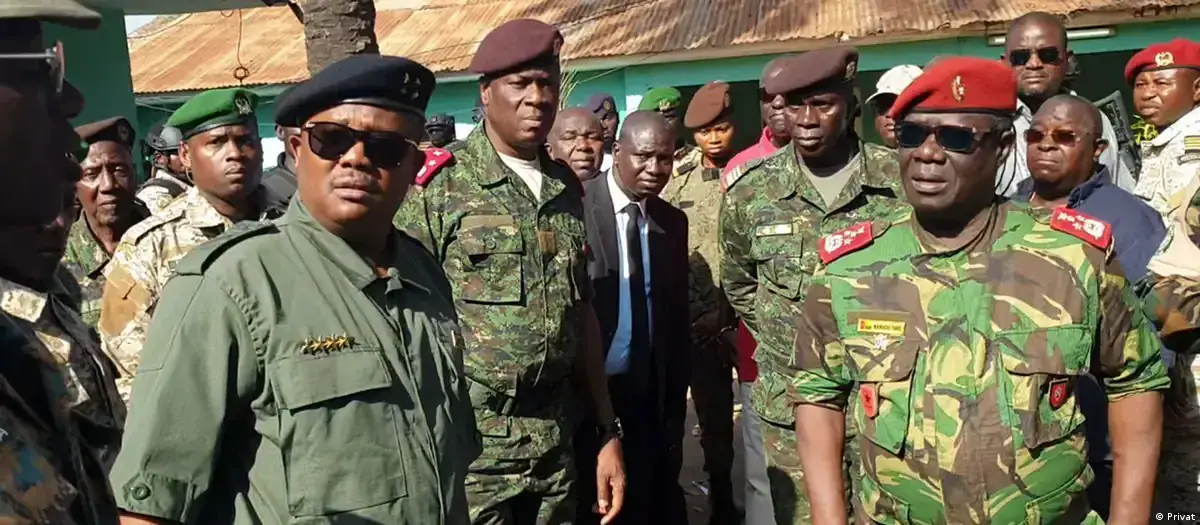
The military named General Horta Inta-a as the President of the Transitional Republic and created a National Transitional Council to replace the parliament. They also decreed a 12-month transition period. Inta-a chose Ilídio Vieira Té, a former minister of Embaló, as the transitional prime minister. The coup led to Guinea-Bissau's suspension from organizations such as the African Union, the Economic Community of West African States (ECOWAS), and the Community of Portuguese Language Countries (CPLP).
The international community has demanded the restoration of institutional normality, the release of political prisoners, and an investigation into human rights violations. Domingos Simões Pereira was arrested and later released under the pretext of medical treatment in Portugal. The country's political and party activities have been restricted, and the headquarters of some parties, including the PAIGC and Madem G15, were invaded and closed by the authorities.
In September, Vieira Té admitted to being the leader of a new party, the Guinean Popular Party, and stated that the main objective of the transition period was to safeguard the state and prepare for the return to normality through elections. However, the conditions for elections are still not met, according to the prime minister and the National Elections Commission. On November 6, the military announced that they would relax restrictions on political and party activities, allowing meetings but maintaining the ban on rallies and demonstrations.
Human rights organizations, such as the Human Rights League and Pó de Terra, have insisted on the release of political prisoners and an investigation into human rights abuses, including the circumstances of the deaths of Mamadu Tano Bari and activist Vigário Balanta. Some military personnel detained for over a year have been released, and the Attorney General's Office announced an investigation into Balanta's death.
The situation in Guinea-Bissau remains uncertain, with no clear date for elections or a return to democracy. The country's transition to democracy has been suspended for over a year, and the international community continues to pressure the military authorities to restore normality. Key issues, such as the release of political prisoners and an investigation into human rights abuses, remain unresolved.
Key points
- The military coup in Guinea-Bissau has led to a suspension of democracy, with no clear date for elections or a return to normality.
- The international community is pressuring the military authorities to restore institutional normality and investigate human rights abuses.
- The country's transition to democracy has been marked by restrictions on political and party activities, and the release of some detained military personnel.
Reporting sources
- Guiné-Bissau: Democracia continua suspensa um ano depois... · novojornal.co.ao