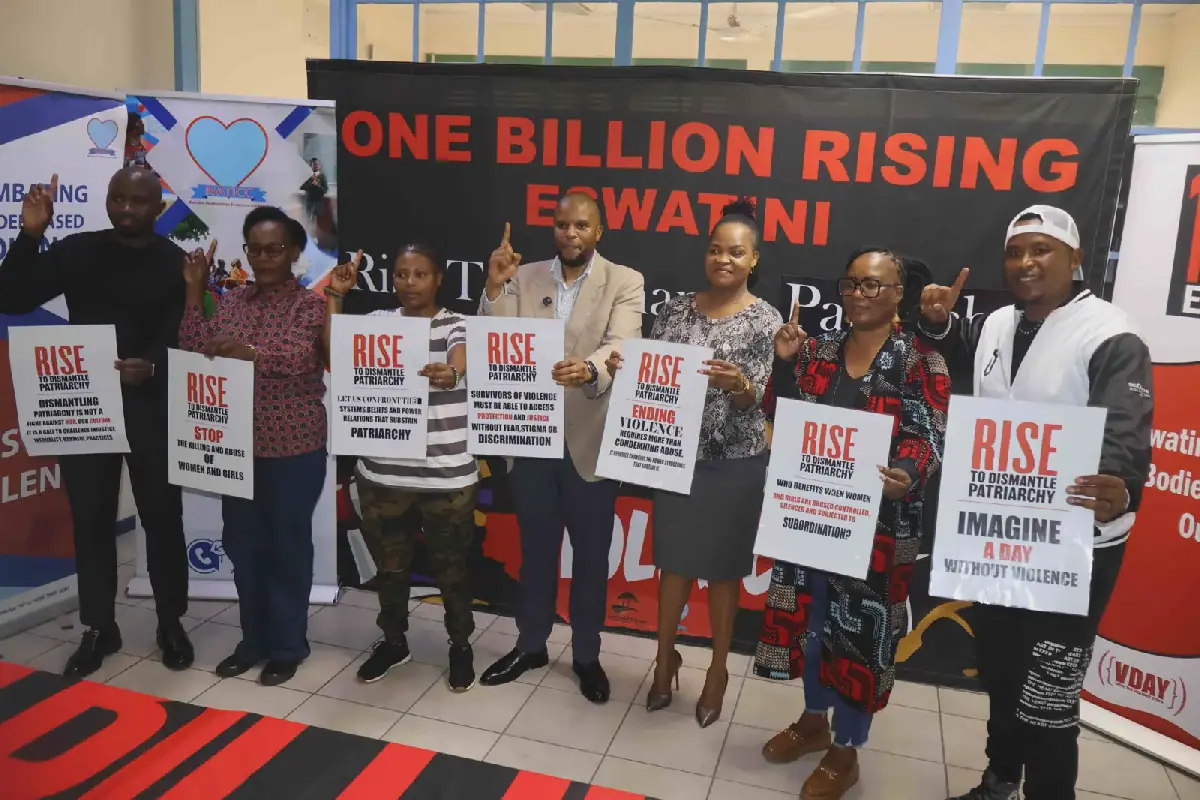
One Billion Rising Eswatini has introduced its 2027 campaign theme, 'Rising to Dismantle Patriarchy', accompanied by the call 'Imagine a Day Without Violence'. The organisation aims to challenge the beliefs, cultural practices, and unequal power relations that perpetuate gender-based violence in the country. This was announced by Colani Hlatjwako, One Billion Rising Africa Regional Coordinator, during a media briefing at FLAS in Manzini.
The campaign seeks to move the national conversation beyond raising awareness about gender-based violence towards confronting the systems, beliefs, and attitudes that sustain it. Hlatjwako questioned why violence against women and girls continued despite years of activism, awareness campaigns, community dialogues, legislation, advocacy, and support programmes for survivors. She emphasised that addressing individual cases of abuse without tackling their underlying causes will not bring lasting change.
According to Hlatjwako, patriarchy is a system of power that gives men greater authority and control over women, limiting their rights, opportunities, freedom, and participation in decision-making. The system is sustained through unequal power relations, harmful social norms, discriminatory practices, and attitudes that place women and girls in subordinate positions. Examples of how patriarchy manifests itself in everyday life include widows being left without houses or denied the right to inherit from their deceased spouses.
Hlatjwako also cited girls being married off at the expense of their education, choices, and future prospects, as well as teenage pregnancies and older men exploiting the vulnerability of young girls. Women's challenges in accessing, owning, and controlling land were also highlighted, alongside situations where women's and young people's leadership was questioned, undermined, or dismissed. This contributes to their underrepresentation in decision-making positions.
The regional coordinator raised concerns about men who abandon their family responsibilities, leaving women and children to struggle alone. She also cited reproductive coercion, where men want children but are unwilling to provide for them and resist family planning, as well as marital rape, which is sometimes excused through beliefs that paying lobola means a woman has surrendered her right to refuse sexual intercourse.
Hlatjwako emphasised that dismantling patriarchy is not a fight against men, Eswatini's culture, or national identity. Instead, it is a call to challenge injustice, inequality, and harmful practices wherever they exist, while building a society where women and men, girls and boys can live with dignity, exercise their rights, and participate equally in shaping their futures.
The organisation is calling for difficult national conversations about whether existing laws adequately protect and promote gender equality and whether their implementation translates into meaningful improvements in the everyday lives of women and girls. Hlatjwako also questioned whether certain cultural practices and traditions continue to reinforce unequal power relations and challenged society to distinguish between cultural practices that uphold dignity and those that perpetuate harm.
Key points
- One Billion Rising Eswatini launches 2027 campaign to challenge gender inequality.
Reporting sources
- One Billion rising calls for patriarchy to be dismantled · Times of Swaziland