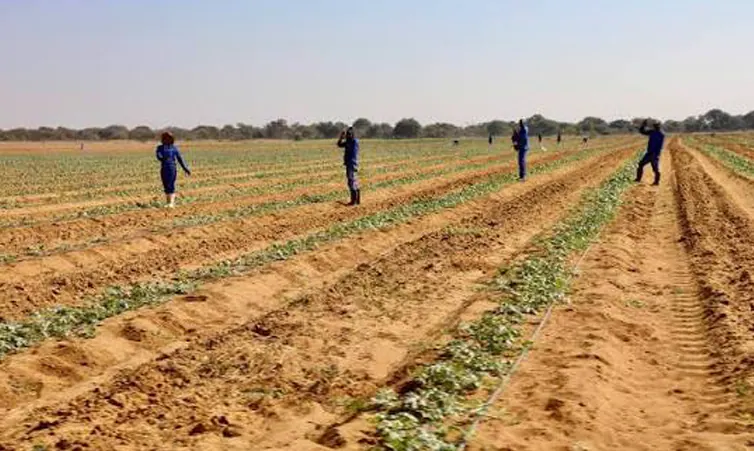
The Drylands Sustainable Landscapes Impact Project (DSL-IP) has chosen Omiyongo village in the Omusati region as the site for a farmers field school. The project aims to support farmers in addressing environmental challenges and improving their agricultural practices. A community meeting was recently held at Omiyongo to discuss the initiative and the rehabilitation of an earth dam at the village. The dam will be rehabilitated to store flood and rainwater for longer periods, benefiting both people and livestock.
The farmers field school will serve farmers from the Outapi, Onesi, and Tsandi constituencies, which form part of the Kunene-Cuvelai landscape under the DSL-IP. Project implementation officer for north-central Namibia, Isak Kaholongo, says the school will provide farmers with the skills to identify, prevent, and respond to environmental challenges in their communities. This will enable them to adopt more sustainable agricultural practices and improve their livelihoods.
The farmers field school will operate differently from a conventional school. Kenyan FFS expert, Gustavas Muli, explains that the field will be the class, and crops will be the teachers. Farmers will learn about the needs of crops, including water and nutrients, while identifying environmental problems affecting their communities. This approach will allow farmers to acquire practical knowledge and skills to address their specific challenges.
The DSL-IP is a collaborative project between the Ministry of Agriculture, Fisheries, Water and Land Reform and the Ministry of Environment, Forestry and Tourism, in partnership with the National Plant Genetic Resources Centre. The project is funded by the Global Environment Facility through the Food and Agriculture Organisation (FAO). The project covers three areas in the Mopane-Miombo belt of northern Namibia: the Okavango, Etosha, and Kunene-Cuvelai landscapes.
Other activities under the project include establishing community seed banks, creating cutlines to address veld fires, and providing drought-resistant crops. The project operates in 11 countries across Africa and Asia and was launched in Namibia in March 2023. It is expected to run until April 2028. The project aims to promote sustainable land management practices and improve the livelihoods of farmers in the region.
Experts from the International Institute for Rural Reconstruction, including Gustavas Muli and Ugandan expert Robert Kalisa, have been hired by the FAO to assist in establishing the FFS. They will provide technical support and guidance to ensure the success of the project. The project has the potential to make a significant impact on the lives of farmers in the region.
The new farmers field school in Omiyongo village is expected to have a positive impact on the local farming community. By providing farmers with the skills and knowledge to address environmental challenges, the project aims to improve agricultural productivity and promote sustainable land management practices. The project will also help to improve the livelihoods of farmers and their communities.
Key points
- The project will serve farmers from the Outapi, Onesi, and Tsandi constituencies.
- The farmers field school will operate differently from a conventional school, with the field as the class and crops as the teachers.
- The project aims to promote sustainable land management practices and improve the livelihoods of farmers in the region.