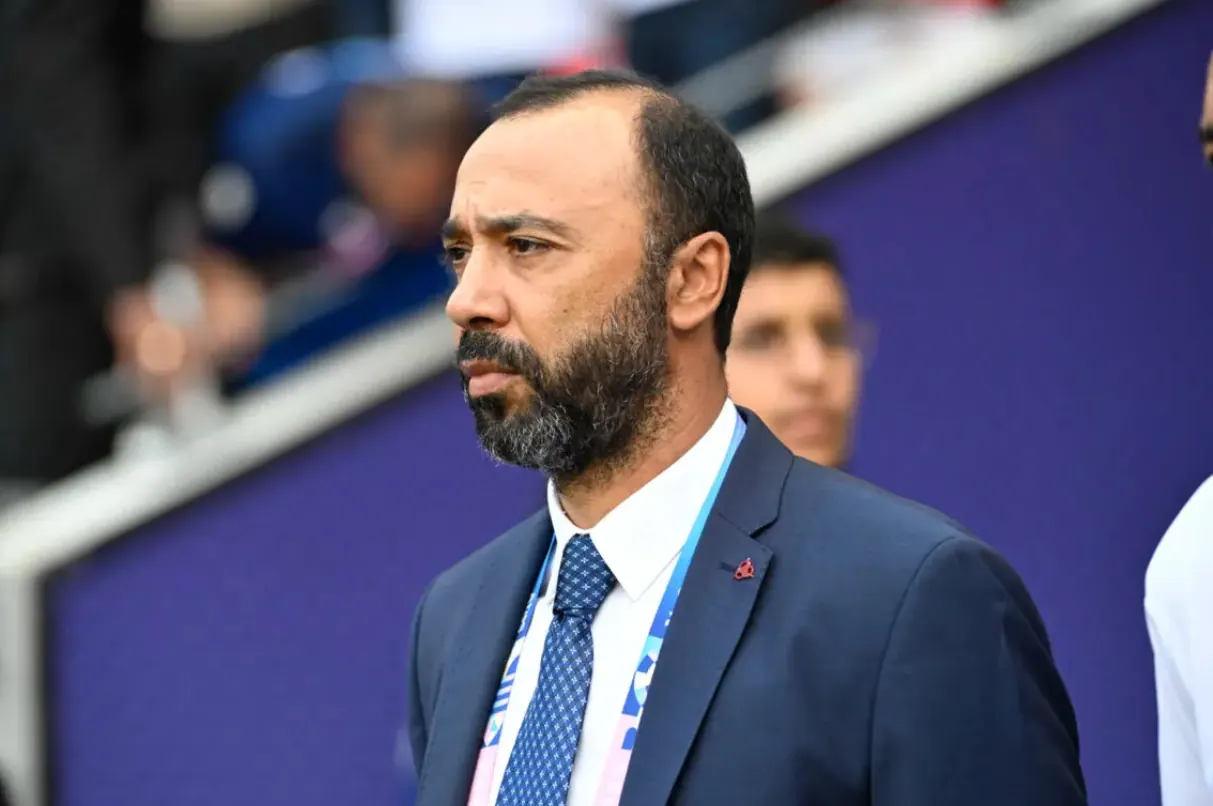
Oman is set to make a strong statement in the 27th Gulf Cup, being held in Jeddah. The team, led by Moroccan coach Tarik Sektioui, is placed in a challenging group alongside Saudi Arabia, Iraq, and Kuwait. Sektioui took over as coach in March, replacing Portuguese manager Carlos Queiroz. This marks a significant milestone as Sektioui becomes the first Arab coach to lead the Omani team in the Gulf Cup in three decades.
Sektioui has expressed his ambition for the team, stating that they aim to deliver strong performances and reach the furthest possible stage in the tournament. He views the Gulf Cup as a crucial preparation phase for upcoming events, particularly the 2027 Asian Cup and the 2030 World Cup qualifiers. The team's recent history in the Gulf Cup has been impressive, with two titles in 2009 and 2017, and four runner-up finishes.
The Omani squad, consisting of 26 players, retains key experienced players such as Issam Al-Sabhi and Harib Al-Saadi. However, the team suffered a setback with the injury of striker Mohsen Al-Ghassani, leading to the inclusion of AbdulSalam Al-Shikili as a replacement. The squad also faced controversy with the exclusion of AbdulRahman Al-Mishifri, a Kuwaiti-Al-Qadsia player. The Oman Football Association stated that these changes were made based on the coach's technical vision.
Under Sektioui's leadership, Oman has shown significant potential. The team's performance in the tournament will be closely watched, given their reputation as a formidable opponent in the Gulf Cup. In the last two decades, Oman has emerged as a difficult team to beat, winning two titles and finishing as runners-up four times.
Sektioui's experience and tactical acumen will be crucial in Oman's campaign. Having taken over the team recently, he has had limited time to implement his strategies. The team's group stage matches will provide valuable insights into their chances of advancing in the tournament.
Oman's opponents in Group B will pose a significant challenge. Saudi Arabia, Iraq, and Kuwait are all established teams with a strong record in the Gulf Cup. Sektioui will need to devise effective strategies to overcome these opponents and lead his team to success.
The 27th Gulf Cup presents an opportunity for Oman to make a statement under Sektioui's leadership. With a mix of experienced players and tactical expertise, the team will look to exceed expectations and make a deep run in the tournament.
Key points
- Oman aims for third Gulf Cup title under Moroccan coach Tarik Sektioui
- Sektioui views the Gulf Cup as preparation for 2027 Asian Cup and 2030 World Cup qualifiers
- Oman faces a challenging group stage with Saudi Arabia, Iraq, and Kuwait