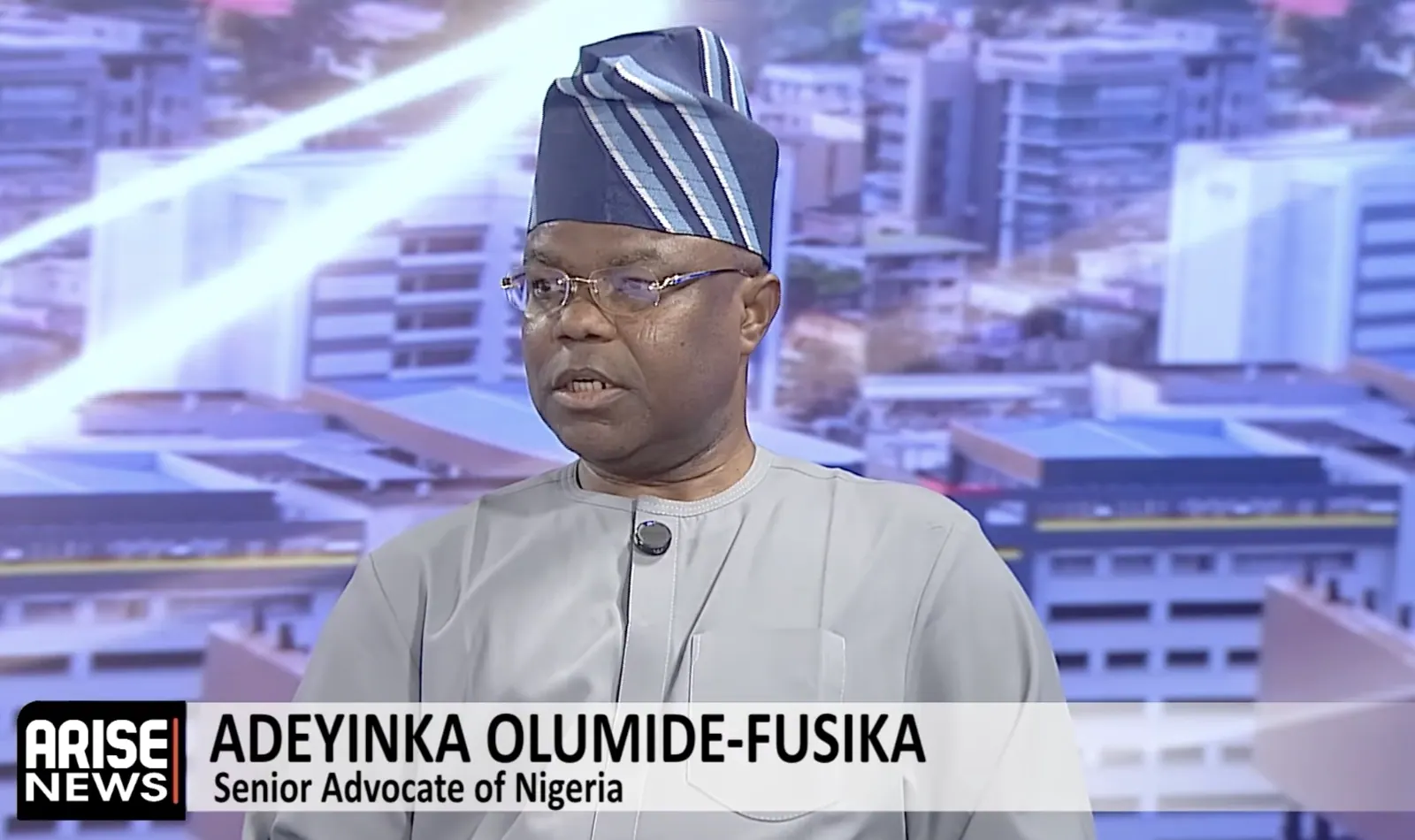
Senior Advocate of Nigeria, Adeyinka Olumide-Fusika, has stated that government funds not directed towards programmes and services benefiting Nigerians can create opportunities for public money to be stolen. In an interview with ARISE NEWS, Olumide-Fusika emphasized that the fight against corruption should go beyond repeated promises, stressing that government must ensure available resources are properly budgeted and spent on citizens' needs.
Olumide-Fusika expressed disappointment that despite the establishment of institutions like the Independent Corrupt Practices and Other Related Offences Commission and the Economic and Financial Crimes Commission, anti-corruption efforts have not produced sufficient visible improvements. He linked the problem to the way government resources are prioritized, emphasizing that public funds should be channelled into essential services, particularly education.
According to Olumide-Fusika, if government money is not spent on social programmes or to benefit the people, it will inevitably be stolen. He maintained that government has a responsibility to provide essential services rather than shifting the burden to citizens. The senior lawyer questioned government spending on activities that do not provide sufficient value to Nigerians, citing elaborate ceremonies that could have been used to restore primary schools.
Olumide-Fusika argued that the impact of public spending depends on how government resources are deployed, using education and investment as examples. He stated that his own 10 Naira could bring more value than the government's 100 Naira if used for education and investment. On the removal of the fuel subsidy, he questioned whether the increase in government revenue had translated into improved public services, such as education.
The lawyer disagreed with calls for harsher penalties, including the death penalty, as the main solution to corruption. Instead, he emphasized effective enforcement, citing Nigeria's experience with the death penalty for armed robbery. Olumide-Fusika also discussed the role of lawyers in corruption cases, stating that defence lawyers are expected to challenge the evidence presented by prosecutors as part of the legal process.
Olumide-Fusika proposed reforms to the way political candidates and public officials declare their assets, suggesting that candidates should be required to submit their declarations as part of the process for contesting elections. He recommended that such declarations should be made public within the constituencies of candidates, with further declarations required after election and at the end of their tenure.
According to Olumide-Fusika, tackling corruption requires stronger practical measures rather than repeated public statements and commitments, with greater attention to how public resources are allocated, spent, and accounted for. He emphasized that public access to asset declarations would provide a basis for questioning unexplained increases in the wealth of public officials.
Key points
- Government inaction and misallocated funds create opportunities for corruption.
- Effective enforcement, not harsher penalties, is key to fighting corruption.
- Reforms to asset declarations can help track and prevent corruption.