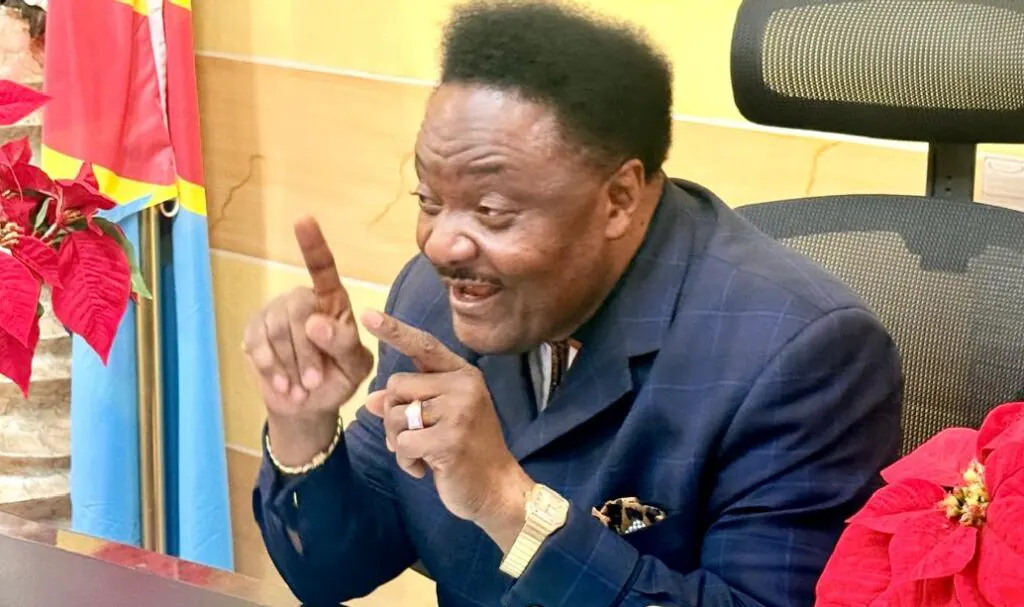
Joseph Olenghankoy, president of the National Council for Security and Stability (CNSA), has stressed that resolving the Democratic Republic of Congo's multifaceted crisis requires the involvement of all stakeholders. According to Olenghankoy, the crisis affects not only the country's political leaders but also its entire population, making it essential to engage all Congolese people in finding a lasting solution. He made these remarks in a recent communication, highlighting the need for a comprehensive approach.
Olenghankoy described the crisis as "multiforme and multidimensionnelle," with effects extending far beyond the circle of political and security actors. He emphasized that all Congolese people, regardless of their regional, ethnic, cultural, or religious backgrounds, are concerned with finding a peaceful solution. The CNSA president acknowledged the crucial role of political forces and their leaders in addressing the crisis but argued that their responsibility should not lead to the exclusion of other stakeholders.
The CNSA president encouraged all Congolese people to contribute to finding a solution through their ideas and experiences. He believes that their participation will broaden the reflection and strengthen adherence to the chosen solution. Olenghankoy's approach goes beyond the composition of delegations to the national dialogue, emphasizing that a solution can only be effective if those it affects understand, accept, and commit to respecting it.
Olenghankoy's vision for the national dialogue is not limited to a simple political compromise between a few protagonists. Instead, he advocates for a process that creates conditions for broad acceptance, allowing the solution to be applied over time. This requires all stakeholders to internalize the solution and commit to avoiding behaviors that led to the crisis. The CNSA president sees this as an opportunity for the Congolese people to learn from the crisis and prevent similar situations in the future.
The CNSA's approach prioritizes inclusivity as a means of consolidating the solution, rather than just a political formula. Olenghankoy wants each component of Congolese society to recognize itself in the commitments made and contribute to their implementation. This approach aims to prevent any stakeholder from contesting the decisions made, citing a lack of representation in the process.
Olenghankoy's strategy seeks to draw lessons from previous dialogue experiences, ensuring that the next process is more effective. He envisions a future dialogue where Congolese people come together not only to negotiate their differences but also to build a solution and commit to preserving it. This inclusive approach would provide a broad base for the solution, allowing decisions to be understood, accepted, and applied beyond the circle of negotiators.
Ultimately, Olenghankoy's call for inclusive dialogue reflects his concern for the country's future and the need for collective responsibility. By engaging all stakeholders, the Congolese people can work together to address the crisis and build a more stable future. The CNSA president's emphasis on inclusivity and collective ownership aims to create a lasting solution that benefits all Congolese people.
Key points
- Joseph Olenghankoy emphasizes the need for inclusive dialogue to address the Democratic Republic of Congo's multifaceted crisis.
- The crisis requires the involvement of all stakeholders, including political leaders and the general population.
- An inclusive approach can help create a lasting solution by fostering collective ownership and responsibility.