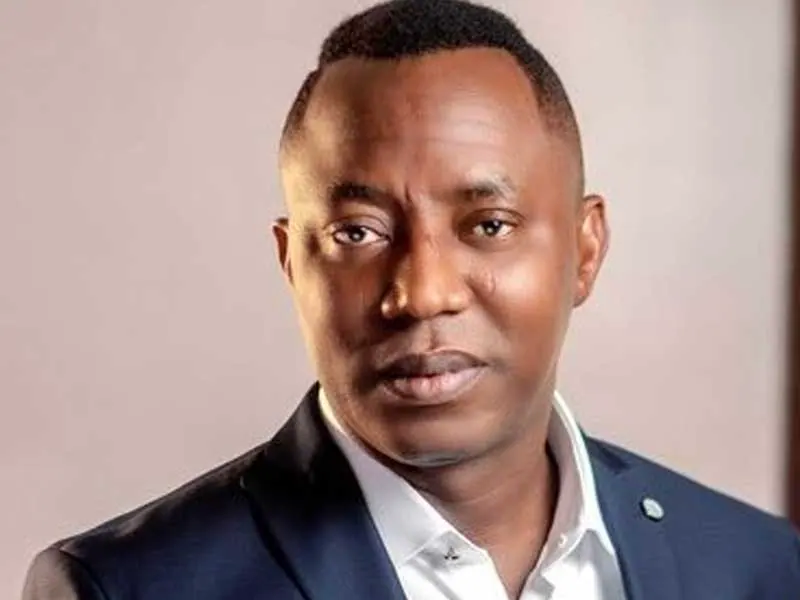
In a recent article on thisdaylive.com, Paul C Nwabuikwu, a longtime communications lieutenant of Ngozi Okonjo-Iweala, launched a scathing attack on Omoyele Sowore's presidential candidacy. Nwabuikwu, who served twice as Special Adviser to Okonjo-Iweala, a former Nigeria's Minister of Finance, questioned why Nigerians do not take Sowore's candidacy seriously. Sowore responded to Nwabuikwu's article, highlighting their complicated history and suggesting that Nwabuikwu's opinions may be driven by personal vendetta.
Nwabuikwu's criticism of Sowore centered on his perceived lack of substance, describing him as an "eternal student activist" and a "perennial presidential candidate." Sowore took umbrage with these comments, pointing out that his student activism was a revolutionary endeavor that aimed to confront military dictatorship in Nigeria. During this time, many Nigerians were jailed, expelled from universities, beaten, disappeared, and killed fighting for freedoms that are now taken for granted.
Sowore also took issue with Nwabuikwu's use of his 14,608 votes in the 2023 presidential election as evidence that Nigerians do not regard him as a serious candidate. Sowore argued that votes obtained within Nigeria's profoundly unequal political system do not constitute an intellectual test of a candidate's ideas. He also noted that Nwabuikwu had previously questioned the credibility of the 2023 elections, making his criticism of Sowore's vote tally hypocritical.
The back-and-forth between Nwabuikwu and Sowore highlights the complexities of Nigerian politics and the often-contentious nature of political discourse. As a longtime aide to Okonjo-Iweala, Nwabuikwu's opinions carry weight, but Sowore's response suggests that his views may be influenced by personal biases. The exchange has sparked a lively debate about the nature of politics in Nigeria and the qualities required of a successful candidate.
Okonjo-Iweala, a highly respected economist and former Minister of Finance, has a long history of public service in Nigeria. She has been a key figure in Nigeria's economic policy-making process and has worked closely with international organizations such as the World Bank and the International Monetary Fund. Her relationship with Sowore, however, appears to be strained, with Sowore suggesting that she has a personal vendetta against him.
Nwabuikwu's article and Sowore's response have generated significant interest in Nigerian political circles, with many commentators weighing in on the debate. Some have praised Nwabuikwu for speaking out against Sowore's candidacy, while others have criticized him for making personal attacks. Sowore, for his part, remains a significant figure in Nigerian politics, with a dedicated following and a reputation for activism.
The controversy surrounding Nwabuikwu's article and Sowore's response underscores the challenges facing Nigeria's democratic process. As the country continues to grapple with issues such as poverty, corruption, and insecurity, the debate over the qualities required of a successful candidate is likely to continue. Ultimately, Nigerians will decide which candidates they believe have the substance and vision to lead the country forward.
Key points
- Paul Nwabuikwu, a longtime aide to Ngozi Okonjo-Iweala, has written a scathing critique of Omoyele Sowore's presidential candidacy.
- Sowore responded to Nwabuikwu's criticism, highlighting their complicated history and suggesting that Nwabuikwu's opinions may be driven by personal vendetta.
- The exchange between Nwabuikwu and Sowore has sparked a lively debate about the nature of politics in Nigeria and the qualities required of a successful candidate.