Ann Wanjiku's pregnancy was uneventful until she developed abdominal pain at 24 weeks, forcing her to deliver a 630-gram baby at Mweiga Level III Hospital. The baby was transferred to Nyeri County Referral Hospital, where she was placed in an incubator. After two months, the baby gained 2 kilograms and was eventually discharged weighing 2.9 kilograms. Wanjiku is grateful for the incubator and healthcare workers, who helped her baby survive.
Lillian Wacuka also experienced the challenges of premature birth, delivering twins at 35 weeks. The babies weighed 2.7 and 2.4 kilograms and were placed in an incubator for a month. Wacuka emphasizes the importance of incubators, saying they are a lifeline for premature babies, giving them a chance to live, grow, and thrive. According to the World Health Organisation, prematurity is the leading cause of death in children under five years old.
The World Health Organisation defines premature births as delivery before 37 completed weeks of pregnancy. In Kenya, approximately 193,000 babies are born prematurely every year, accounting for nearly 12 per cent of all births. Sadly, about 13,300 of these babies do not survive, while thousands more face the risk of long-term health complications. WHO says most preterm births happen spontaneously, but some are due to medical reasons.
Peris Muthee, a neonatal nurse at Nyeri County Referral Hospital, highlights the importance of incubators in providing a controlled environment for premature infants. She describes incubators as a second womb, where babies are cared for until they attain the required organ maturity, body weight, and immune system to survive independently. The hospital's Neonatal Unit has seven incubators, with five premature infants currently receiving specialized care.
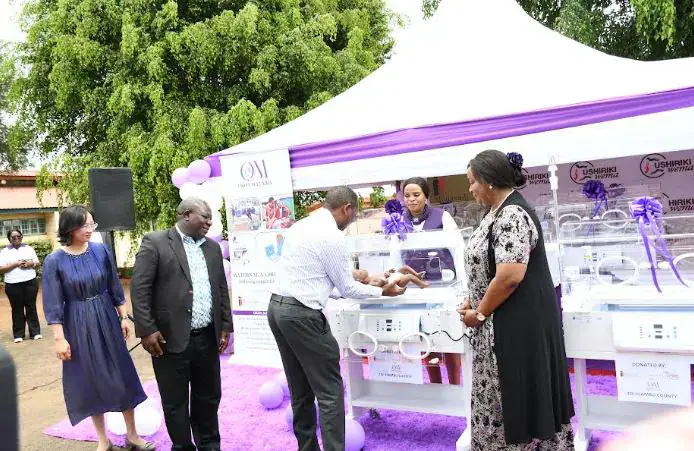
On Saturday, the facility received two more incubators through a donation from Okoa Malaika program, a national neonatal equipment distribution programme under the Ushiriki Wema foundation. The donations came one day before World Prematurity Day, which aims to raise awareness about the challenges and impact of preterm births. This year, the day is marked under the theme Small Babies, Big Potential: Invest in Follow-Up Care to Protect Their Future.
The Okoa Malaika program has completed 10 successive Phases, distributing and handing over 92 neonatal incubators to 49 health facilities across 44 counties. The program's goal is to strengthen newborn care and safeguard the well-being of mothers and their children. Mrs. Tessie Musalia, spouse of the Prime Cabinet Secretary, welcomed the donation, saying it is a critical step towards strengthening equipment availability for newborn care in level IV and level V public hospitals in Kenya.
The donation of incubators to Nyeri County Referral Hospital and other central region counties, including Murang'a, Kiambu, Kirinyaga, Laikipia, and Nyandarua, is expected to make a significant impact on neonatal care. Partnerships between the National and County governments, development organizations, and well-wishers are critical in addressing healthcare needs in counties. The initiative aims to promote quality antenatal care in the country and reduce the risk of long-term health complications for premature babies.
Key points
- Okoa Malaika program donates 2 incubators to Nyeri County Referral Hospital to support premature babies.
- Premature births account for nearly 12 per cent of all births in Kenya, with approximately 193,000 babies born prematurely every year.
- The Okoa Malaika program has distributed 92 neonatal incubators to 49 health facilities across 44 counties.
Reporting sources
- ‘Okoa Malaika’ incubator donation renew hope to preterm mothers in Nyeri · Kenya News Agency