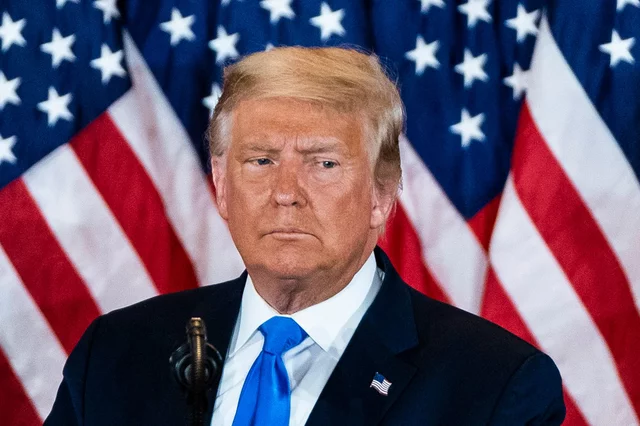
Oil prices experienced a significant surge on Monday, accompanied by rising bond yields, as President Donald Trump's rejection of an Iranian ceasefire proposal sparked concerns about inflation. The development has added to the complexities of the ongoing conflict between the US and Iran, particularly with regards to the crucial Strait of Hormuz, a vital waterway for the world's energy supply.
The Iranian proposal, presented at the UN General Assembly, aimed to halt hostilities and reopen the Strait of Hormuz, which has been impacted by the conflict. The waterway's significance has been further underscored by the recent seizure of Yemen's entire Red Sea coast by Houthis, including the Bab al-Mandab Strait, a vital shipping lane. However, Trump dismissed the Iranian offer, stating that he rejects their proposal.
Despite Trump's rejection, he expressed expectations that negotiations with Iran would resume. In an interview with Axios, Trump indicated that Iran seeks to make a deal, but not on terms acceptable to him. He suggested that the Iranian proposal was one that could have been agreed upon a year ago, adding that Iran had "overplayed their hand." Axios also reported that indirect talks between Washington and Tehran could take place as early as Monday.
Iran has maintained its stance on conditions for reopening the Strait of Hormuz, including the release of frozen assets, lifting of sanctions on its oil, and an end to the US naval blockade. The rejection of the Iranian proposal led to a rebound in oil prices, which had fallen more than two percent on Friday. Brent crude surged over three percent, rising above $107 per barrel.
The increase in oil prices has stoked inflation concerns, impacting stock markets globally. Seoul experienced a 2.7 percent decline upon reopening after a long break, while Tokyo, Shanghai, Manila, Mumbai, Bangkok, and Jakarta also recorded losses. Conversely, Hong Kong, Sydney, Singapore, and Wellington saw gains, with London, Paris, and Frankfurt also performing well.
The rise in bond yields, with the global average topping four percent for the first time since 2007, has brought the Federal Reserve's upcoming policy meeting into focus. Ahead of the meeting, investors will be closely watching the release of the Fed's preferred inflation gauge and a key jobs report, which could significantly influence policymakers' decisions.
Market analyst Stephen Innes noted that Middle East tensions have flared again following Trump's rejection of Iran's proposal, leading to higher oil prices and softer Asian equities. Despite this, Innes suggested that the market still prices in the probability of eventual negotiations between the parties. Key movements in the market include West Texas Intermediate up 2.2 percent at $94.50 per barrel and Brent North Sea Crude up 2.5 percent at $106.96 per barrel.
Key points
- US President Donald Trump rejected Iran's seven-day ceasefire proposal.
- Oil prices surged over three percent, with Brent crude rising above $107 per barrel.
- The conflict's impact on global markets includes rising bond yields and mixed stock market performances.