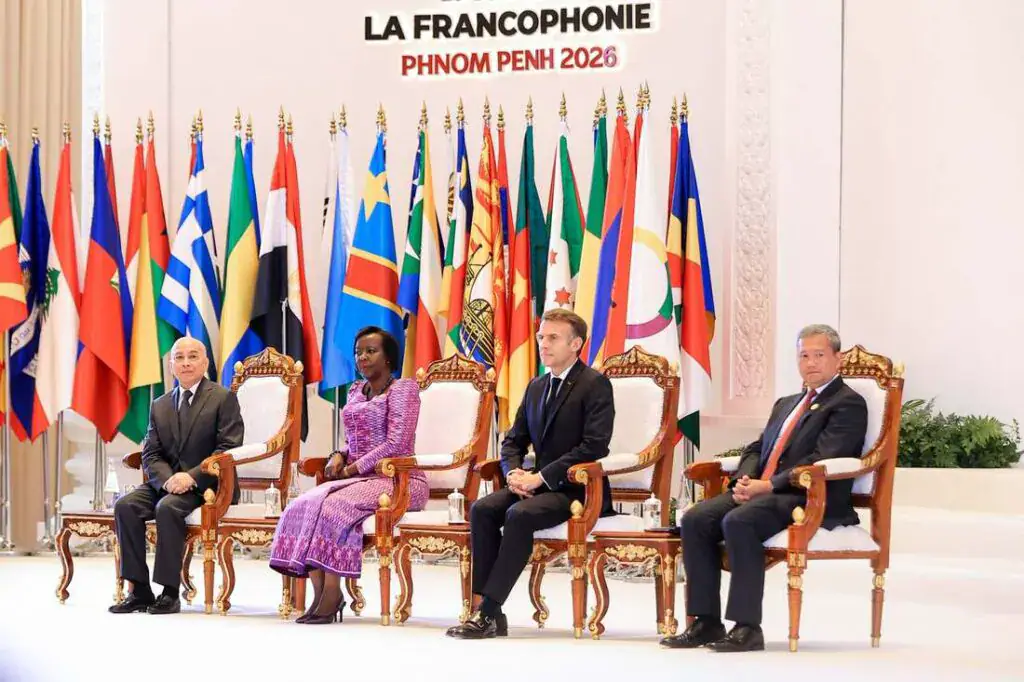
The 20th Francophonie Summit in Phnom Penh, Cambodia, has concluded with a compromise on the leadership of the Organisation internationale de la Francophonie (OIF). The summit had been threatened by tensions between the Democratic Republic of Congo (DRC) and Rwanda, fueled by the ongoing conflict in eastern Congo. The DRC had threatened to leave the organization if Rwandan candidate Louise Mushikiwabo was re-elected for a third term.
The compromise reached at the summit grants Mushikiwabo a one-year extension, but bars her from running for re-election at the end of that term. This concession was made to the DRC, which had opposed Mushikiwabo's re-election. In return, Rwanda agreed not to support any other candidate in the next election. The agreement avoids a potentially divisive confrontation between the two countries and their respective allies.
The compromise also marks a significant development for the African continent, which has a significant presence in the OIF. With many member states and French-speaking populations, Africa stands to benefit from maintaining its influence within the organization. By avoiding a confrontation that could have led to the loss of the secretary-general position, African countries have preserved their chances of continuing to lead the OIF.
The outcome of the summit is also notable for avoiding the influence of external pressures, particularly from France. French President Emmanuel Macron had expressed a preference for Mushikiwabo's withdrawal, but this was not realized. Instead, the OIF member states have demonstrated their ability to find a solution through consensus.
The agreement reached at the summit has been met with mixed reactions. Outgoing Secretary-General Mushikiwabo may not be entirely satisfied with the outcome, while former Romanian Prime Minister Dacian Cioloș, who had also been considered for the position, may also be disappointed. However, the organization as a whole may have been saved from potential division.
The compromise also highlights the importance of African unity in maintaining the organization's leadership. With a strong presence in the OIF, African countries are well-positioned to put forward a consensus candidate for the secretary-general position in the future. This could help ensure that the organization continues to reflect the interests and priorities of its African member states.
In conclusion, the OIF summit in Phnom Penh has achieved a significant outcome by avoiding division and finding a compromise on the leadership position. The agreement preserves the organization's unity and allows African countries to maintain their influence within the OIF. As the organization looks to the future, it will be important for member states to continue working together to promote their shared interests and priorities.
Key points
- The OIF summit in Phnom Penh ended with a compromise on the secretary-general position, granting Louise Mushikiwabo a one-year extension but barring her from re-election.
Reporting sources
- OIF : le pire évité à Phnom Penh · Ledjely