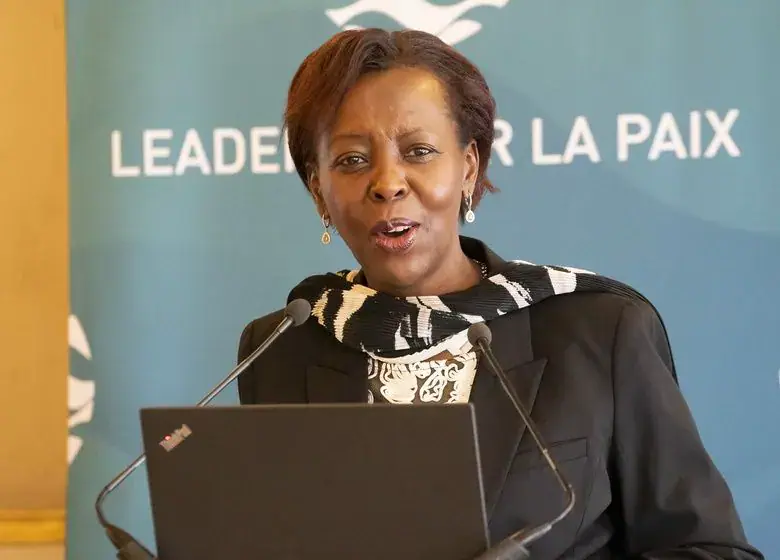
The OIF, a global organization of French-speaking countries, has delayed its secretary general election by one year. The decision was made after two days of negotiations in Phnom Penh, Cambodia, on November 14 and 15, 2026, failed to produce an agreement. The postponement comes amid diplomatic tensions between the Democratic Republic of Congo (DRC) and Rwanda. The DRC had opposed a third term for Rwandan candidate Louise Mushikiwabo, who has been in office since 2018.
The DRC had accused Rwanda of supporting rebels in the east of its territory, leading to a significant rift between the two countries. The Congolese authorities had threatened to leave the organization if Mushikiwabo's candidacy was approved. In an effort to resolve the impasse, French President Emmanuel Macron proposed that both countries withdraw their candidates to pave the way for a compromise. The DRC had agreed to withdraw its candidate, Juliana Lumumba, in favor of Romanian Dacian Cioloș, but Rwanda refused to back down.
Mushikiwabo defended her decision to maintain her candidacy, stating that she had the ambition and energy to continue serving the organization. In contrast, Cioloș expressed disappointment, describing the day as "very sad for the Francophonie." The OIF's inability to reach a consensus highlights the organization's challenges in managing internal differences. Despite adopting a procedure allowing for a simple majority vote in 2022, member states opted not to use it, instead prioritizing a political agreement.
The postponement extends Mushikiwabo's term by one year, providing time for reforms to the secretary general selection process. A new extraordinary summit will be organized, allowing existing candidates to remain in the running and new ones to emerge. While Paris and Kinshasa have welcomed the compromise, the episode reveals fractures within an organization already weakened by the decline of multilateralism and the departure of several Sahel region countries.
The crisis facing the OIF goes beyond the issue of succession, as the organization's influence relies heavily on its African members. The DRC and Rwanda's disagreement has spilled over into the OIF's leadership selection process. The organization's future will depend on its ability to navigate these internal tensions and adapt to the changing global landscape.
The OIF's membership has been affected by the departure of several countries, including those in the Sahel region. This has raised concerns about the organization's relevance and effectiveness. The postponement of the secretary general election provides an opportunity for the OIF to reassess its priorities and strengthen its relationships with member states.
The OIF's secretary general plays a crucial role in promoting the organization's goals and values. The next leader will face significant challenges in navigating the complex landscape of international relations and promoting cooperation among member states. The organization's ability to adapt to these challenges will depend on its capacity to manage internal differences and build consensus among its members.
Key points
- The OIF has postponed its secretary general election due to a lack of consensus among member states, amid diplomatic tensions between the Democratic Republic of Congo and Rwanda.
- The postponement extends the term of current secretary general Louise Mushikiwabo by one year, providing time for reforms to the selection process.
- The crisis facing the OIF highlights the organization's challenges in managing internal differences and adapting to the changing global landscape.