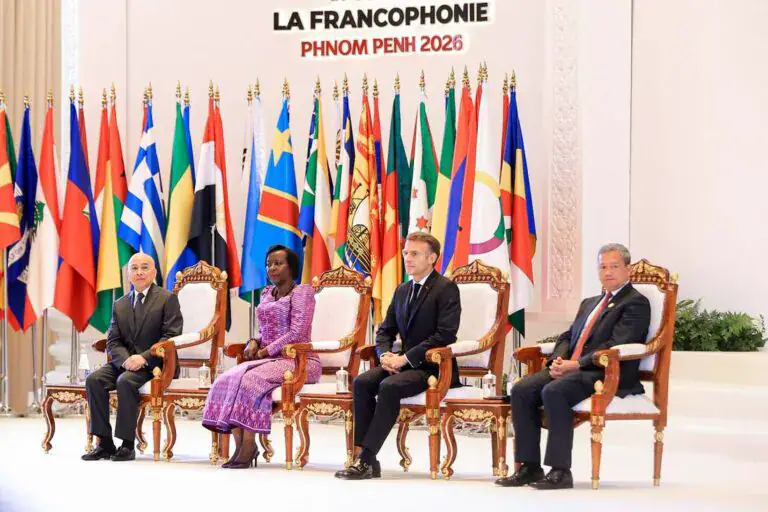
The Organisation internationale de la Francophonie (OIF) has postponed the election of its next secretary general to 2027, avoiding an immediate institutional crisis. The decision was made during the 20th Summit of Phnom Penh, held on November 15-16, 2026. The current secretary general, Louise Mushikiwabo of Rwanda, will continue in her position until November 2027. This move has been seen as a compromise to prevent a major rift within the organization.
The OIF had been facing significant challenges, including the departure of several Sahelian countries, including Mali, Burkina Faso, and Niger, from the Alliance des États du Sahel. The organization's ability to function effectively had been questioned, and the election of a new secretary general had become increasingly contentious. The Democratic Republic of Congo (RDC) had threatened to leave the OIF if Mushikiwabo was re-elected, citing her alleged support for the M23 rebellion in eastern Congo.
The OIF's decision to postpone the election has been seen as a pragmatic move to avoid a divisive vote. The organization had traditionally chosen its secretary general through a consensus-based process, but this approach had broken down in the face of intense rivalries between member states. The postponement has given the OIF a temporary reprieve, but it also highlights the deep-seated challenges facing the organization.
The OIF's problems are not limited to the election of a new secretary general. The organization is also struggling to maintain its relevance in the face of growing security crises in Africa. The Sahelian region, in particular, has been plagued by instability, and the OIF's inability to respond effectively to these challenges has raised questions about its credibility.
The Rwandan government has been accused of supporting the M23 rebellion in eastern Congo, which has created tensions with the RDC. The OIF's decision to postpone the election of a new secretary general has been seen as a way to avoid taking sides in this conflict. However, this approach may not be sustainable in the long term, and the OIF will need to find a way to address these underlying tensions.
The OIF's membership includes 57 million French speakers worldwide, making it a significant cultural and linguistic organization. However, its effectiveness has been undermined by internal rivalries and a lack of clear direction. The postponement of the secretary general election may provide a temporary solution, but the OIF will need to address its deeper problems if it is to remain a relevant and credible player on the international stage.
The OIF will need to make a decision on the next secretary general by November 2027. This will require a more effective and inclusive decision-making process than in the past. The organization will also need to demonstrate its ability to respond to the security challenges facing its member states, particularly in the Sahelian region. The outcome of the OIF's efforts will be closely watched by its member states and the wider international community.
Key points
- The OIF has postponed the election of its next secretary general until 2027 due to geopolitical fractures within the organization.