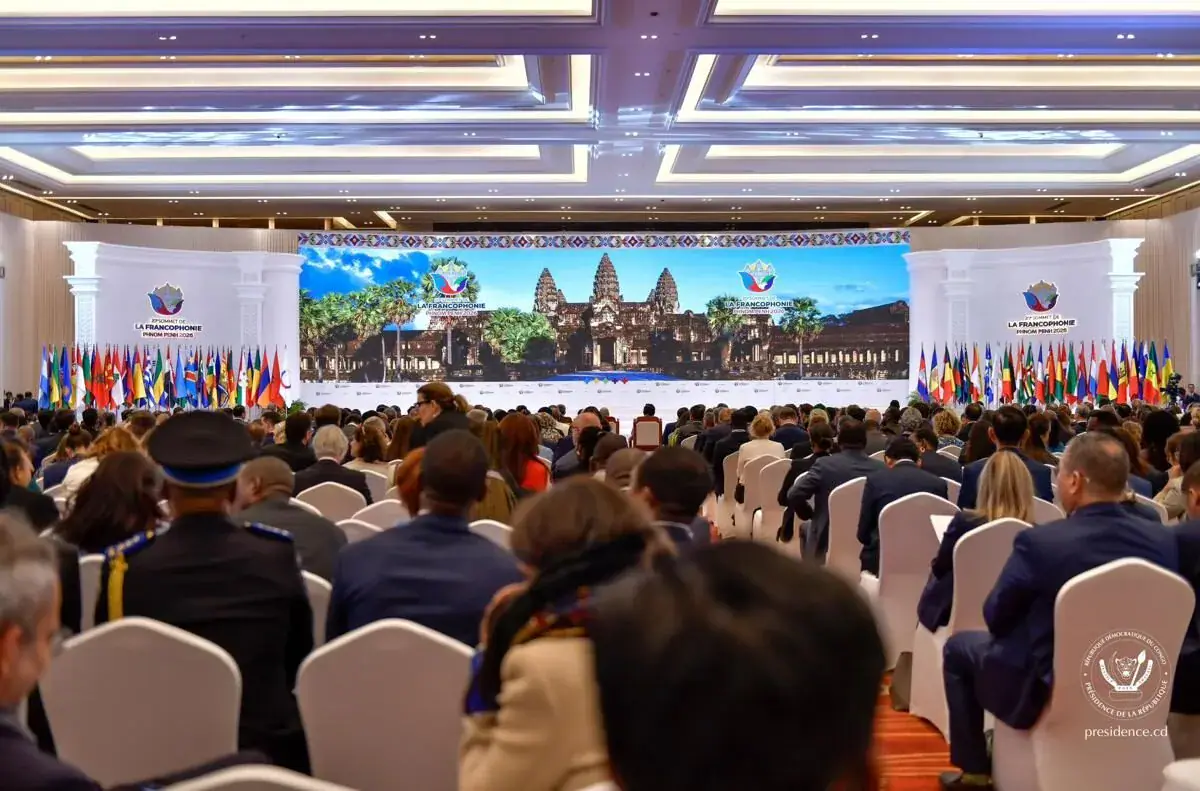
The Organisation Internationale de la Francophonie (OIF) has postponed the election of its new secretary general to 2027, following a meeting of member states on November 16. The decision was announced by Congolese Foreign Minister Thérèse Kayikwamba Wagner on her social media account. The move aims to allow for more time to find a consensus candidate and to reform the process of selecting the next secretary general. The current secretary general, Louise Mushikiwabo, will continue in her position until the new election.
The decision to postpone the election was made amid divisions over various candidatures. The OIF had been struggling to reach a consensus on a new secretary general, with several countries vying for the position. The Congolese government had previously announced its intention to withdraw its candidate, Juliana Amato Lumumba, in favor of a collective approach supporting Romanian candidate Dacian Cioloș. This move was seen as an effort to find a candidate who could unite the member states.
The OIF has agreed to a 12-month transitional period, during which time the current secretary general's mandate will not be extended. The existing candidatures will remain in place, and new candidates will be allowed to emerge. The organisation aims to use this period to reform the process of selecting the secretary general and to find a candidate who can command a consensus among member states.
The Congolese government has welcomed the decision, with Foreign Minister Thérèse Kayikwamba Wagner describing it as a "wise compromise" that will help to preserve the unity of the Francophonie. The government had been keen to find a solution that would avoid confrontation and promote dialogue among member states. The decision reflects the organisation's commitment to finding a candidate who can unite its member states.
The postponement of the election has given the OIF a breathing space to review its rules and procedures for selecting the secretary general. The organisation has acknowledged that the current process needs to be reformed to ensure that it is more inclusive and transparent. The transitional period will allow the OIF to engage in a thorough review of its selection process and to make necessary changes.
The decision to postpone the election has been seen as a positive development by some, as it allows for more time to find a consensus candidate. However, others have expressed concerns that the delay could lead to further divisions and uncertainty. The OIF has assured its member states that it will continue to work towards finding a solution that promotes unity and cooperation.
The OIF's decision to postpone the election of its new secretary general reflects the complexities and challenges of finding a consensus candidate. The organisation will continue to work towards finding a solution that promotes unity and cooperation among its member states. The postponement of the election has given the OIF a chance to review its selection process and to make necessary changes to ensure that it is more inclusive and transparent.
Key points
- The OIF has postponed the election of its new secretary general to 2027 amid divisions over candidatures.
- The organisation has agreed to a 12-month transitional period, during which time the current secretary general's mandate will not be extended.
- The postponement of the election has given the OIF a chance to review its selection process and to make necessary changes to ensure that it is more inclusive and transparent.