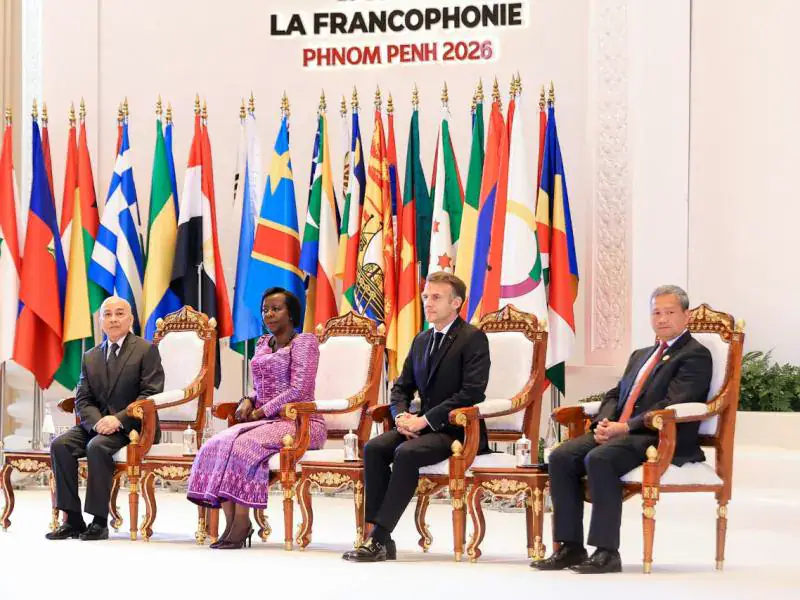
The 20th Summit of the Organisation internationale de la Francophonie (OIF) in Phnom Penh, Cambodia, was expected to designate a new Secretary-General for the next four years. However, due to persistent tensions between the Democratic Republic of Congo (DRC) and Rwanda, the decision was postponed. The summit, which began on November 14, 2026, had four candidates vying for the position: incumbent Rwandan Louise Mushikiwabo, Juliana Lumumba from the DRC, Dr. Coumba Ba from Mauritania, and Dacian Cioloș from Romania.
The DRC had expressed opposition to Mushikiwabo's third term and initially planned to withdraw Juliana Lumumba's candidacy to promote a consensus around a single candidate. The DRC seemed to be aligning with Romanian candidate Dacian Cioloș. However, Burundi, an ally of the DRC, also joined in opposing Mushikiwabo's candidacy, citing concerns that her reappointment could lead to the collapse of the OIF.
Burundian Foreign Minister Édouard Bizimana stated that imposing candidates in an international organization disregards its members and serves sectarian interests. He emphasized that a third term for Mushikiwabo would undermine the OIF. In response, Rwandan Foreign Minister Olivier Nduhungirehe expressed disappointment with Burundi's stance, recalling that the African Union's Executive Council, chaired by Bizimana, had approved Mushikiwabo's candidacy.
Nduhungirehe accused Burundi of contradicting the African Union's decisions and called for an end to what he termed "institutionalized incompetence" within the AU. Meanwhile, DRC government spokesperson Patrick Muyaya rejected Rwanda's accusations of French interference in the selection process. Muyaya argued that France was simply trying to uphold tradition within the OIF.
Muyaya emphasized that France's role was to facilitate consensus, not to dictate the choice of Secretary-General. He dismissed suggestions that Paris was trying to impose its will, stating that the goal was to ensure the legitimacy of the next OIF leader. The summit's discussions highlighted the intense diplomatic competition and tensions between the DRC and Rwanda.
French President Emmanuel Macron acknowledged the existence of internal divisions during his opening speech, calling for dialogue and consensus. The OIF summit ultimately announced a one-year transition period, during which Mushikiwabo will remain Secretary-General. The Rwandan government will not present a candidate in the next selection process, which is set for 2027.
The delayed leadership succession and tensions between the DRC and Rwanda reflect deeper regional dynamics and challenges within the OIF. The organization's ability to navigate these complexities and find a consensus-driven solution will be crucial in maintaining its legitimacy and effectiveness.
Key points
- The OIF summit postponed the leadership succession due to tensions between the DRC and Rwanda over Louise Mushikiwabo's candidacy for a third term.
- Burundi joined the DRC in opposing Mushikiwabo's reappointment, citing concerns about the OIF's stability.
- A one-year transition period was announced, during which Mushikiwabo will remain Secretary-General, and Rwanda will not present a candidate in the next selection process.