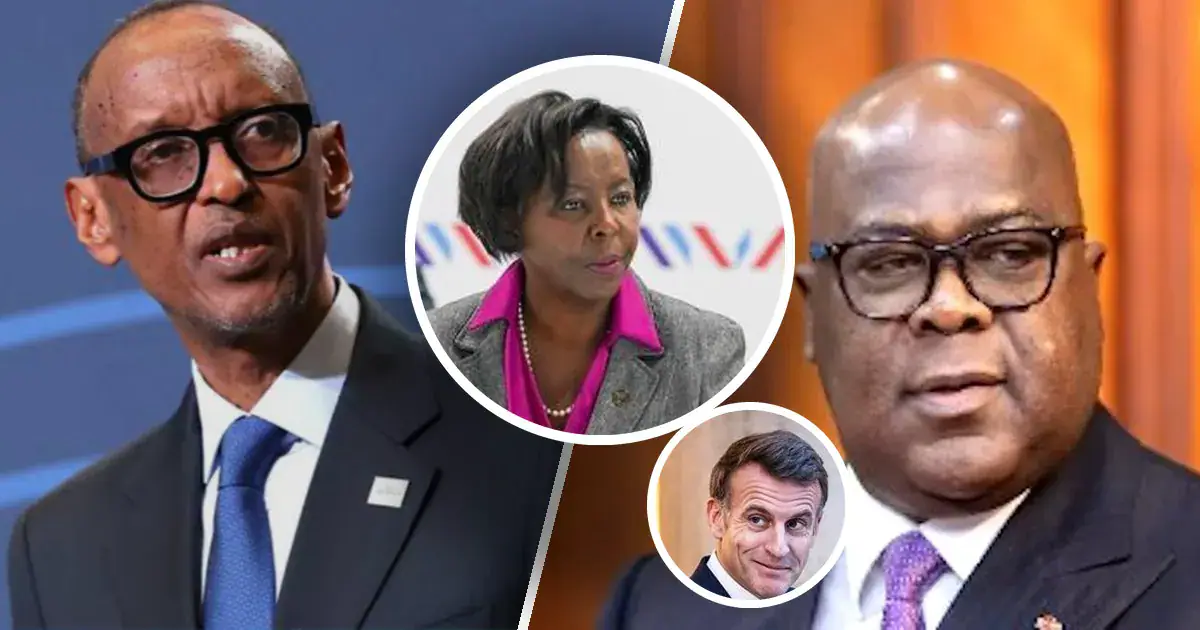
The 20th Summit of the Organisation internationale de la Francophonie (OIF) is set to take place in Phnom Penh, Cambodia, with a crucial decision on the table: choosing a new secretary general to lead the institution for the next four years. The decision is complicated by tensions between Rwanda and the Democratic Republic of Congo, with the latter threatening to leave the organization if Rwandan candidate Louise Mushikiwabo is re-elected for a third term. Mushikiwabo's candidacy has been supported by French President Emmanuel Macron, who had sought to improve relations with Rwanda when he first took office in 2018.
The dispute between Rwanda and DR Congo centers on the ongoing conflict in eastern DR Congo, which Kinshasa blames on Rwanda's alleged support for rebel groups. The situation puts Macron and other OIF leaders in a difficult position, as they must balance the organization's principles with the interests of its member states. DR Congo is a significant player in the OIF, with around 57 million French speakers, and its departure would likely be detrimental to the organization. Macron's initial support for Mushikiwabo was seen as a move to improve relations with Rwanda, but it now puts him at odds with DR Congo.
The OIF has four candidates vying for the secretary general position, including Mushikiwabo, but the real choice is between her and the organization's future. If Mushikiwabo is not re-elected, the alternative candidates, including former Romanian Prime Minister Dacian Cioloș, may not have the same level of support. Cioloș is reportedly gaining traction as a compromise candidate, but this would mean that Africa would miss out on an opportunity to lead the organization. The other candidates, Juliana Lumumba from DR Congo and Coumba Bâ from Mauritania, are considered less likely to succeed.
The situation is further complicated by the fact that DR Congo has made its threat to leave the OIF public, which could undermine the organization's credibility if it gives in to the country's demands. On the other hand, ignoring DR Congo's concerns could lead to its departure, which would be a significant blow to the OIF. The organization's leaders must navigate this delicate situation carefully to avoid damaging its reputation.
Emmanuel Macron's initial support for Mushikiwabo was seen as a strategic move to improve relations with Rwanda, but it has now put him at odds with DR Congo. Macron's approach to Africa has been characterized as "décomplexée" and nuanced, but this situation may test his ability to balance competing interests. The OIF's credibility is at stake, and its leaders must find a solution that works for all member states.
The outcome of the summit will have significant implications for the OIF and its member states. If a consensus is reached around Cioloș or another candidate, it could mark a new era for the organization. However, if the situation is not resolved, it could lead to DR Congo's departure and undermine the OIF's influence in Africa. The stakes are high, and the OIF's leaders must work carefully to find a solution.
Ultimately, the decision on the next OIF secretary general will depend on the organization's priorities and its commitment to its principles. The OIF must balance its desire to maintain its credibility with the interests of its member states, including DR Congo and Rwanda. The outcome will have far-reaching implications for the organization and its role in promoting French language and culture around the world.
Key points
- The OIF summit must decide on a new secretary general amid tensions between Rwanda and DR Congo.
- DR Congo has threatened to leave the OIF if Rwandan candidate Louise Mushikiwabo is re-elected for a third term.
- The outcome will have significant implications for the OIF's credibility and its influence in Africa.