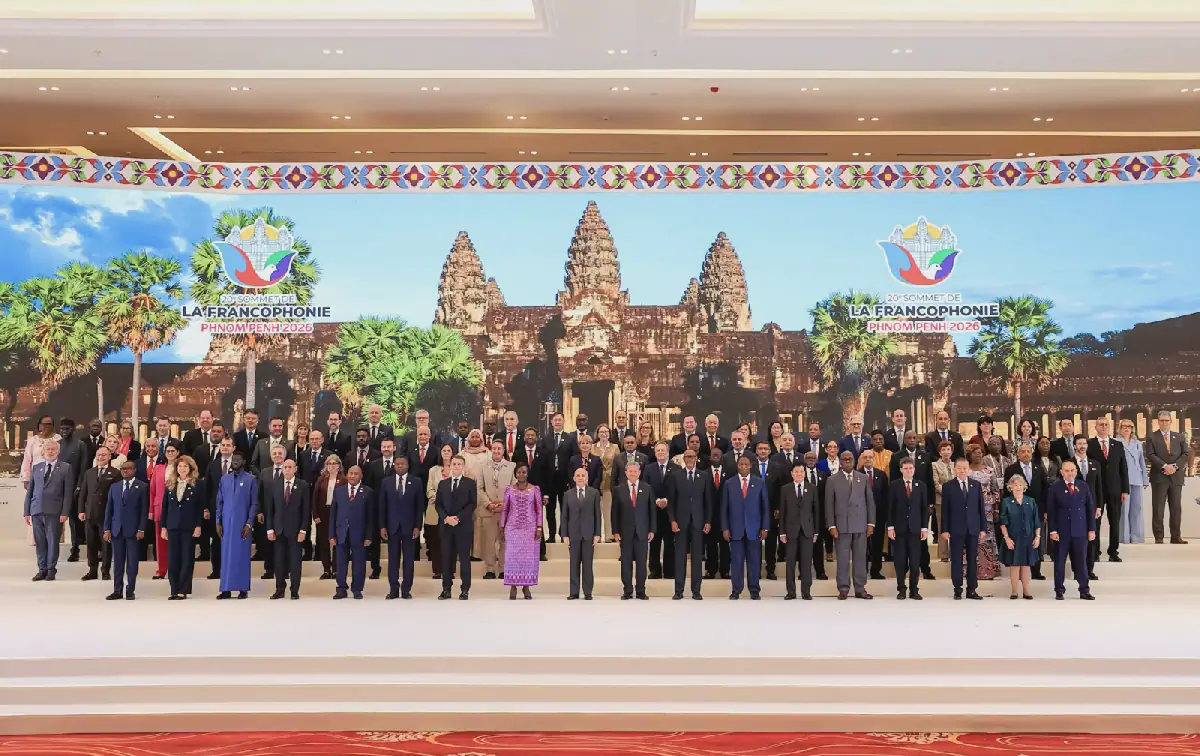
The Organization Internationale de la Francophonie (OIF) recently concluded its 20th Summit of Heads of State and Government in Phnom Penh, Cambodia, from November 15-16, 2026. The summit, themed "Réinvestir dans la paix pour une prospérité partagée et une stabilité durable" (Reinvesting in peace for shared prosperity and sustainable stability), brought together leaders from OIF member countries to discuss pressing global issues. The summit resulted in the adoption of three key documents: the Phnom Penh Declaration, a resolution on countries facing conflict and peacebuilding efforts, and a statement on protecting cultural heritage.
The Phnom Penh Declaration reaffirmed the importance of peace and security, emphasizing the need for sustained efforts to maintain stability. The declaration also highlighted the role of good governance, conflict resolution through dialogue, and assistance to countries in transition. Furthermore, it stressed the significance of youth and women's involvement in peacebuilding and the protection of reliable information in the face of disinformation and media manipulation.
The second resolution focused on security and conflict issues in various countries, including Armenia, Sudan, Haiti, the Sahel region, and Eastern Democratic Republic of Congo. The OIF expressed concerns over border disputes, such as the one between Cambodia and Thailand, and the security situation in the Eastern DRC. In response to the DRC's request for support, the OIF Secretary-General, Louise Mushikiwabo, was commended for her efforts to investigate and assess the situation.
The third document, "La Déclaration de Phnom Penh," centered on protecting cultural heritage, combating illicit trafficking of cultural goods, and facilitating their return to countries of origin. This declaration underscored the importance of preserving cultural heritage and promoting cooperation among OIF member countries to address these challenges.
In a significant development, Louise Mushikiwabo's term as OIF Secretary-General was extended by 12 months, following an agreement among member countries. This decision allows for further consultations and preparations for the next Secretary-General election, scheduled for 2027. Mushikiwabo welcomed the decision, emphasizing her commitment to OIF's goals and her efforts to enhance the organization's effectiveness and transparency.
During the closing ceremony, Mushikiwabo reflected on the reforms implemented within OIF since 2019, aimed at improving its performance, transparency, and accountability. She expressed her appreciation for the support of member countries and reaffirmed her dedication to serving the organization. Mushikiwabo also highlighted the importance of addressing challenges related to artificial intelligence and encouraged member countries to work together to harness its potential.
The next OIF Summit is scheduled to take place in Ottawa, Canada, preceded by a youth forum in New Brunswick. Canadian Prime Minister Mark Carney has announced that the summit will focus on enhancing the visibility and accessibility of French-speaking countries in the digital age. Currently, OIF comprises 92 member countries and governments, including 53 full members, 5 associate members, and 34 observers.
Key points
- The OIF summit emphasized the importance of peace, security, and cultural heritage, with key decisions on leadership and member relations.
- Louise Mushikiwabo's term as OIF Secretary-General was extended by 12 months to facilitate preparations for the next election.
- The next OIF Summit will take place in Ottawa, Canada, focusing on the visibility and accessibility of French-speaking countries in the digital age.