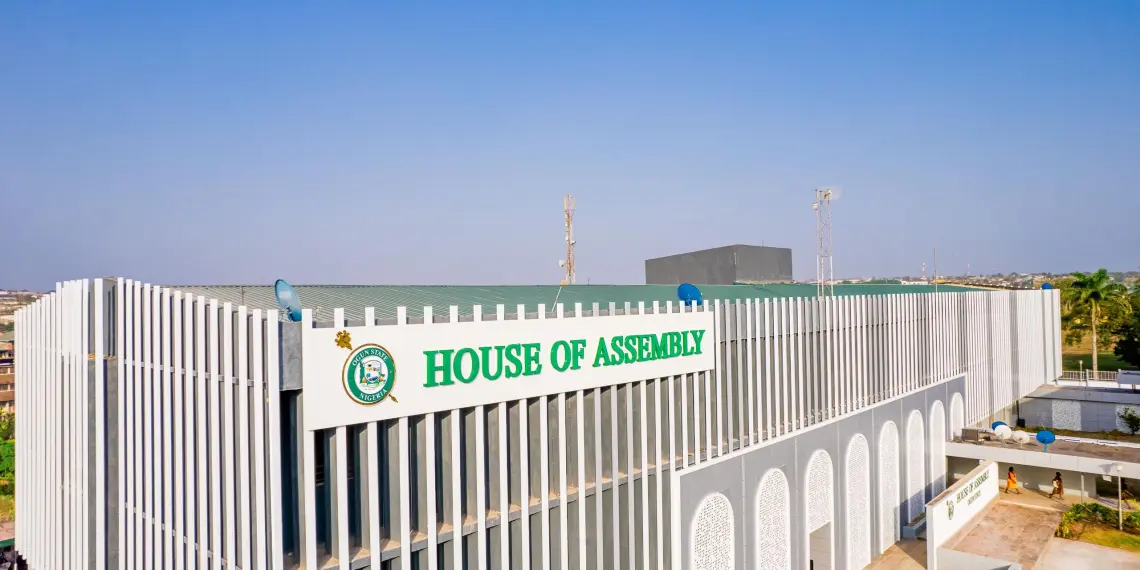
The Ogun State House of Assembly has begun consideration of a bill aimed at promoting gender balance in political and public appointments in the state. The Gender Balance in Political and Public Offices Bill, 2026, was presented for first reading on August 21, 2026, by the Majority Leader of the Assembly, Hon. Yusuf Sherif Abiodun. If passed into law, the bill will require that at least 35% of appointments to political and public offices in Ogun State be occupied by persons of either gender.
The proposed legislation covers various appointments, including commissioners, special advisers, and special assistants, as well as positions on state boards, commissions, councils, and agencies. It also seeks to place an obligation on appointing authorities to provide evidence-based justification where appointments fall below the proposed 35% threshold. The bill proposes an annual reporting mechanism to monitor compliance with the gender representation requirement across ministries, departments, and agencies of the state.
The legislation was developed through research and advocacy under AdvoKC Foundation's Strengthening Women and Youth Political Power Through Promise Tracking, Policy Advocacy, and Public Participation project. The organization assessed gaps in gender representation in political and public appointments, followed by consultations and engagement with relevant stakeholders. The introduction of the bill comes amid concerns over the representation of women in Nigeria's political institutions.
Women remain under-represented in elected and appointed positions across Nigeria, with the issue of gender inclusion featuring prominently in debates on political reform. While recent legislative proposals at the national level have focused on increasing women's representation in elective positions, the Ogun bill seeks to address appointive offices, where executive authorities exercise considerable discretion in selecting officials for government positions.
Under the proposed framework, appointments to boards, commissions, councils, and government agencies would also be subject to the gender representation requirement. The bill would create a mechanism for monitoring the gender composition of public institutions and provide a basis for assessing compliance with the proposed threshold. Project Director of AdvoKC Foundation, Habib Sheidu, described the first reading as an important stage in the organization's efforts to promote gender representation and public accountability.
Sheidu said the organization had researched gender representation gaps, developed the legislative framework, and engaged stakeholders before the bill was presented to the Assembly. He emphasized the role that evidence-based advocacy and engagement could play in influencing public policy. The foundation will continue to monitor the bill as it progresses through the legislative process and engage stakeholders on its provisions.
The bill will now proceed to the second reading, where lawmakers will debate its general principles. If it scales that stage, it may be referred to the appropriate House committee for detailed consideration. The outcome of the legislative process will determine whether the proposed 35% requirement and its accompanying monitoring and reporting provisions become part of Ogun State's legal framework for political and public appointments.
Key points
- The Ogun State House of Assembly is considering a bill to institutionalize a 35% gender balance in political and public appointments.
- The proposed legislation covers appointments such as commissioners, special advisers, and positions on state boards, commissions, and agencies.
- The bill proposes an annual reporting mechanism to monitor compliance with the gender representation requirement.