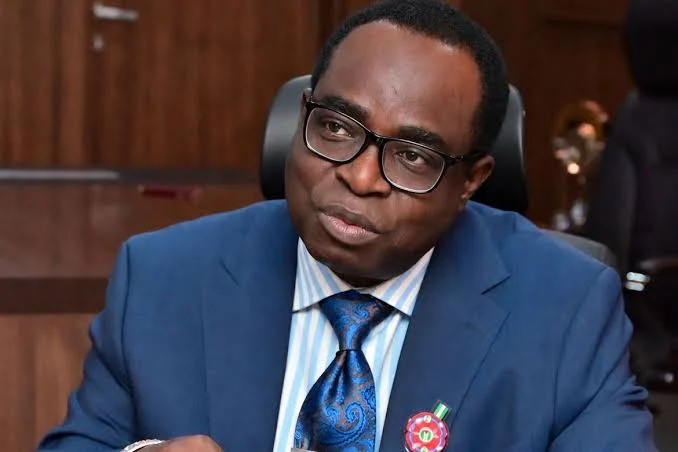
The Chairman of the Planning Committee of the 2027 APC Presidential and Governorship Campaign Committee in Ogun State, Kayode Oladele, has expressed concerns over the fuel subsidy proposal unveiled by Alhaji Atiku Abubakar, the presidential candidate of the African Democratic Congress. Oladele described the proposal as an attempt to repackage an old policy under a new name. He stated that Atiku's proposal for a "capped, budgeted production subsidy" on petrol refined in Nigeria raised fundamental questions that could not be answered merely by changing the terminology.
Atiku's proposal suggests that only petrol refined domestically, including products from modular refineries, would qualify for the proposed intervention, while imported petrol would be excluded. He also promised that the costs and payments would be published and independently audited. However, Oladele argued that the important question was not what Atiku chose to call the programme, but who would ultimately pay for it and how much it would cost the Nigerian taxpayer.
Oladele, a former federal lawmaker, noted that a subsidy remains a subsidy, regardless of the name it is given. He emphasized that the critical questions remain unanswered, including the subsidy rate, quantity of petrol that would qualify, annual expenditure ceiling, funding source, and mechanism to guarantee that benefits reach ordinary Nigerians at filling stations. The APC Presidential Campaign Council had also raised similar questions, asking Atiku to disclose the proposed subsidy rate, spending ceiling, eligible volumes, funding source, and safeguards against diversion and fraudulent claims.
Oladele highlighted the difference between President Bola Ahmed Tinubu's approach and Atiku's proposal, stating that the President is attempting to restructure the energy and transportation economy rather than return government to permanently underwriting fuel consumption. President Tinubu took the difficult decision to confront a subsidy system that had become enormously burdensome to the public treasury. Oladele noted that such structural reforms inevitably come with adjustment pressures.
Oladele also faulted Atiku's criticism of the Federal Government's transportation initiatives, saying the opposition candidate was ignoring the administration's attempt to diversify Nigeria's transportation energy base through Compressed Natural Gas and other alternatives to petrol. He stated that Atiku wants Nigerians to believe that the only meaningful way of reducing transportation costs is to return the government to subsidising fuel.
President Tinubu is pursuing a different structural approach, according to Oladele, which involves broadening the country's transportation energy options, expanding CNG infrastructure, and progressively reducing the dependence of commercial transportation on petrol. Oladele said Atiku was entitled to propose a different economic programme, but Nigerians were equally entitled to demand its full arithmetic.
Oladele concluded that simply repackaging subsidy and presenting it as a new economic philosophy does not answer the difficult questions Nigeria faces. He emphasized that President Tinubu chose reform over postponement, while Atiku is proposing that government should once again intervene in the price of petrol through subsidy. Nigerians deserve to examine the consequences of those fundamentally different approaches carefully.
Key points
- - Ogun APC committee chair Kayode Oladele criticizes Atiku's fuel subsidy proposal. - Atiku's proposal suggests a "capped, budgeted production subsidy" on petrol refined in Nigeria. - Oladele argues that the proposal is an old policy repackaged under a new name.