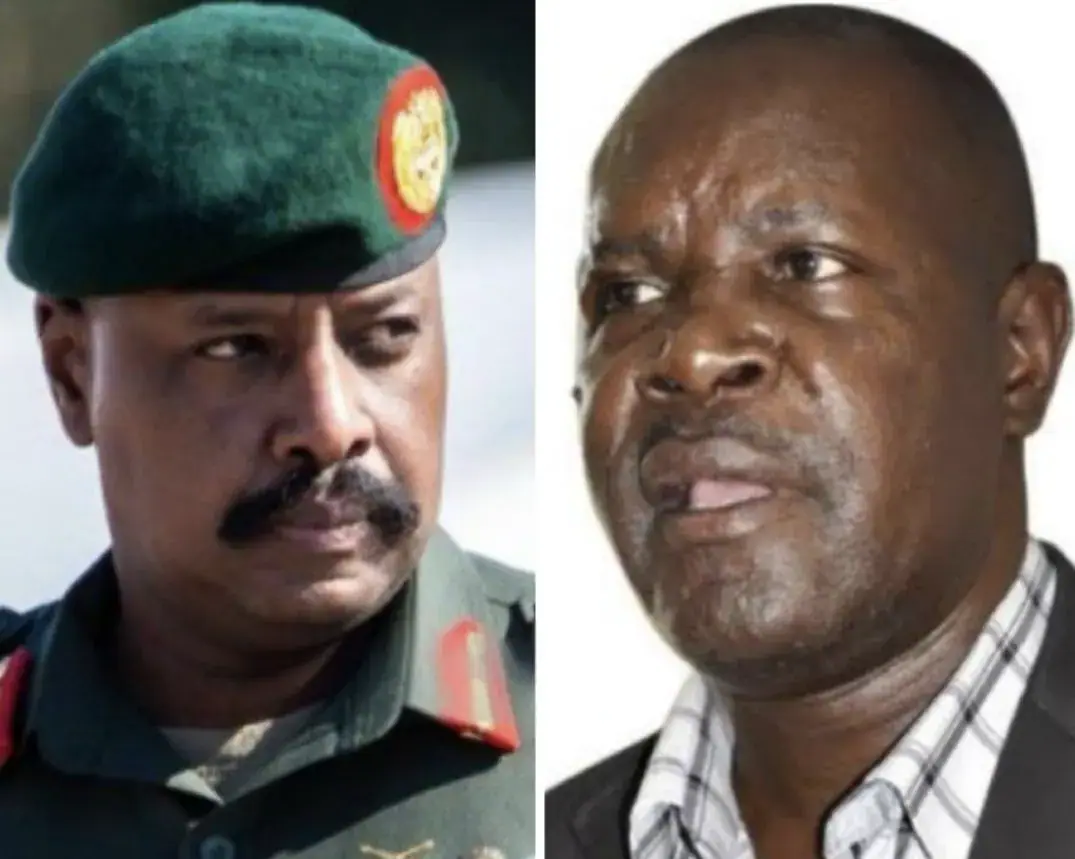
Veteran political commentator and Member of Parliament Ofwono Opondo has maintained his refusal to apologize to Chief of Defence Forces (CDF) Gen. Muhoozi Kainerugaba, insisting that the military commander has no legal authority to compel him to issue an apology. Opondo made these remarks during a live broadcast on NBS Frontline, where he reiterated his position and dismissed the General's demand for a public apology on his knees as legally unfounded.
The confrontation between Opondo and Muhoozi dates back to November 5, when Gen. Kainerugaba accused Opondo of insulting him in social media exchanges and subsequently demanded a public apology within one week. Opondo immediately rejected the ultimatum, making it clear that he would not be intimidated into submission. He previously declared that the seventh day of Muhoozi's deadline would find him peacefully at his ancestral home in Mulanda-Ayago, Tororo District.
Opondo's refusal to apologize has sparked debate over the limits of military authority, freedom of expression, and whether a serving military commander can use his position to compel a civilian political figure to make a public apology. The standoff has attracted attention because it involves two prominent figures with considerable influence in Uganda's political and security circles. Muhoozi, as CDF, heads the country's military establishment, while Opondo is a veteran political commentator and public figure known for his outspoken views on national affairs.
With the deadline now expired, Opondo appears determined to maintain his position rather than offer the apology demanded by the General. His latest remarks also raise broader questions about the relationship between military leadership, civilian political participation, and constitutional freedoms in Uganda. Opondo's position is that no military ultimatum can override the law, and he will not apologize on Muhoozi's terms.
The CDF's demand and Opondo's refusal have significant implications for Uganda's democratic space. The issue has sparked discussions on the limits of military power and the protection of individual freedoms. As a prominent public figure, Opondo's stance has been seen as a test of the country's commitment to upholding the rule of law and protecting freedom of expression.
It remains to be seen whether Gen. Muhoozi will take further action following the expiration of his seven-day deadline. The situation is being closely watched by Ugandans and international observers, who are keen to see how the country's leaders will navigate this complex issue. Opondo's refusal to back down has been seen as a bold move, and his stance has garnered support from some quarters.
The confrontation between Opondo and Muhoozi has highlighted the need for clear guidelines on the relationship between military leadership and civilian political participation in Uganda. The incident has also sparked calls for greater transparency and accountability in the country's governance structures. As the situation continues to unfold, one thing is clear: Ofwono Opondo will not apologize to Gen. Muhoozi Kainerugaba on the terms set by the military commander.
Key points
- Ofwono Opondo refuses to apologize to Gen. Muhoozi Kainerugaba, citing lack of legal authority.
- The confrontation has sparked debate over military authority, freedom of expression, and constitutional freedoms in Uganda.
- Opondo's stance has significant implications for Uganda's democratic space and the protection of individual freedoms.