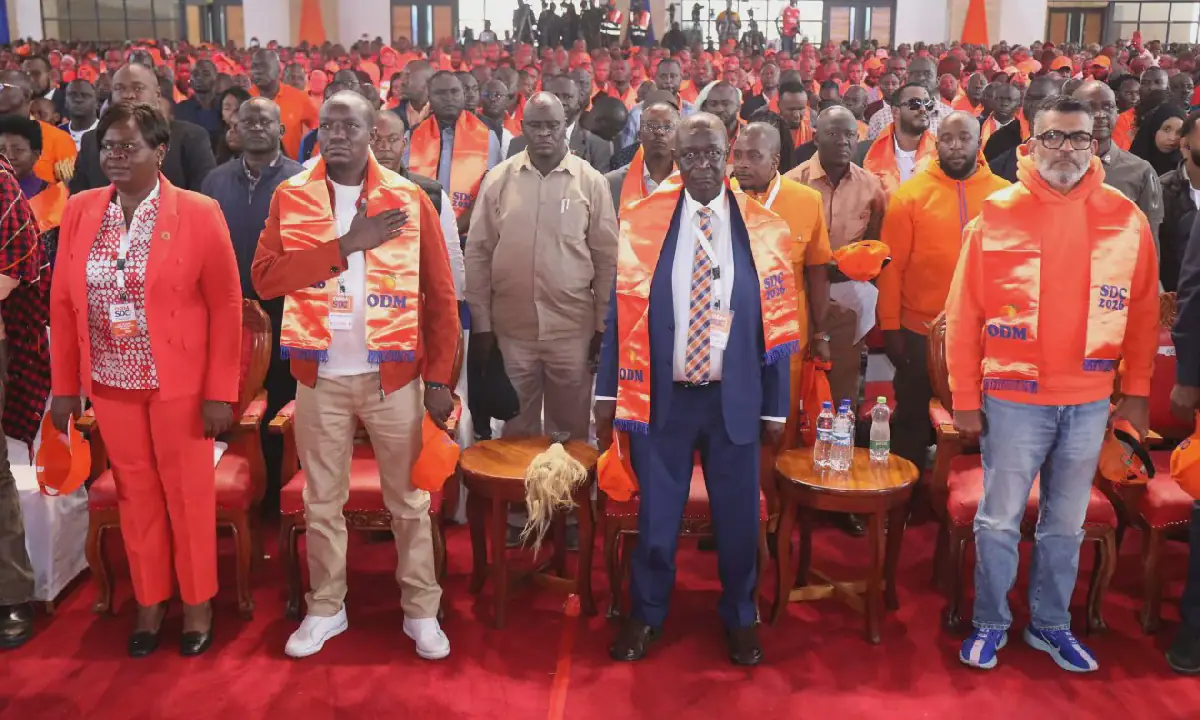
The Orange Democratic Movement (ODM) is entering a critical phase in its political calculations ahead of the 2027 general elections, seeking to share power equally with the ruling United Democratic Alliance (UDA) in a proposed coalition to support President William Ruto. However, with ODM leader Oburu Oginga emphasizing that the party deserves half of the power in any agreement with UDA, internal divisions and disagreements over cooperation with Ruto threaten to undermine his position in the negotiations.
ODM wants to be an equal partner with UDA, rather than a junior partner in a coalition dominated by the president's party. Oburu publicly stated this position in June 2026, saying any pre-election agreement between ODM and UDA must be based on a 50-50 power sharing principle. "When we form a coalition agreement with UDA, it will be based on a 50-50 share of power, which will make us stronger. We will even discuss the presidency; we will not leave any seat without negotiations," Oburu said.
The ODM's push for equal power sharing with UDA comes as the party seeks to capitalize on its existing structures and networks across the country. The party's chairman, Gladys Wanga, and other leaders have emphasized that any agreement with UDA must be based on a 50-50 power sharing principle, including the allocation of cabinet positions, parliamentary leadership, and other key government positions.
The death of Raila Odinga on October 15, 2025, has created a leadership vacuum within ODM, with Oburu now tasked with leading the party through this transition period. While ODM still has elected leaders, political networks, and a national identity built over the years, the party's ability to maintain unity and demonstrate its strength will be crucial in negotiations with UDA.
The ODM and UDA have taken steps towards a coalition, with Ruto and Oburu announcing teams to work on a power sharing framework and a joint manifesto for the 2027 elections. However, the two parties have different interpretations of what a 50-50 power sharing arrangement would entail, with ODM seeking equal influence in decision-making and UDA reportedly resistant to some of its demands.
Analysts say the ODM's push for equal power sharing is a negotiating position, but it remains to be seen whether UDA will agree to it. "The challenge for ODM is not just to get a share of government positions, but to ensure that any agreement benefits the party and its supporters," says political analyst Jimmy Opiyo.
The outcome of the negotiations between ODM and UDA will have significant implications for the 2027 elections and the future of Kenyan politics. While a coalition between the two parties could provide ODM with a stronger voice in government, it also risks exacerbating internal divisions and undermining the party's influence if the terms of the agreement are not favorable.
Key points
- ODM is seeking a 50-50 power sharing arrangement with UDA in a proposed coalition ahead of the 2027 general elections.