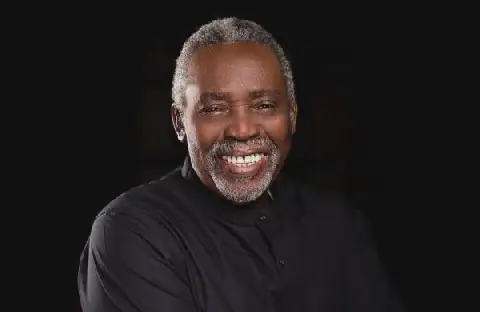
Professor Chidi Odinkalu, a renowned lawyer and professor, has expressed concerns over President Bola Tinubu's extended stay abroad, warning that Nigeria cannot be governed indefinitely from Europe. Odinkalu, the former Chairman of the National Human Rights Commission (NHRC), made these comments amid controversy surrounding Tinubu's prolonged absence and that of Vice President Kashim Shettima, who is representing Nigeria at the 81st United Nations General Assembly in New York.
Odinkalu argued that the simultaneous absence of Tinubu and Shettima is an unprecedented departure from the convention followed by previous administrations, where one of the two principal executive officers remained in Nigeria to ensure continuity of government. He accused the administration of creating a pattern in which Nigeria's two principal executive officers are simultaneously outside the country, raising fundamental questions about constitutional governance and continuity of executive authority.
The former NHRC chairman cited previous administrations under former Presidents Olusegun Obasanjo, Umaru Musa Yar'Adua, Goodluck Jonathan, and Muhammadu Buhari, where the Vice President would remain in Nigeria when the President travelled abroad. Odinkalu described this practice as a convention of government that ensured an identifiable senior executive authority was physically available in Nigeria.
Odinkalu rejected the possibility of the Secretary to the Government of the Federation, George Akume, assuming presidential functions simply because both Tinubu and Shettima are abroad. He argued that such an arrangement does not exist under Section 145 of the Constitution, which addresses presidential absence. The constitutional dispute centres on Section 145 of the 1999 Constitution, requiring a President to transmit a written declaration to the President of the Senate and Speaker of the House of Representatives when proceeding on vacation or unable to discharge office functions.
Odinkalu drew a comparison with Cameroon, stating that Nigeria should not be governed like Cameroon, where President Paul Biya has been in office for over 40 years. He described Tinubu's prolonged absence as "japa," a Nigerian expression for leaving the country in search of better opportunities. Odinkalu also described Nigeria, in the circumstances created by the simultaneous absence of Tinubu and Shettima, as an "ungoverned territory."
The Presidency has insisted that Tinubu has remained in touch with officials and continued directing government affairs from abroad, while Shettima represents Nigeria at the UN General Assembly. However, Odinkalu argued that the ability of a President to communicate with government officials from abroad does not settle questions surrounding the constitutional exercise of presidential authority.
Key to the controversy is the interpretation of Section 145 of the 1999 Constitution and the convention of having one of the principal executive officers physically present in Nigeria. The situation has sparked debate about the constitutional implications of Tinubu's prolonged absence and the need for clarity on the exercise of presidential authority.
Key points
- The controversy centres on the interpretation of Section 145 of the 1999 Constitution.
- Previous administrations maintained a convention of having one principal executive officer in Nigeria.
- Odinkalu warns that Nigeria cannot be governed indefinitely from abroad.