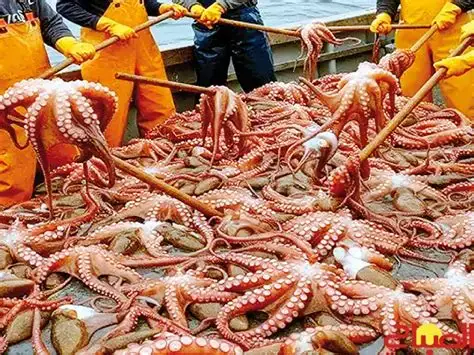
The octopus fishing season in Tunisia resumed on November 16, 2026, after a one-month extension to ensure sustainable fishing practices. The extension was based on scientific research by the National Institute of Marine Sciences and Technology, which found that most samples studied had not yet reached the minimum commercial weight of 1 kilogram. This measure aims to preserve the marine stock and ensure the long-term sustainability of octopus fishing in Tunisian waters.
The Tunisian Association for Participatory Sciences, "tunsea," has called for adherence to a set of recommendations to ensure sustainable octopus fishing. These recommendations include respecting the legal weight limit and not catching octopuses weighing less than 1 kilogram. Fishermen are also advised to avoid catching young octopuses and return them to the sea if caught accidentally, handling them carefully to avoid damage.
The recommendations also emphasize the importance of using authorized fishing gear and avoiding random and destructive fishing methods that harm marine habitats. Additionally, fishermen are urged to protect breeding and hiding places, not to destroy natural shelters, and not to leave abandoned nets on the sea floor. The goal is to promote responsible fishing practices and prevent overfishing.
The decision to extend the fishing ban was made by the Minister of Agriculture, Water Resources, and Maritime Fishing on October 14, 2026. The extension was recommended by the Advisory Committee for the Organization of Maritime Fishing, which met on October 13, 2026. The committee suggested continuing the fishing ban and extending it by one month to allow for further growth of the octopus population.
The Tunisian government aims to balance fishing activities with conservation efforts to maintain a healthy marine ecosystem. The octopus fishing season is an important economic activity for many Tunisian fishermen, but it must be managed sustainably to ensure its long-term viability. By working together, the government, fishermen, and conservation organizations can promote responsible fishing practices and protect Tunisia's marine resources.
The resumption of the octopus fishing season is a significant event for the Tunisian fishing industry. Fishermen are expected to adhere to the regulations and recommendations set by the authorities and conservation organizations to ensure the sustainability of the fishery. The Tunisian government will continue to monitor the fishery and make adjustments as needed to maintain a healthy and sustainable octopus population.
The cooperation between the government, fishermen, and conservation organizations is crucial for the success of sustainable fishing practices in Tunisia. By working together, they can ensure the long-term sustainability of the country's marine resources and promote responsible fishing practices that benefit both the environment and the economy.
Key points
- The Tunisian government extended the octopus fishing ban by one month to allow for sustainable fishing practices and protect the marine stock.
Reporting sources
- الاثنين 16 نوفمبر 2026 : انطلاق موسم صيد الأخطبوط في تونس · Radio Jeunes