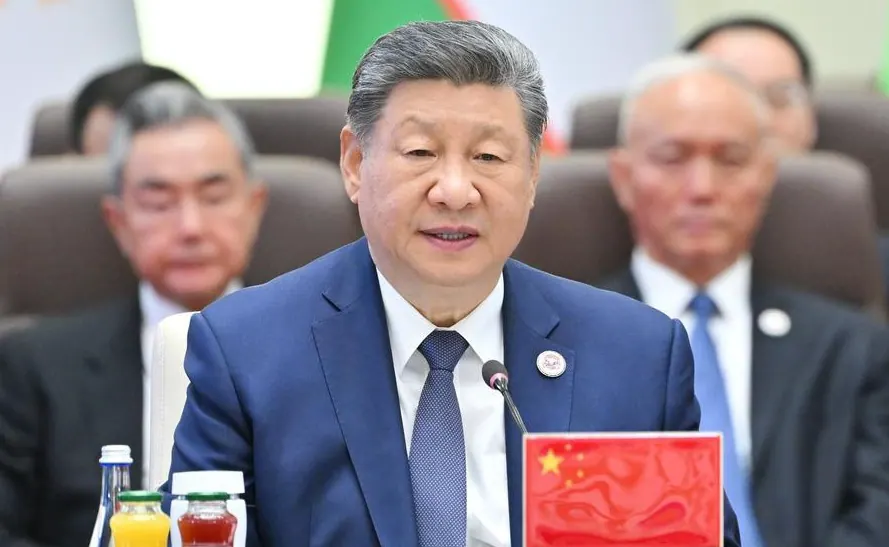
The Shanghai Cooperation Organization (OCS) recently celebrated its 25th anniversary in Bishkek, marking a significant milestone in its evolution from a regional security-focused group to a comprehensive cooperation organization covering economy, infrastructure, energy, trade, and more. This development has sparked reflection in Africa on how to achieve more concrete regional integration, greater economic autonomy, and a stronger collective voice in global governance. The OCS's growth comes amid rising geopolitical tensions, intensifying commercial rivalries, and questions about the future of multilateralism.
Chinese President Xi Jinping has called for promoting a multipolar world order, emphasizing the need for a more just and equitable global governance system. The OCS's experience offers valuable lessons for Africa, particularly in transforming geographic proximity, common interests, and political agreements into sustainable mechanisms for growth, security, and prosperity. Xi Jinping's concept of the "Shanghai Spirit" – based on mutual trust, mutual benefit, equality, and respect for diversity – resonates with the ambitions of African regional organizations, such as the African Union and the African Continental Free Trade Area (AfCFTA).
The African Union, regional economic communities, and AfCFTA aim to integrate economies and strengthen the continent's bargaining power. However, the key to success lies in translating these ambitions into measurable results. This requires investing in infrastructure, promoting trade, and facilitating the free flow of people, capital, and goods. The OCS's experience shows that integration cannot be limited to summits, declarations, and agreements; it must be accompanied by concrete actions and investments.
Xi Jinping highlights the OCS's achievements, including its expansion into a large, populous organization with immense development potential. The organization has made significant progress in political, security, economic, and cultural cooperation. For Africa, the challenge is similar: to transition from a collection of national markets to a genuine integrated economic space. The continent has vast natural resources, agricultural land, energy, and a large, young population, but these assets must be better connected and leveraged.
Infrastructure development is crucial to unlocking Africa's potential. This includes investing in roads, railways, ports, electricity networks, telecommunications, and digital infrastructure. The AfCFTA can help reduce trade barriers, but its effectiveness depends on states' ability to invest in infrastructure and harmonize economic policies. The OCS's experience with the Belt and Road Initiative offers insights for Africa's own economic corridors, which must connect production zones to markets, ports, and industrial centers.
Africa's economic transformation requires a shift from extractive industries to more value-added activities. For decades, the continent has exported raw materials, only to re-import processed products. This limits job creation and local value addition. The OCS's emphasis on cooperation in trade, investment, and industry can inform Africa's own strategies for developing industrial activities, logistics, and services around its natural resources. The Simandou mining project in Guinea illustrates this challenge, with the country's economic benefits depending on its ability to create sustainable infrastructure, jobs, and local industries.
The OCS is also exploring new areas of cooperation, including digital technologies and artificial intelligence. Xi Jinping calls for bridging the digital divide and promoting the benefits of technological progress for all. The organization aims to create a center for international cooperation on AI applications, launch 100 technological cooperation projects, and train more talent in the next three years. For Africa, this presents opportunities for collaboration and knowledge-sharing in emerging areas that can drive economic growth and development.
Key points
- The OCS's 25th anniversary offers lessons for Africa on regional integration and global governance.
- Africa seeks to develop its own economic corridors and industrial activities around natural resources.
- The OCS is expanding cooperation in emerging areas, including digital technologies and artificial intelligence.