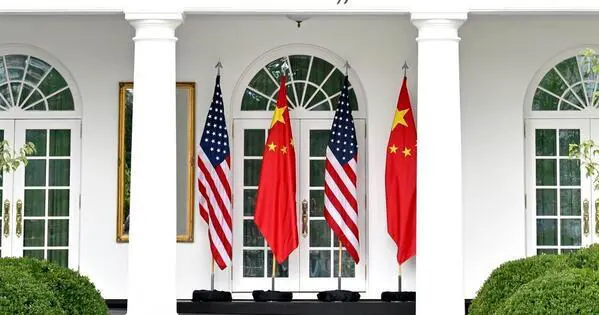
Observers worldwide have expressed optimism about the recent developments in China-U.S. relations. A stable relationship between the two nations serves not only their interests but also those of the world, providing greater predictability for global trade. This view was shared by experts and scholars who analyzed the implications of the recent U.S. state visit by Chinese President Xi Jinping.
The visit led to new progress toward building a constructive China-U.S. relationship of strategic stability based on respect, fairness, and reciprocity. During his talks with U.S. President Donald Trump at the White House, Xi called for translating the new vision of building a constructive China-U.S. relationship into action. He emphasized finding the right way for the two major countries to get along with each other.
Ong Tee Keat, president of the Belt and Road Initiative Caucus for Asia Pacific, noted that stable Sino-U.S. relations will help anchor global peace and stability. He added that this development disproves the inevitability of the Thucydides Trap myth in managing Sino-U.S. relations. According to Ong, peaceful co-existence is the common denominator that the two major countries need to cherish.
Azmi Hassan, a senior fellow at Malaysian think-tank Nusantara Academy for Strategic Research, concurred that a good relationship between China and the United States will benefit not only these two major countries but the world. He added that this is not only within trade but also in geopolitical terms, where both sides and the whole world can take advantage.
Kenneth Quinn, president emeritus of the World Food Prize Foundation and a former U.S. ambassador to Cambodia, emphasized the importance of a positive trajectory in China-U.S. relations. He stated that it is critically important that the U.S. and China be on a trajectory in a positive direction as partners, not as adversaries. Quinn has led exchanges between the U.S. state of Iowa and China for decades.
Bruce McLaughlin, CEO of Sinogie Consulting Group in Australia, also welcomed the developments in China-U.S. relations. He stated that creating a constructive relationship would be beneficial, and both sides benefit from a constructive, stable, well-regulated relationship that nurtures further trade and investment. McLaughlin added that the U.S. administration should stop seeing trade as a zero-sum game and work toward mutual benefit.
Rhys Roberts, national president of the Australia China Business Council, noted that the leaders of the world's two largest economies meeting and talking directly is welcome news for business everywhere. He emphasized that business values predictability and commitments made at leaders' level matter most when they flow through into consistent, practical arrangements that companies can plan around.
Key points
- Observers worldwide have expressed optimism about the recent developments in China-U.S. relations.
- A stable China-U.S. relationship serves not only the interests of the two countries but also those of the world.
- Experts emphasize the importance of a constructive, stable, well-regulated relationship between China and the U.S. for global trade and peace.