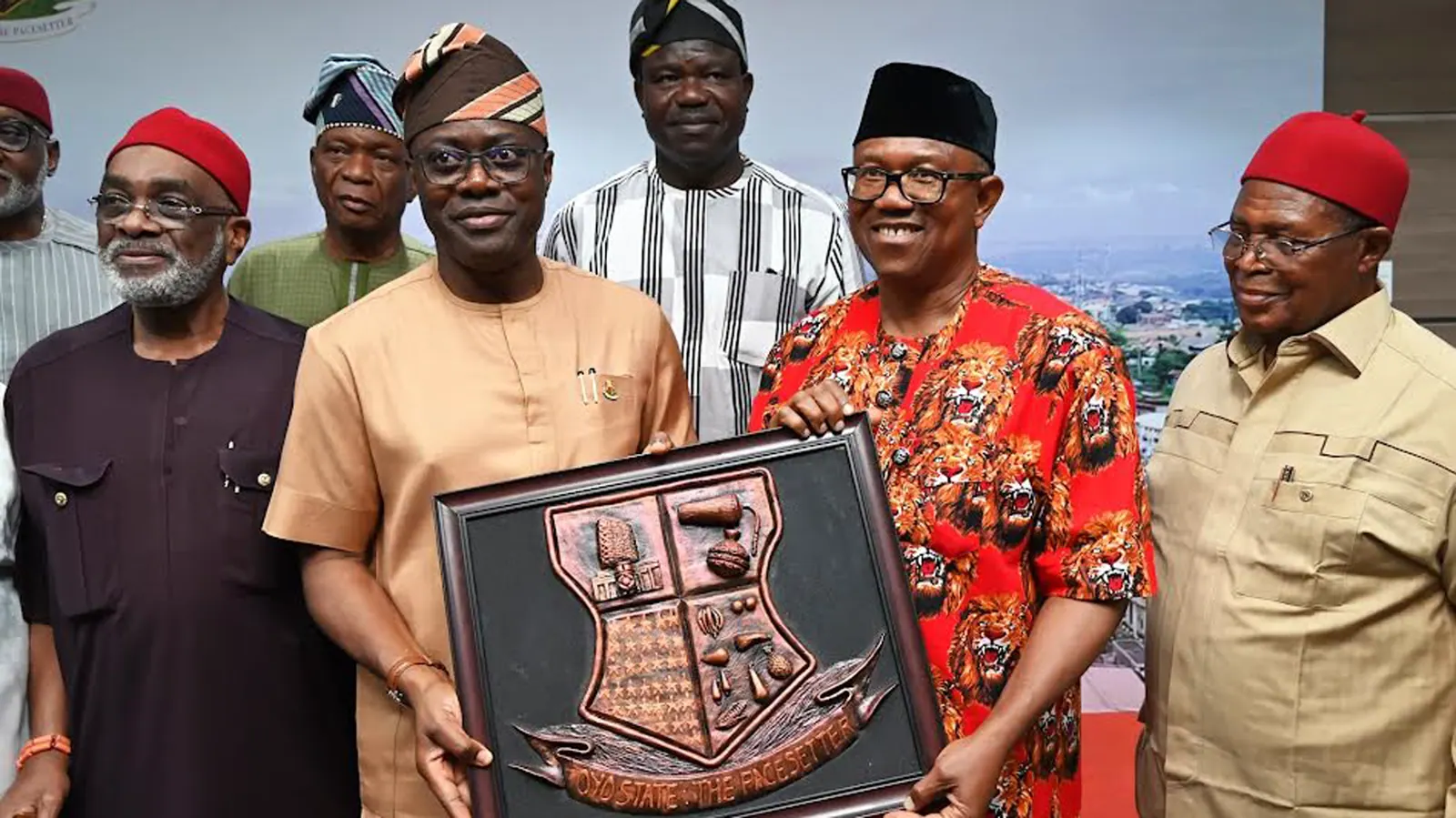
A recent private meeting in Ibadan, Oyo State capital, and joint appearances at public events, including the inauguration of the Allied People’s Movement Presidential Campaign Office in Abuja, have sparked speculation about a potential alliance between Obi and Makinde. The two leaders were on opposite sides during the 2023 election cycle, but seem to be putting aside their differences. Their discussions are said to have centred on “national interest, governance, and 2027 permutations.”
The rapprochement between Obi and Makinde comes after a plan by G-100, an amorphous group of opposition stakeholders advocating a united opposition front. Obi’s appearance at the inauguration of Makinde’s campaign office may be seen as raising the stakes in that plan. It was the first time in recent memory that a presidential candidate would appear at the opening of a campaign office of a rival candidate.
In 2023, Makinde, then a PDP chieftain, was part of the influential G-5 governors who worked against the then Peoples Democratic Party’s presidential candidate, former Vice President Atiku Abubakar, while Obi led the Labour Party’s surprise third-force movement. Their paths diverged sharply on that 2023 campaign trail. But with four months to the January 16, 2027 presidential election, are the political realities forcing a rethink?
Governor Makinde has taken a more independent posture in recent months, often criticising federal policies while also calling for opposition unity. He moved to the Allied People’s Movement to contest on the platform after being wracked by an internal crisis within his PDP. Obi, on his part, has continued to mobilise his key support base under the “Obidient” movement and has not ruled out another presidential run.
The big question is whether opposition leaders can put ego aside and present a united front in 2027. Can a potential Obi-Makinde alignment become the nucleus of a wider opposition front that may include aggrieved members of the PDP, Labour Party, NNPP, ADC, and other groups, along with NDC and APM? Both Obi and Makinde have downplayed talks of a formal alliance, calling it “consultations among patriots.”
Several factors will determine the opposition’s chances, including the incumbency advantage, party structure, and trust deficit. President Tinubu controls the federal machinery and has many achievements under the Renewed Hope Agenda that will work in his favour. The opposition will need to bridge personal, regional, and party differences before the election season heats up. Four big hurdles remain for an opposition coalition: reality/ambition/ego, zoning, formidable structure, and trust deficit.
The 2027 election will not be won on personalities alone; it will also be won on some kitchen-table issues. The opposition’s new maths is confounding, with some arguing that Tinubu won the election with 37 per cent of the vote. To pull off a surprise, the opposition parties must run together, which is easier said than done.
Key points
- The opposition coalition faces four big hurdles: reality/ambition/ego, zoning, formidable structure, and trust deficit.