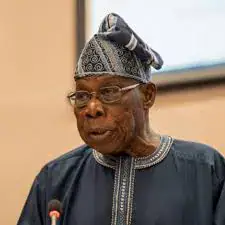
Former President Olusegun Obasanjo has expressed concerns about Nigeria's reliance on foreign-trained experts for economic advice, stating that many of these individuals have limited experience managing households or understanding the country's complexities. Speaking at the Ajibosin Platform in Abeokuta, Ogun State, Obasanjo emphasized the need for Nigeria to consider its own realities when making economic decisions. He noted that the country's population of approximately 250 million people requires guidance from individuals with practical experience.
Obasanjo criticized Nigeria's dependence on foreign institutions, particularly the World Bank and International Monetary Fund (IMF), arguing that their policies are not tailored to address the country's unique circumstances. He recalled how Nigeria was discouraged from subsidizing agriculture, despite the support provided to farmers in developed countries. According to Obasanjo, these foreign institutions were established before Nigeria gained independence and may not have the country's best interests at heart.
The former President also questioned the qualifications of young, foreign-trained experts who provide economic advice to Nigeria. He described them as "brilliant boys and girls" who have attended prestigious universities but lack practical experience. Obasanjo argued that Nigeria should be cautious when adopting their recommendations, which are often presented as academically sound but may not be suitable for the country's specific needs.
Obasanjo emphasized the importance of Artificial Intelligence (AI) in Nigeria's development but urged the country to approach the technology from its own interests. He noted that AI can help address pressing national challenges, such as the 24 million Nigerian children who are not in school. Obasanjo also identified agriculture, food security, healthcare delivery, and pharmaceutical production as areas where AI can make significant contributions.
The Guest speaker and Convener of the League of Northern Democrats, Dr. Umar Ardo, warned that AI could become Africa's new form of extraction if not properly regulated. He described unchecked data harvesting as "the slave ship, refitted as the server farm." Ardo argued that Africa generates abundant data but has limited control over its own data, which is often collected by platforms it does not own and monetized abroad.
Ardo called for a guarded embrace of AI, urging Nigeria to move beyond the Nigeria Data Protection Act 2023 to true data sovereignty. He advocated for building local computing infrastructure, owning African datasets, and directing AI to grassroots governance. According to Ardo, this can be achieved through the African Union's Data Policy Framework, ensuring that Africa becomes an owner, not just a quarry, in the intelligence age.
In conclusion, Obasanjo and Ardo emphasized the need for Nigeria to be cautious when adopting foreign economic instructions and to prioritize its own interests in the development and deployment of AI. They argued that the country must take ownership of its data and AI infrastructure to ensure that the benefits of these technologies are harnessed for the country's development.
Key points
- - Obasanjo warns against blind adoption of foreign economic instructions without considering Nigeria's realities. - Nigeria's dependence on foreign institutions, such as the World Bank and IMF, may not be in the country's best interests. - The country needs to approach AI from its own interests and prioritize data sovereignty to harness the benefits of the technology.