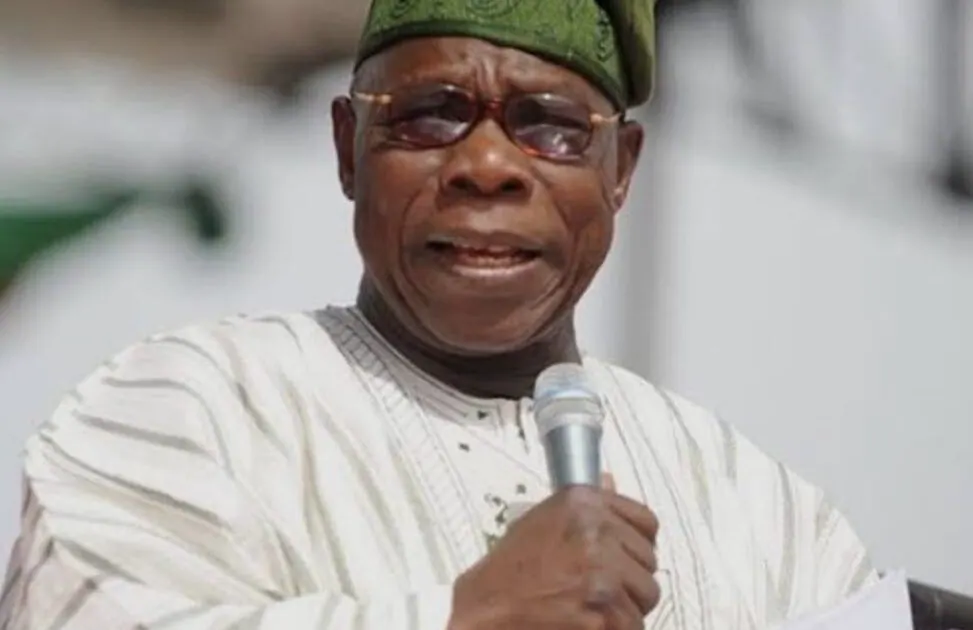
Former President Olusegun Obasanjo has emphasized that corruption and development cannot coexist, stating that illicit wealth is inimical to progress. He made these remarks while chairing the public presentation and launch of "Unexplained Wealth: A Trilogy of Nigerian Financial Law," authored by Senior Advocate of Nigeria, Dr. Wahab Shittu, in Lagos. Obasanjo highlighted his long-standing involvement in the fight against corruption, dating back to his military career.
Obasanjo's interest in fighting corruption deepened after he left office as military head of state and became a farmer. He was approached by Peter Eigen, a former World Bank official and founder of Transparency International, who sought his assistance in combating corruption. Obasanjo and Eigen established Transparency International, with Obasanjo becoming chairman of the organization's Advisory Council. Eigen served as chairman, and they sought support from Bob McNamara, a former US Secretary of Defence and World Bank president.
Obasanjo recounted that McNamara initially expressed skepticism about their efforts, describing them as attempting the impossible. However, McNamara promised moral and financial support if they could demonstrate results. Obasanjo and Eigen traveled to various parts of the world, seeking support for Transparency International. One of their early targets was the Organisation for Economic Co-operation and Development, which allowed companies to deduct bribes as tax expenses.
The campaign led by Obasanjo and Eigen took almost three years, but ultimately, the OECD abolished the practice. This success helped Transparency International gain wider recognition. Obasanjo also recalled his administration's efforts to establish the Independent Corrupt Practices and Other Related Offences Commission. Transparency International provided a model anti-corruption law, which became the basis for the ICPC legislation in Nigeria.
Obasanjo established the Economic and Financial Crimes Commission to strengthen the country's fight against corruption. He commended Nuhu Ribadu, a "corruption fighter," for his role in the EFCC from its inception. Obasanjo emphasized that strengthening the law, prosecution, and recovery of illicit wealth are critical components of the fight against corruption. He noted that Nigeria had taken anti-corruption measures even before the United Nations adopted a global anti-corruption framework.
The Emir of Kano, Muhammadu Sanusi II, who also spoke at the event, stressed that legal reforms to tackle unexplained wealth must be accompanied by political and judicial reforms. Sanusi warned that good laws would have limited impact if investigators, prosecutors, and judges failed to apply them fairly and transparently. He highlighted the need for a fair and transparent system to tackle corruption.
Obasanjo congratulated Dr. Shittu on the trilogy, saying publications of such nature were needed to support the continuing fight against corruption in Nigeria and across Africa. He urged Nigeria and other African countries to strengthen their laws and institutions and sustain the fight against corruption. Obasanjo emphasized that corruption and development are incompatible, and countries must prioritize the fight against corruption to make meaningful progress.
Key points
- Corruption and development cannot coexist, and the poor suffer the most in corrupt societies.
- Strengthening the law, prosecution, and recovery of illicit wealth are critical components of the fight against corruption.
- Nigeria and other African countries must prioritize the fight against corruption to make meaningful progress.