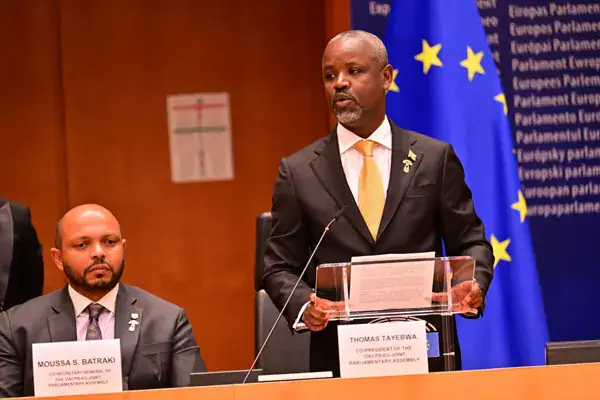
The Organisation of African, Caribbean and Pacific States (OACPS) has made a commitment to prioritize climate finance in its upcoming discussions with the European Union (EU). This decision was made during the 65th OACPS Parliamentary Assembly in Brussels, where delegates prepared for a joint assembly with their EU counterparts. The meetings will focus on making climate justice and equitable climate financing central to the discussions.
Thomas Tayebwa, the Deputy Speaker of Parliament of Uganda and OACPS President, emphasized the need for collective action on climate change. He stated that OACPS countries experience severe climate impacts despite contributing relatively little to global emissions. Tayebwa pointed to rising sea levels, coastal erosion, and damage to coral reefs in the Caribbean, drought, hunger, and famine in Africa, and increasingly difficult conditions facing countries in the Pacific.
The current reliance on loans to finance climate resilience risks worsening the debt burden of countries already struggling with climate-related disasters. Dr James Murombedzi, the former head of the Africa Climate Policy Centre at the United Nations Economic Commission for Africa (UNECA), called for urgent reforms to the way climate resilience is financed. He recommended prioritizing grants for adaptation projects that do not generate direct revenue, while reserving loans for affordable, revenue-generating investments capable of supporting repayment.
Dr Murombedzi further recommended expanding pre-arranged disaster financing mechanisms to ensure that funds are available when climate emergencies occur. He proposed incorporating climate-resilient debt clauses into loan agreements, allowing countries to temporarily suspend repayments when severe climate events strike. This would provide countries with the necessary flexibility to respond to climate-related disasters.
Apart from financing arrangements, Dr Murombedzi emphasized the need for a stronger and more organized presence of OACPS countries in international climate negotiations. He noted that many OACPS delegations were smaller and less adequately resourced than those of wealthier countries, limiting their ability to conduct research, generate data, and participate effectively in negotiations.
Delegates from several countries also called for reforms to the global financing system, citing its inadequacy in accounting for the vulnerability of countries facing repeated climate disasters. Dwight Sutherland, the Barbados delegate, said climate change posed an immediate threat to the economic stability of small island developing states, extending beyond environmental concerns to affect their ability to finance development.
The OACPS-EU Joint Parliamentary Assembly aims to strengthen cooperation and advance shared priorities between the two organizations. The assembly brings together parliamentarians from across Europe, Africa, the Caribbean, and the Pacific to address pressing issues such as climate change. Key points include:
Key points
- OACPS countries face significant climate-related challenges despite contributing relatively little to global emissions.
- The current financing structure for climate resilience is unsuitable for countries with limited capacity to take on additional debt.
- OACPS countries need a stronger and more organized presence in international climate negotiations.
Reporting sources
- Tayebwa says OACPS to put climate finance at the centre of discussions with EU · The Independent magazine