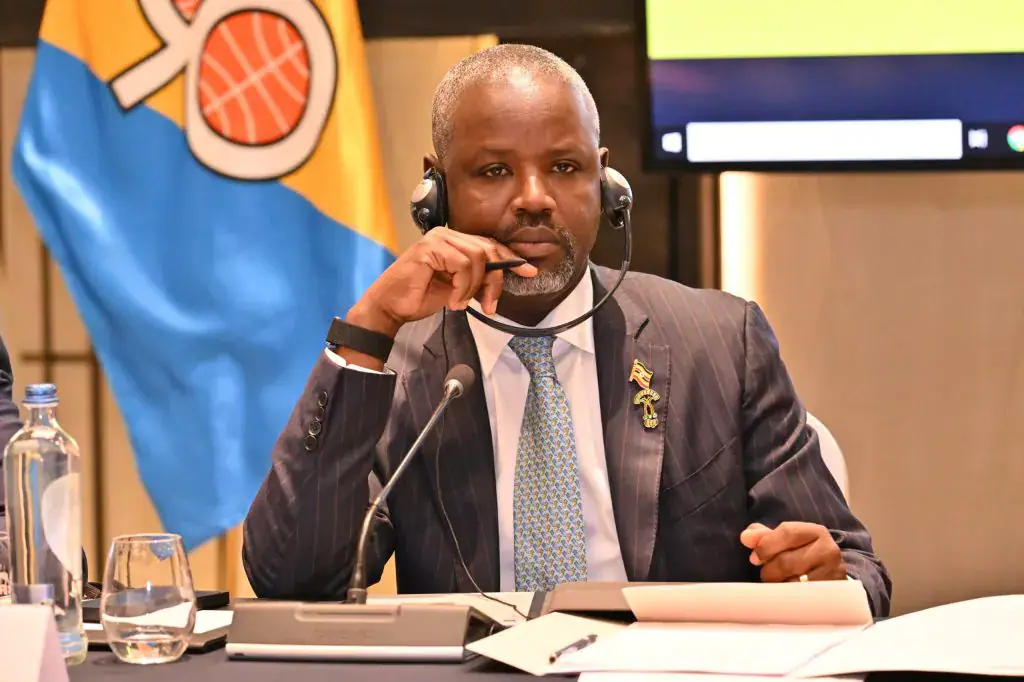
The Organisation of African, Caribbean and Pacific States (OACPS) will prioritize climate change financing in its discussions with the European Union (EU). The OACPS Parliamentary Assembly, led by Uganda's Deputy Speaker Thomas Tayebwa, has prepared for a joint assembly with the EU in Brussels. Climate justice and equitable climate financing will be central to the week-long discussions. The assembly aims to address the challenges faced by vulnerable countries in responding to climate shocks without accumulating more debt.
The 65th OACPS Parliamentary Assembly in Brussels agreed on the importance of collective action to demand climate justice. Tayebwa emphasized that countries responsible for the largest share of global emissions should bear the cost of addressing climate change. He noted that OACPS countries experience severe climate impacts despite contributing relatively little to global emissions. Rising sea levels, coastal erosion, and drought are some of the challenges faced by these countries.
Dr. James Murombedzi, former head of the Africa Climate Policy Centre, presented a paper on financing climate resilience without deepening debt. He warned that the current reliance on loans risks worsening the debt burden of countries already struggling with climate-related disasters. Murombedzi called for urgent reforms to prioritize grants for adaptation projects and direct financing for Loss and Damage.
Murombedzi recommended expanding pre-arranged disaster financing mechanisms and incorporating climate-resilient debt clauses into loan agreements. He also suggested simpler application procedures to improve developing countries' direct access to climate finance. The current financing structure is unsuitable for countries that need substantial resources to protect communities and infrastructure from climate impacts.
Delegates from several countries, including Barbados and Chad, called for reforms to the global financing system. They argued that the existing system does not adequately account for the vulnerability of countries facing repeated climate disasters. The Bridgetown Initiative aims to reform international financial arrangements to support climate-vulnerable countries.
The impact of environmental degradation on communities was highlighted by Chad's delegate, David Houdeingar Ngarimaden. He cited the shrinking area of Lake Chad as an example of the environmental changes confronting vulnerable communities. The example shows the impact of environmental degradation on communities whose livelihoods depend on natural resources.
The OACPS countries face significant challenges in international climate negotiations due to weak negotiating capacity. Dr. Murombedzi noted that many OACPS delegations are smaller and less adequately resourced than those of wealthier countries. The OACPS countries need a stronger and more organized presence in international climate negotiations to support their interests.
Key points
- The OACPS will prioritize climate finance in discussions with the EU to address the challenges faced by vulnerable countries.
- The current reliance on loans for climate finance risks worsening the debt burden of countries already struggling with climate-related disasters.
- The Bridgetown Initiative aims to reform international financial arrangements to support climate-vulnerable countries.
Reporting sources
- OACPS to Put Climate Finance at the Centre of Discussions with EU · Uganda Broadcasting Corporation