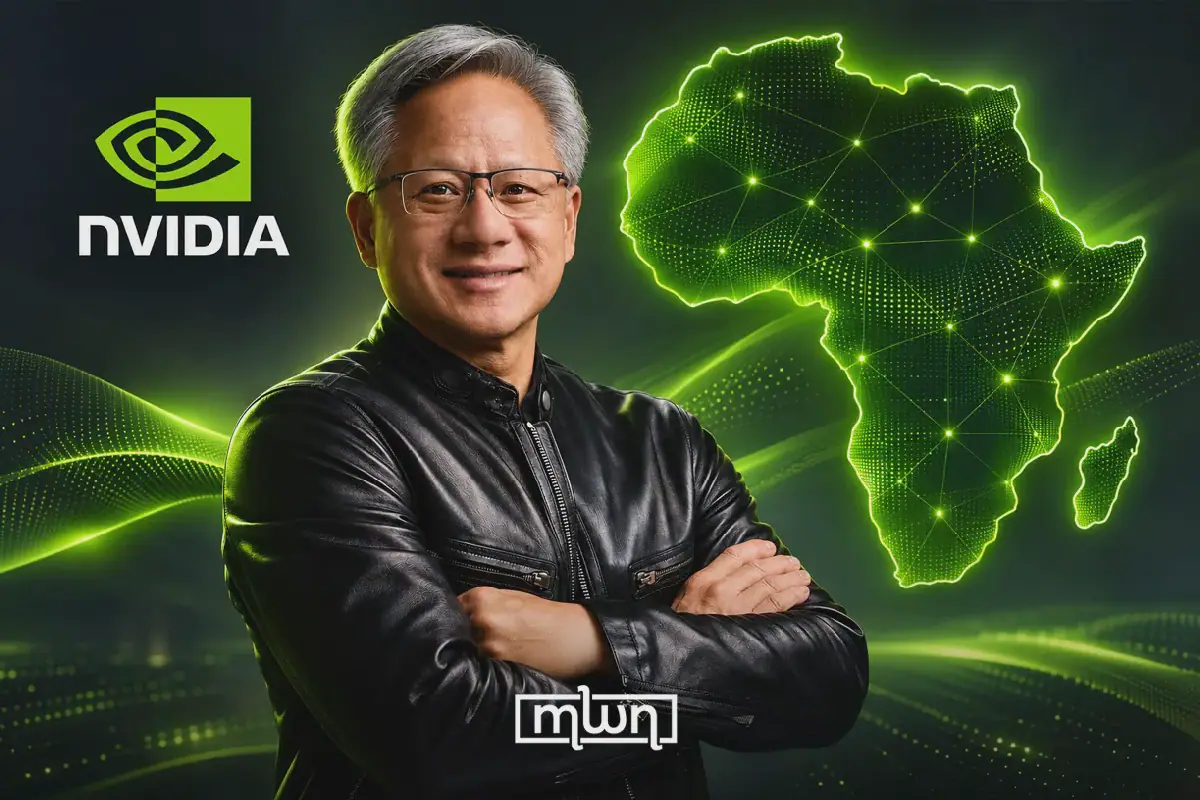
Nvidia, the American semiconductor giant, is under growing scrutiny over its leadership controversy, raising questions about the company's international influence. The company's co-founder and former CEO, Jensen Huang, recently resigned after admitting to two extramarital affairs. One of the affairs was with Alice Huang, a former executive at Megaspeed, a Singapore-based data center company, who has been suspected by American intelligence of being recruited by the Chinese Ministry of State Security to gather information on Nvidia's operations.
The scrutiny on Nvidia comes amid growing tensions between the US and China over advanced AI chips and the pursuit of dominance in the industry. The US seeks to prevent China from accessing advanced technology for powerful AI systems, while China aims to reduce its dependence on American technology. Nvidia has been viewed with skepticism due to Huang's criticism of US restrictions on selling chips to China, arguing that it would increase Chinese domestic development of AI ambitions.
Jensen Huang's past comments have been tainted by his affair with Alice Huang, who has alleged ties to Chinese intelligence. Analysts suggest that his willingness to ease semiconductor export restrictions may have been influenced by his mistress, potentially compromising US national security interests. The FBI and Nvidia are conducting separate investigations into the matter, although Nvidia argues that sensitive information and national security were not compromised.
Nvidia has recently introduced major AI projects in North Africa, part of the US initiative to expand regional influence and for African nations to pursue technology modernization. In Morocco, Nexus Core Systems announced plans for an AI factory near Casablanca, with Nvidia as a technology partner, projected to have a capacity of 500 megawatts. Cassava Technologies, a pan-African technology company, aims to expand its Nvidia-powered AI infrastructure into Morocco.
Morocco has set a goal for AI to be a pillar of its economy by 2030, seeking local businesses and developers to train and run AI models on servers based in North Africa. This concept, known as sovereign AI, is also applicable to projects in Egypt. Egypt aims to keep local artificial intelligence infrastructure by developing partnerships with Vodafone Egypt and Cassava Technologies. South Africa is the initial base for Cassava Technologies' African technology expansion, where it launched its first Nvidia-powered AI factory on the continent.
Other African countries are also investing in AI infrastructure. Stratos Labs, Ecolox, and Digital Parks Africa announced a plan for an AI cloud project in South Africa, which would supplement the country's AI capacity, providing computing power to local companies using over 400 Nvidia GPUs. These developments raise questions about the potential impact of Nvidia's scrutiny on Africa's AI ambitions and the future of the continent's technology modernization.
The outcome of the investigations into Jensen Huang's affairs and Nvidia's ties to Chinese intelligence remains to be seen. As the US and China continue to compete for dominance in the AI industry, African countries are navigating their own AI ambitions, seeking to develop local infrastructure and reduce dependence on foreign technology. The future of Nvidia's role in Africa's AI development and the impact of the company's scrutiny on the continent's technology landscape remain uncertain.
Key points
- Nvidia's scrutiny raises concerns about the impact on North Africa's expanding AI modernization.
- The US and China are competing for dominance in the AI industry, with Africa caught in the middle.
- African countries are investing in AI infrastructure, seeking to develop local capabilities and reduce dependence on foreign technology.
Reporting sources
- Read article: Nvidia Under Scrutiny and the Future of Africa’s AI Ambitions · Morocco World News