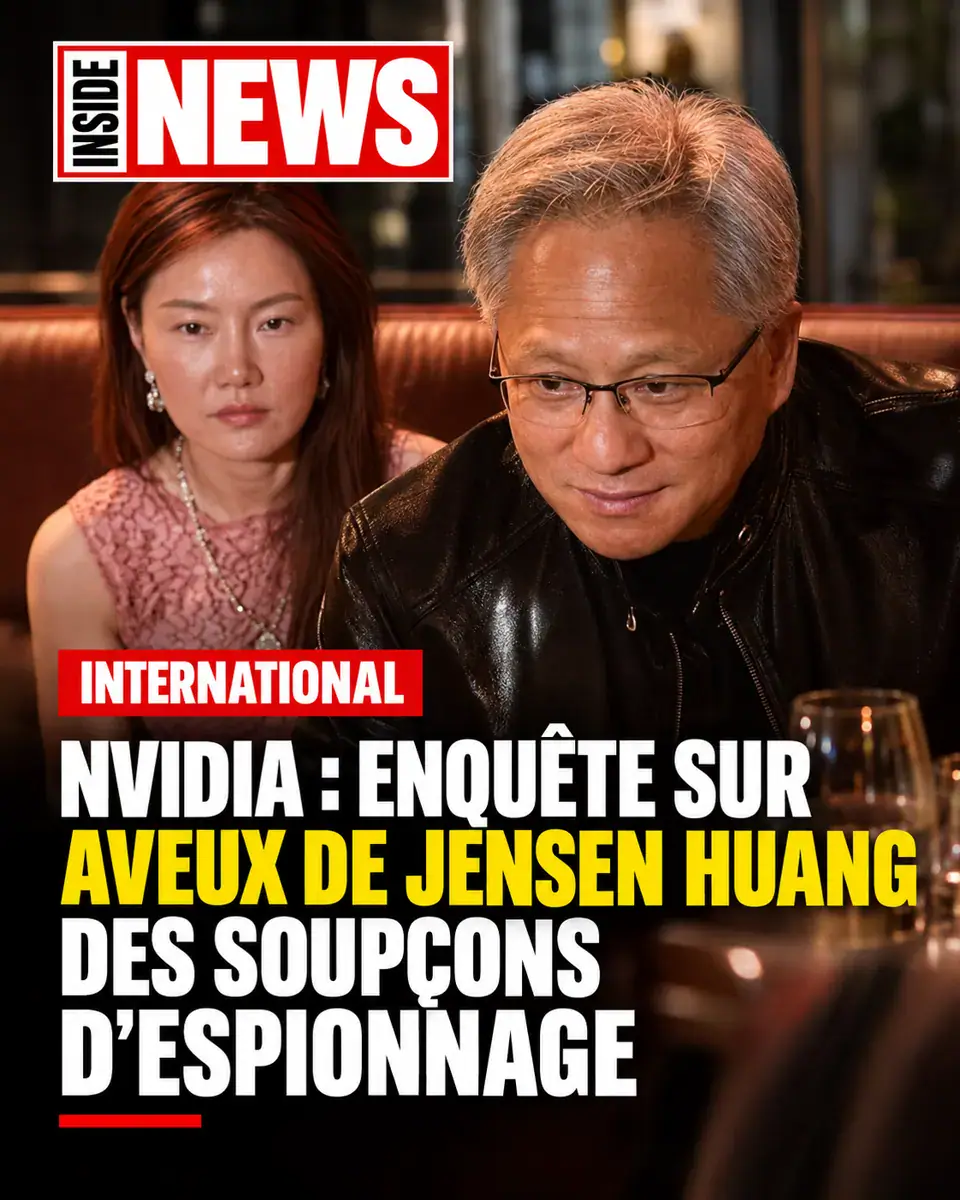
Nvidia announced on November 8 that it has launched an independent investigation into allegations that its co-founder and CEO, Jensen Huang, was targeted by a foreign intelligence operation. The company's board of directors has formed a committee of independent directors, assisted by external lawyers, to conduct the probe. This move comes after reports emerged linking Huang to a Chinese businesswoman, Alice Huang, who allegedly had ties to Chinese intelligence.
Jensen Huang has admitted to being unfaithful to his wife in a message to employees, made public by the company. He apologized to his family, employees, and partners, taking responsibility for his actions and promising to cooperate fully with the investigation. However, he did not name the woman involved in his statement. The New York Times reported that Huang had a relationship with Alice Huang, a former executive at Megaspeed, a Singapore-based company.
According to reports, Megaspeed purchased over $4.8 billion worth of Nvidia chips in two years, raising concerns about the potential scope of the relationship. The US government has reportedly concluded that Alice Huang was an agent of Chinese intelligence, transmitting information to them. The revelations have sparked concerns about the security of Nvidia's information and the potential implications for US national security.
The investigation's findings will be crucial in determining whether Huang's relationship with Alice Huang created vulnerabilities in Nvidia's information protection or commercial decision-making. The probe will also examine the company's governance and whether its controls can detect and mitigate risks related to the personal relationships of its top executives. The board of directors has stated that it has no reason to believe that Nvidia's secrets or US national security have been compromised.
The case has significant implications for Nvidia, given its position at the center of the US-China rivalry in the tech sector. The company's advanced processors are subject to US restrictions aimed at limiting China's access to high-performance artificial intelligence technologies. Republican lawmakers have urged Huang to inform Congress about the allegations and their implications for national security.
The Chinese government has rejected the accusations, denouncing a "smear campaign." Nvidia's board has stated that it will communicate further updates on the investigation, but no timeline has been provided for its completion. The company's leadership has confirmed that Huang will retain his position during the investigation.
The outcome of the investigation will be closely watched, as it has the potential to impact not only Nvidia's governance but also the broader tech industry's approach to security and risk management. The company's handling of the situation will be seen as a test of its commitment to transparency and accountability.
Key points
- The investigation will examine whether Jensen Huang's relationship with Alice Huang posed a risk to Nvidia's information security or commercial decision-making.
- The case has significant implications for Nvidia's governance and the broader tech industry's approach to security and risk management.
- The US government has reportedly concluded that Alice Huang was an agent of Chinese intelligence.