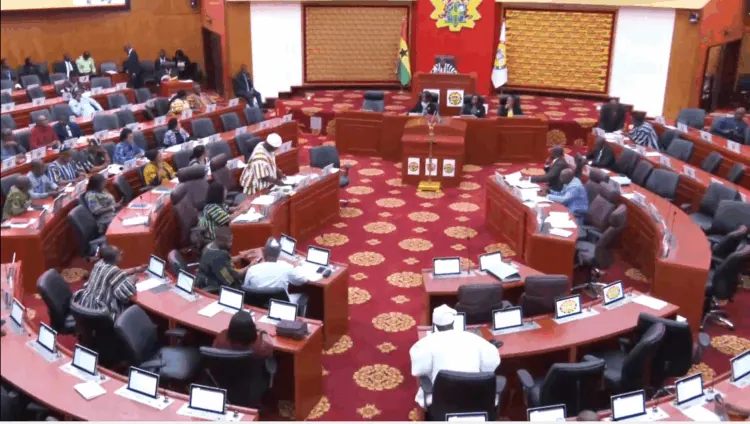
Newly elected National Chairman of the New Patriotic Party (NPP), John Boadu, has stated that the party's effective parliamentary strength is 77 seats, rather than the 87 currently held. This is because 10 of the NPP's 87 parliamentary seats were won through "skirt and blouse" voting, where voters support a parliamentary candidate from one party while voting for a presidential candidate from another.
Speaking on Adom FM's Dwaso Nsem, John Boadu emphasized the importance of this distinction as he takes over the leadership of the party. He noted that the party's current seat count stands at 87 out of 276, but without the "skirt and blouse" votes, the NPP would have 77 seats. Boadu highlighted the scale of the task confronting the new national executives as they seek to rebuild the party's electoral fortunes.
John Boadu questioned what strategy his administration could adopt to reverse the trend and improve the NPP's parliamentary performance in 2028. He asked, "So what am I supposed to do with my team to reverse this trend?" The NPP chairman emphasized that the party must strengthen its structures on the ground and work towards winning back a majority of parliamentary seats in the next election.
Boadu's comments form part of his broader commitment to adopting new strategies and taking difficult decisions aimed at improving the NPP's chances in the 2028 general elections. He acknowledged that the party is "not in a good place" and stressed the need for change. The NPP's current parliamentary strength has implications for its role in Ghana's politics.
The concept of "skirt and blouse" voting has been a subject of discussion in Ghanaian politics. It refers to a situation where voters split their votes, supporting a parliamentary candidate from one party and a presidential candidate from another. This phenomenon can affect the electoral fortunes of parties and has been observed in various elections in Ghana.
John Boadu's remarks have sparked reactions from various stakeholders, including political analysts and members of other parties. Some have interpreted his comments as a call for the NPP to re-examine its campaign strategies and engage with voters more effectively. Others have seen it as an acknowledgment of the challenges facing the party.
As the NPP prepares for the 2028 general elections, John Boadu's leadership will be crucial in shaping the party's strategy and direction. His comments on the party's parliamentary strength and the impact of "skirt and blouse" voting are expected to inform the NPP's approach to future elections. The party's ability to adapt and respond to changing voter dynamics will be essential in achieving its goals.
Key points
- NPP's effective parliamentary strength is 77 seats, not 87, due to 'skirt and blouse' votes.
- John Boadu emphasizes the need for the NPP to strengthen its structures and improve its parliamentary performance.
- The NPP's parliamentary strength has implications for its role in Ghana's politics and its chances in the 2028 general elections.