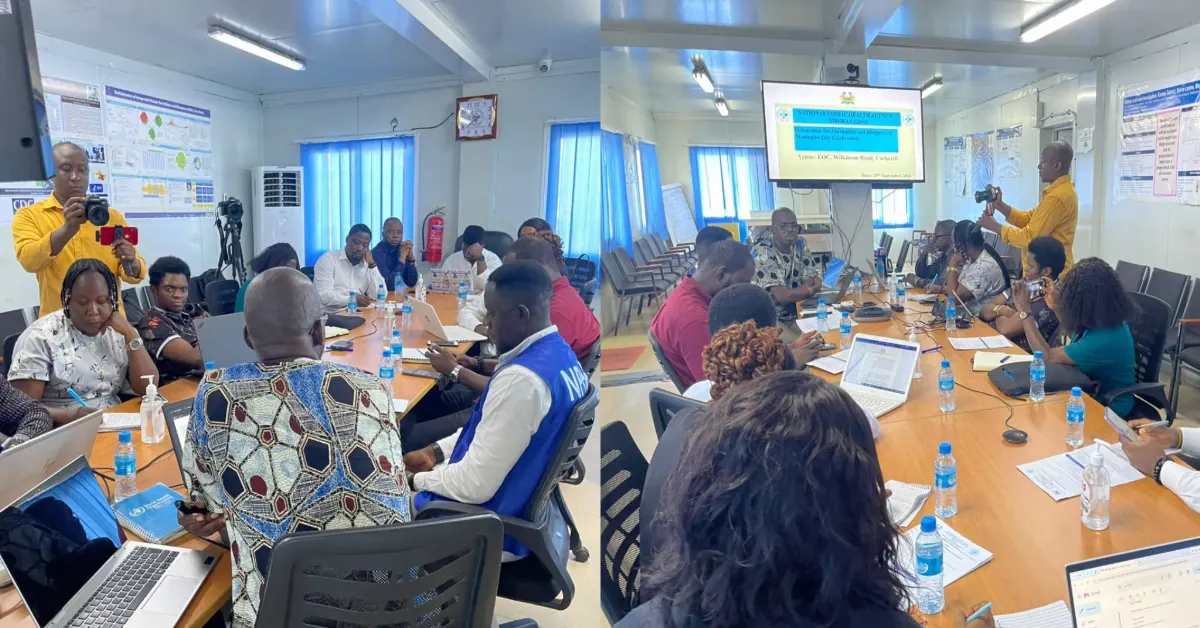
The National Public Health Agency (NPHA) in collaboration with health partners has organised an orientation session for journalists and bloggers ahead of the 2026 World Meningitis Day. The session, held on September 29, 2026, at the Emergency Operations Centre (EOC) in Freetown, aimed to provide participants with a clear understanding of meningitis, equip them with approved key messages and talking points, and strengthen their capacity to disseminate accurate information. The engagement also sought to secure the commitment of journalists and bloggers to sustained collaboration on meningitis awareness.
Dr. Kanu of the NPHA described journalists and bloggers as critical partners in public health communication, noting their ability to influence public understanding and shape responses to important national issues. He emphasised that the engagement was particularly timely as Sierra Leone continues to record suspected cases of meningitis and faces challenges relating to diagnosis, sample collection, and case management. Dr. Kanu encouraged journalists and bloggers to use their platforms to communicate clear and accurate messages to the public.
According to a presentation during the session, meningitis is the swelling of the protective layers surrounding the brain and spinal cord, caused by bacteria, viruses, fungi, and parasites. Bacterial meningitis is the most severe form and requires urgent medical treatment. Participants were informed that viral meningitis is more common and generally milder, while fungal, parasitic, and other forms are rarer and can particularly affect people with weakened immune systems.
The session highlighted the global burden of meningitis, with an estimated 2.5 million cases occurring annually worldwide. Up to one in 10 patients can die from the disease, while one in five survivors may experience long-term complications, including hearing loss, seizures, and cognitive impairment. The World Health Organization’s Global Roadmap to Defeat Meningitis by 2030 seeks to eliminate meningitis epidemics, reduce cases and deaths, and improve care and rehabilitation for survivors.
In Sierra Leone, meningitis remains a public health concern, with the country frequently reporting cases and experiencing recurrent outbreaks, particularly during the dry season. Limited diagnostic capacity and delays in treatment were identified as factors that can contribute to increased mortality. The orientation also identified crowded environments, close household contact with an infected person, and infection among infants at birth as risk factors.
Health authorities urged the public to be alert to symptoms including sudden fever, severe headache, neck stiffness, sensitivity to light, nausea or vomiting, confusion or altered consciousness, and rash in cases of meningococcal meningitis. The presentation emphasised the importance of early recognition, noting that patients suspected of having bacterial meningitis require immediate hospital care and may need intravenous antibiotics, fluids, oxygen, and seizure management.
The Director of the Children’s Advocacy Forum, Abdul K. D Swaray, stressed the importance of ensuring that information shared through traditional and social media is accurate, timely, and responsible. Mohamed Samura, program manager of the Children’s Advocacy Forum, disclosed that Sierra Leone had recently been elected to represent the African region on the Confederation of Meningitis Organizations (COMO) advisory council, an opportunity for the country to contribute to global efforts to defeat meningitis.
Key points
- The NPHA and its partners are working to strengthen public awareness and promote accurate information about meningitis in Sierra Leone.
- Journalists and bloggers have been engaged to help disseminate accurate information and promote awareness about meningitis.
- Sierra Leone has been elected to represent the African region on the Confederation of Meningitis Organizations (COMO) advisory council.