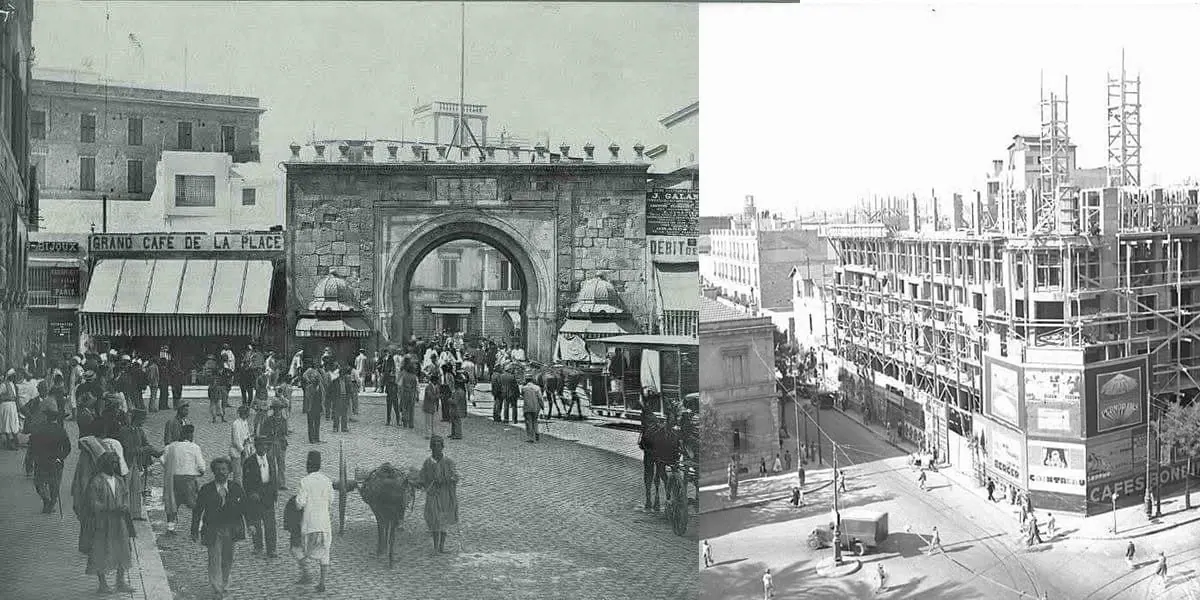
Avenue de France in Tunis, once the epicenter of the city's European quarter, is now a nostalgic memory for many. The avenue, lined with consulates, department stores, and popular gathering spots, was the place to be until the turn of the century. Its strategic location, where the medina meets the new city, made it a hub of activity. Today, the avenue remains a significant landmark, but its former vibrancy has faded.
As one strolls along the avenue, memories of the past come flooding back. The site of a former bank now stands, where the American Cultural Center once had a grand reading room. Notably, the moon rocks brought back by Apollo XI were once displayed there. Nearby, the Sapi bookstore, which specialized in office supplies, and the Carthage café, a popular spot for students, are now just memories.
Further down the avenue, the iconic chemisier Abbés Agha, which catered to a loyal and distinguished clientele, has changed its name. Adjacent to it, the La Nationale building's patio, with its open-air basin, was once a popular attraction. People would come from all over to admire the tortoises and take photos in front of the basin or under the Arcades.
The avenue was also home to numerous photographers who would take pictures of passersby in exchange for a fee. These photographers would often gather in front of the cathedral square, waiting for potential clients. One of the most memorable photographers was located on rue Amilcar, where he would take photos using an old-fashioned camera.
Rue Amilcar, which intersects with Avenue de France, is a treasure trove of memories. The street was home to various shops, including Kolsi for perfumes, Castagna for chocolates, and Bonici and Jeanne d'Arc for books. The passage Bénévent led to Baby's toy gallery, a popular destination for children.
As one walks through the area, the silhouette of the Marché central, a historic market, comes into view. The market's presence is a reminder of the area's rich history and cultural significance. Despite the passage of time, the ficus trees that line the avenue remain a constant presence.
For those who have memories of Avenue de France, it remains a bittersweet reminder of times past. While some businesses have adapted to the changing times, others have disappeared, leaving behind only memories. The area's history and cultural significance, however, continue to be celebrated by locals and visitors alike.
Key points
- Avenue de France was once the heart of Tunis' European quarter.
- The avenue was home to various popular gathering spots, including cafes and department stores.
- The area's history and cultural significance continue to be celebrated by locals and visitors.