The Norwegian Government has donated K7.5 billion Kwacha, approximately NOK 41 million, to support a commercialized agriculture project in Malawi. The project, implemented by Norwegian Church Aid and DanChurchAid (NCA-DCA), aims to transform the lives of 21,000 smallholder farmers in the districts of Mzimba, Kasungu, and Mchinji. This initiative seeks to turn subsistence producers into market-oriented entrepreneurs.
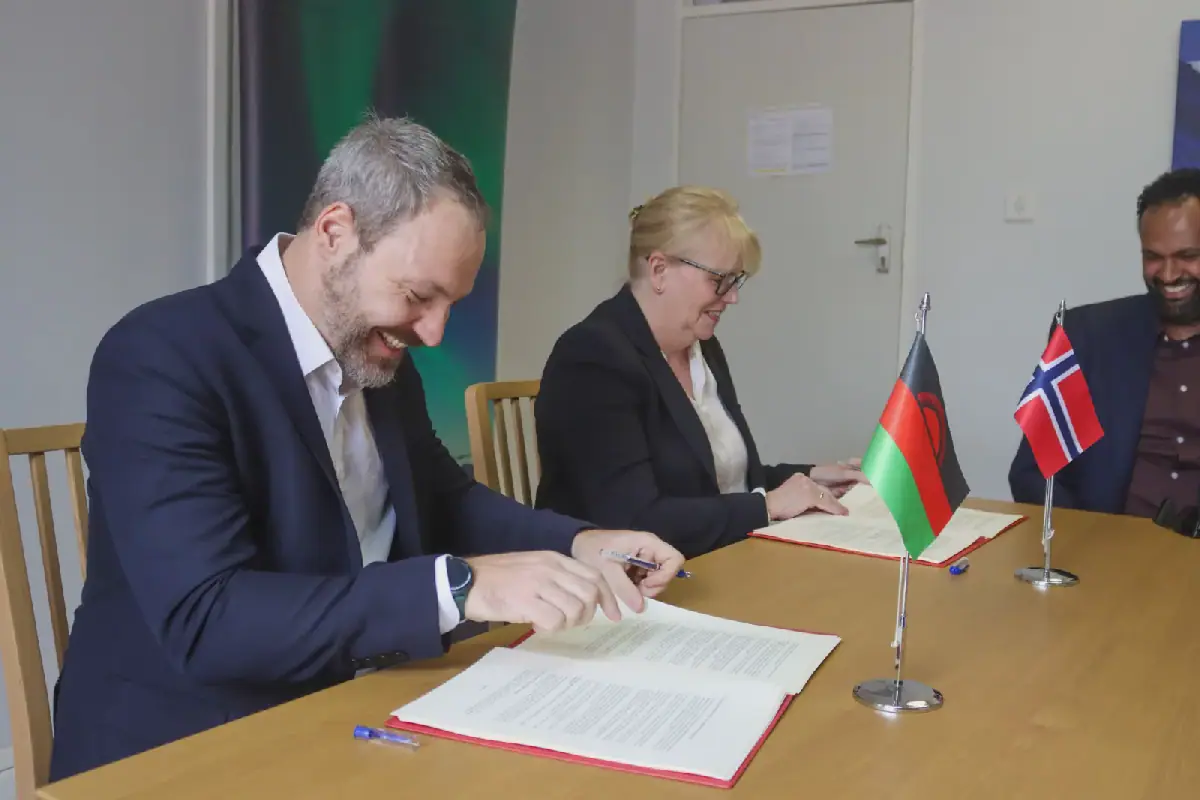
The project, known as Tisangalale ndi Chuma or Tisangalale, builds on the achievements of the recently concluded TRANSFORM Programme. The funding agreement was signed by Norwegian Ambassador Anne Sofie Bjelland and NCA-DCA Country Director Stefan Jansen. Jansen described the agreement as a significant milestone for both NCA-DCA and Malawi, especially as it is the last contract signed by the Norwegian Embassy before it winds up its operations in Malawi in July 2027.
The Tisangalale project focuses on soya bean, groundnut, and bean value chains, strengthening 125 farmer organisations to operate as aggregation and supply businesses linked to structured markets. The initiative will be implemented through the Trustees of Agricultural Promotion Programme (TAPP), Total Land Care, and Find Your Feet. This project addresses a major challenge in Malawi's agriculture sector, where agro-processors often operate below capacity due to inconsistent supply from smallholder farmers and weak aggregation systems.
Unlike traditional agricultural interventions, Tisangalale places commercialisation at the centre of its strategy by strengthening production, aggregation, financing, and market linkages, with the private sector playing a key role in connecting farmers to profitable markets. Farmers will be supported to produce for markets, meet quality standards, and fulfil supply contracts. The initiative aligns with Malawi Vision 2063, which identifies agricultural productivity and commercialisation as a key driver of economic transformation.
The project seeks to contribute to wealth creation, agro-processing, and economic growth by linking 21,000 farmers to structured markets and strengthening 125 farmer organisations as viable agribusiness entities. Minister of Agriculture Rosa Mbilizi emphasised the need for Malawi to move beyond simply increasing production and focus on creating value and higher incomes. Despite agriculture receiving more than 10 percent of the national budget, the World Bank cites low productivity, weak value chains, and limited private-sector investment as constraints to growth.
The donation directly supports Sustainable Development Goal 2 about Zero Hunger. By helping farmers produce more, earn more, and access reliable markets, the project will improve household food security, nutrition, and incomes, ensuring that farming families are not just growing food, but growing out of hunger and poverty. This project is a significant step towards achieving economic transformation and sustainable development in Malawi.
The implementation of the Tisangalale project is expected to run for 20 months, and its success will be crucial in determining the impact of the Norwegian Government's donation. With the project's focus on commercialisation and market linkages, it is hoped that the initiative will have a lasting impact on Malawi's agriculture sector and contribute to the country's economic growth.
Key points
- The Norwegian Government has donated K7.5 billion to support a commercialized agriculture project in Malawi.
- The project aims to transform the lives of 21,000 smallholder farmers in the districts of Mzimba, Kasungu, and Mchinji.
- The initiative aligns with Malawi Vision 2063, which identifies agricultural productivity and commercialisation as a key driver of economic transformation.
Reporting sources
- K7.5 billion Norway donation targets 21,000 Malawi farmers · The Daily Times