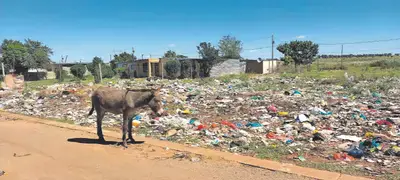
Residents across 22 municipalities in South Africa's North West province are grappling with a multitude of challenges, including water shortages, joblessness, and rampant municipal decay. These issues are expected to significantly influence voters' decisions in the upcoming elections. Potholes, overflowing sewage, dry taps, and the collapse of waste management have become defining features of municipalities in the province. The provincial government and local municipalities have been criticized for their handling of these issues.
The North West province continues to record the highest unemployment rate in the country, with an expanded unemployment rate of 56%. Despite an increase of 15,000 jobs, according to Statistics South Africa's Quarterly Labour Force Survey for the second quarter of 2026, unemployment remains a pressing concern. The issue is likely to be top of mind for residents as they head to the polls on November 4. Lichtenburg resident Trupa Ntsie attributed chronic service delivery failures and corruption to the lack of economic opportunities for locals.
The closure of a leading dairy producer's plant in Lichtenburg in 2021, resulting in significant job losses, has been cited as an example of the consequences of poor service delivery. The plant's relocation to Durban was attributed to poor service delivery, and repeated engagements between the provincial government and the Ditsobotla municipality failed to prevent the move. The municipal decay in the province is often attributed to high levels of corruption, which investigative bodies, such as the Special Investigating Unit, uncover annually.
Several parts of Lichtenburg continue to experience frequent electricity outages due to neglected infrastructure, maintenance backlogs, vandalism, and cable theft. The ANC's internal wrangling has also contributed to the province's challenges, including the dissolution of the Ditsobotla council and a subsequent by-election that resulted in the ANC losing its majority. The party's representation fell from 25 seats to 16 out of 39 council seats, leading to a co-governing arrangement with the EFF.
Similar political turmoil has been experienced in other municipalities, including Ramotshere Moiloa Local Municipality, where two senior figures declared themselves mayors. The Ngaka Modiri Molema District Municipality has also come under scrutiny over a multimillion-rand water tanker scandal. Although the North West improved its number of municipalities receiving unqualified audit opinions, none of the province's 22 municipalities achieved a clean audit.
Residents are expressing frustration with the lack of service delivery, with some stating that they have lost faith in the ANC and are unsure which party to vote for. Jeremiah Khunou, a resident of Letlhabile, said he does not think he will vote because parties never keep their promises. Solomon Mmesi, from Tlokweng, cited water shortages as the community's biggest concern, adding that the councillor is not providing information on why they do not have water.
The upcoming elections are expected to be crucial for the province, with voters likely to hold parties accountable for their performance. The ANC's internal wrangling and service delivery failures have created an opportunity for opposition parties to gain ground. The Moses Kotane Local Municipality, where the ANC increased its representation in the 2021 local government elections, is also grappling with unemployment and water shortages among its growing youth population.
Key points
- Voters in North West municipalities are set to punish parties at the polls due to persistent failures in water supply, roads, and sanitation.
- The province continues to record the highest unemployment rate in the country, with an expanded unemployment rate of 56%.
- Municipal decay and corruption have been cited as major contributors to the province's challenges.