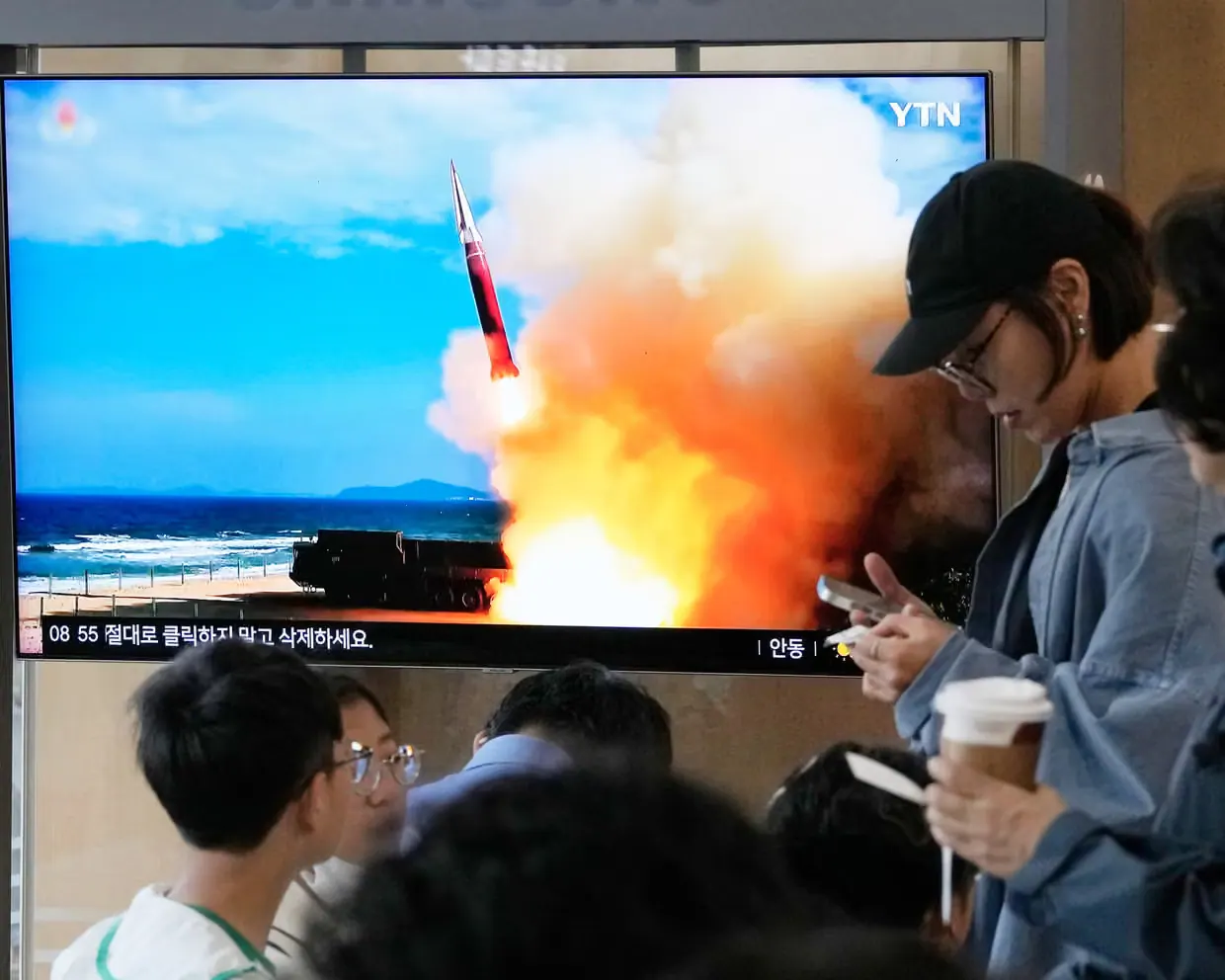
North Korea launched a ballistic missile toward the sea on Saturday, escalating tensions with South Korea. The missile was detected by South Korea's military at around 6:30 a.m. local time from the Wonsan area. It traveled over 700 kilometers toward the East Sea, also known as the Sea of Japan, before landing in the sea. The South Korean military, along with Washington, continued to analyze the launch to determine further details.
Japan's coast guard reported that the object may have been a ballistic missile and appeared to have come down in the sea. The coast guard also warned ships in the area to take precautions. In response to the launch, South Korea increased surveillance for any additional missile launches and said it would share information with the United States and Japan. The country's presidential office held an emergency National Security Council meeting on Saturday to assess the launch.
The latest test came after North Korean leader Kim Jong Un's sister, Kim Yo Jong, rejected Seoul's demand for an apology over a mine blast. The blast injured three South Korean soldiers during a reconnaissance mission inside the 4-kilometer-wide buffer zone separating the two countries. South Korea attributed the explosion to North Korean mines, prompting a demand for an apology from Pyongyang.
Kim Yo Jong dismissed Seoul's demand in a statement on Friday, criticizing President Lee Jae Myung's call for Pyongyang to return to dialogue. Lee made the appeal on Thursday, one day after the South Korean military demanded an apology over the blast. Kim described Seoul as "really despicable" and mocked Lee's proposal for dialogue, calling it "the climax of the farce that everyone should watch."
Kim Yo Jong also stated that Pyongyang was "ready for anything" Seoul might do in response to the mine blast. The missile launch followed her remarks the next morning. According to Cheong Seong-chang, vice-president at the Sejong Institute in Seoul, the test might represent an attempt by Pyongyang to provoke a response from South Korea following Kim Yo Jong's statement.
The missile test may also indicate that North Korea is testing a new type of missile. North Korea has conducted more than 10 missile tests so far this year, some of which followed Pyongyang's objections to joint military exercises between South Korea and the United States. Relations between the two Koreas have deteriorated in recent years, with North Korea abandoning unification as a national goal.
North Korea now describes South Korea as its "primary foe." The recent developments have contributed to the strained relations between the two countries. The situation remains tense, with both sides taking measures to respond to the other's actions. The international community is closely monitoring the situation, as the missile launch and the tensions between the two Koreas have significant implications for regional stability.
Key points
- North Korea fired a ballistic missile toward the sea on Saturday, adding to tensions with South Korea.
- The missile launch followed North Korean leader Kim Jong Un's sister, Kim Yo Jong, rejecting Seoul's demand for an apology over a mine blast that injured three South Korean soldiers.
- The situation between the two Koreas remains tense, with both sides taking measures to respond to the other's actions.