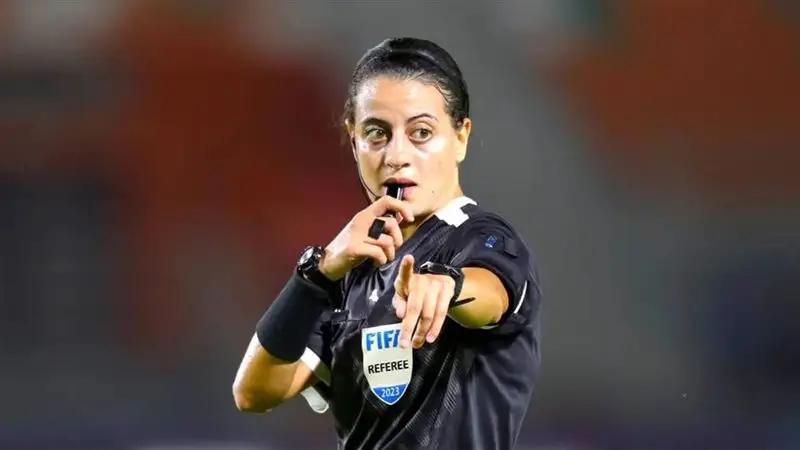
In a significant setback for North African refereeing, several female officials have failed to qualify for the U-17 Women's World Cup. The physical tests, which are a prerequisite for officiating at the tournament, proved too challenging for many of the candidates. Egypt's Shahenda Magrabi, who has previously refereed the African Women's Cup of Nations final, was among those who failed to meet the required standards.
The failed qualification of these referees has raised concerns about the representation of North Africa at the tournament. The physical tests are designed to ensure that referees are fit enough to keep up with the demands of the game, and failure to pass them means that these officials will not be able to participate in the World Cup. This is a disappointment for the referees, who had been hoping to make their debut at the tournament.
Despite this setback, there are still some North African referees who have made a name for themselves in international competitions. Moroccan referee Bouchra Karboubi, for example, has refereed several high-profile matches, including the 2020 Arab Club Champions Cup final. She has also been involved in the VAR system, making her one of the first African women to be involved in this technology.
The failure of these referees to qualify for the World Cup has highlighted the challenges faced by women in refereeing. Despite progress in recent years, women still face significant barriers in the sport. The physical tests, while necessary, can be a major hurdle for many referees, particularly those from developing countries.
The U-17 Women's World Cup is an important tournament for young female footballers, and the presence of experienced referees is crucial to its success. The tournament, which is scheduled to take place in 2026, will feature teams from around the world, and the referees will play a key role in ensuring that the matches are fair and enjoyable.
In recent years, there have been efforts to increase the number of female referees in football. The Confederation of African Football (CAF) has implemented several initiatives aimed at promoting women's refereeing, including training programs and mentorship schemes. These initiatives have helped to increase the number of female referees in Africa, but there is still much work to be done.
The Moroccan football federation has also been working to promote women's refereeing in the country. The federation has established a number of programs aimed at identifying and developing young female referees, and has also provided training and support for existing referees. These efforts are expected to pay off in the long term, with more female referees from Morocco and North Africa expected to make their mark on the international stage.
Key points
- North African female referees, including Egypt's Shahenda Magrabi, Algeria's Asmaa Wahab, and Tunisia's Hoda Afif, have failed to pass the physical tests required to officiate at the U-17 Women's World Cup.