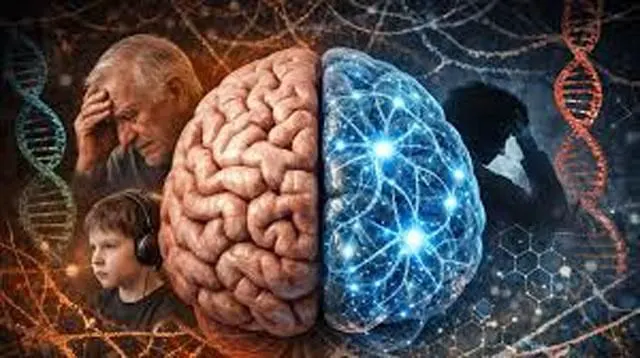
The Nobel Prize in Medicine has been awarded to three scientists for their groundbreaking work in optogenetics, a revolutionary technique that uses light to control neurons. US neurologist Karl Deisseroth and German scientists Peter Hegemann and Georg Nagel were recognized for their pioneering research in this field. Optogenetics holds great potential for treating various conditions, including dementia, blindness, and depression. The technique involves introducing light-sensitive proteins into cells, allowing scientists to switch neurons on and off with precision. This innovation has transformed the biological sciences, enabling researchers to study the brain and nervous system in unprecedented detail.
The discovery of light-sensitive proteins was a crucial step in the development of optogenetics. Hegemann and Nagel found a protein called channelrhodopsin in green algae, which they used to stimulate nerve signals in rats and mice. Deisseroth introduced this protein into cells, allowing scientists to control neurons with light. This breakthrough has enabled researchers to track which areas of the brain affect certain functions, shedding light on complex behaviors and physiological processes. The Nobel medicine committee member Abdel El Manira noted that the discovery has shed light on functions such as parental behavior, aggression, anxiety, and fear.
Optogenetics has shown promise in treating various medical conditions. Researchers have used the technique to restore vision in patients with degenerative eye diseases. Jose-Alain Sahel, founder of the Vision Institute in Paris, conducted trials using optogenetics to treat patients with defective retinal cells. By introducing the light-sensitive protein into the eye cells and using special goggles, the researchers successfully activated the retinal cells, restoring vision. This breakthrough has significant implications for the treatment of blindness and other visual disorders.
The potential applications of optogenetics extend beyond vision restoration. Researchers believe that the technique could be used to treat neurological and psychiatric disorders such as epilepsy, Parkinson's disease, depression, and anxiety. By controlling specific neuronal populations with high precision, scientists hope to develop new therapeutic targets for these conditions. The prizewinning research could also help researchers understand the underlying mechanisms of diseases such as Alzheimer's and epilepsy.
Optogenetics has also been used to study memory and learning. Simon Schultz, a neurotechnology professor at Imperial College London, used optogenetics to develop a closed-loop treatment for memory disorders. By lengthening the pulses that help the brain store memories, Schultz's team hopes to improve learning and memory in complex tasks. This research has significant implications for the treatment of memory-related disorders.
The Nobel Prize in Medicine recognizes the groundbreaking work of Deisseroth, Hegemann, and Nagel. Their research has opened up new avenues for understanding the brain and nervous system. As scientists continue to explore the potential of optogenetics, we can expect significant advances in the treatment of various medical conditions. The technique has the potential to revolutionize the field of neuroscience, enabling researchers to study the brain in unprecedented detail.
While optogenetics holds great promise, there are still many questions to be answered. Researchers are eager to explore the potential of optogenetics in understanding subjective consciousness and its relationship to artificial brains. However, the Nobel medicine committee member Abdel El Manira noted that the current state of research does not provide answers to these questions. Nevertheless, the prizewinning research has paved the way for future breakthroughs in neuroscience and medicine.
Key points
- Optogenetics uses light to control neurons, holding potential for treating conditions like dementia, blindness, and depression.
- The technique involves introducing light-sensitive proteins into cells, allowing scientists to switch neurons on and off with precision.
- Optogenetics has shown promise in treating various medical conditions, including vision disorders, epilepsy, and Parkinson's disease.