The Nobel Committee announced on Monday, October 5, 2026, that the Nobel Prize in Medicine would be awarded to Karl Daiserooth, an American, and Peter Hegemann and Georg Nagel, both from Germany. Their groundbreaking work on light-controlled ion channels and optogenetics has revolutionized the field of medicine. This discovery has opened up new avenues for understanding the human body's intricate mechanisms and has led to significant advances in medical research.
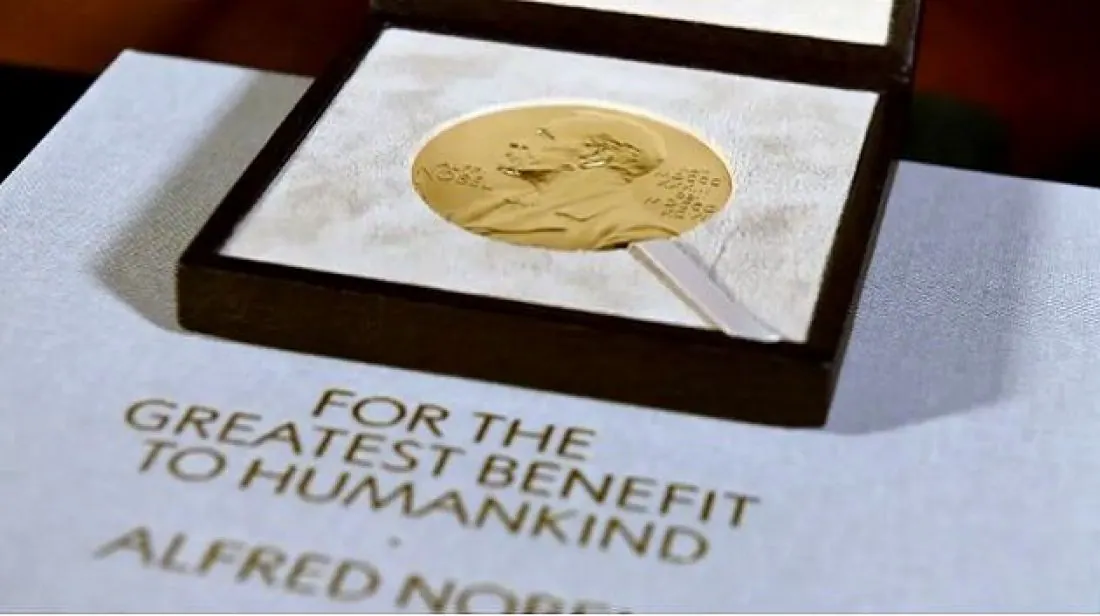
The Nobel Prize in Medicine is awarded annually by the Nobel Assembly at the Karolinska Institute in Sweden. The prize consists of a medal and a cash award of 11 million Swedish kronor, which is equivalent to approximately $1.2 million USD. The prize is considered one of the most prestigious honors in the medical field, and the recipients are chosen for their outstanding contributions to medical science.
The 2026 Nobel Prize in Medicine winners were recognized for their pioneering work in optogenetics, a field that combines optics and genetics to control and manipulate cells. Their research has enabled scientists to study the behavior of cells and tissues in unprecedented detail, leading to new insights into the workings of the human body. This breakthrough has far-reaching implications for the treatment of various diseases and conditions.
In recent years, the Nobel Prize in Medicine has been awarded to researchers who have made significant contributions to our understanding of the human body and the development of new treatments. In 2025, the prize was awarded to American researchers Mary Branko, Fred Ramsdell, and Japanese researcher Shimon Sakaguchi for their work on peripheral tolerance, which is a critical aspect of the immune system.
The 2024 Nobel Prize in Medicine was awarded to American researchers Victor Ambros and Gary Ruvkun for their discovery of microRNA and its role in regulating genes. Their work has had a profound impact on our understanding of gene regulation and has led to new approaches to treating diseases. The Nobel Committee's decision to award the prize to these researchers reflects the significance of their contributions to medical science.
The Nobel Prize in Medicine is a testament to the power of human ingenuity and the importance of scientific research. The prize serves as a reminder of the critical role that scientists play in advancing our understanding of the world and improving human health. The 2026 Nobel Prize in Medicine winners, Karl Daiserooth, Peter Hegemann, and Georg Nagel, are a shining example of the impact that scientific research can have on society.
The awarding of the 2026 Nobel Prize in Medicine to Karl Daiserooth, Peter Hegemann, and Georg Nagel is a significant recognition of their contributions to medical science. Their work on optogenetics has opened up new avenues for research and has the potential to lead to breakthroughs in the treatment of various diseases. The Nobel Committee's decision to award the prize to these researchers is a testament to the importance of their work and its potential to improve human health.
Key points
- The 2026 Nobel Prize in Medicine was awarded to American Karl Daiserooth and Germans Peter Hegemann and Georg Nagel for their discoveries related to light-controlled ion channels and optogenetics.