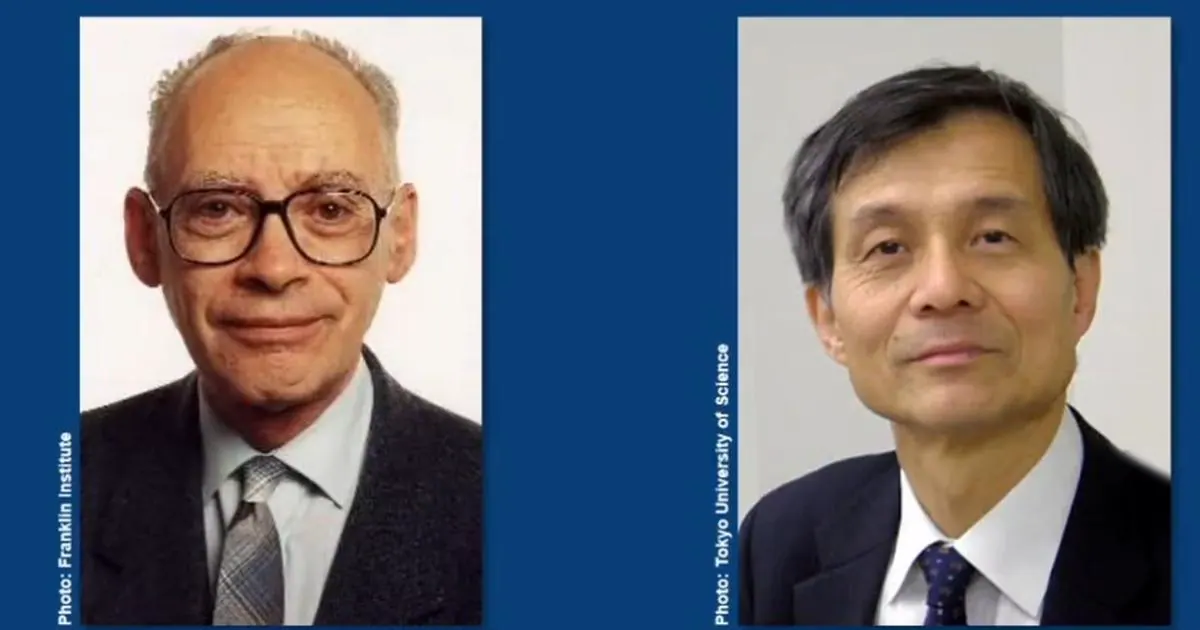
The 2026 Nobel Prize in Chemistry has been awarded jointly to French chemist Henri B. Kagan and Japanese chemist Kenso Soai for their groundbreaking work on asymmetric organic synthesis. Their research has provided a solution to a century-old question surrounding homochirality, the phenomenon where living organisms overwhelmingly use only one of two possible mirror-image forms of certain molecules. This discovery has significant implications for the field of chemistry, particularly in the development of medicines and other useful compounds.
Henri B. Kagan, born on December 15, 1930, is a renowned French chemist and emeritus professor at Université Paris-Saclay. Kagan made a major breakthrough in 1986 when he discovered a non-linear effect in asymmetric catalysis. This finding challenged the conventional understanding of the relationship between the imbalance in a chiral catalyst and the imbalance in the molecules it produced. Kagan's work laid the foundation for deliberately steering reactions towards one molecular "hand".
Kenso Soai, a Japanese organic chemist and Professor Emeritus at the Tokyo University of Science, has built upon Kagan's work and introduced the concept of autocatalysis. In an autocatalytic reaction, a product of the reaction helps catalyze the same reaction, creating a chemical feedback loop. Soai's team reported the first example of asymmetric autocatalysis in 1995, which was capable of producing a much greater imbalance than the initial catalyst. This discovery has led to significant advancements in the field of chemistry.
The significance of Kagan and Soai's discoveries extends beyond laboratory chemistry. Their work has provided scientists with a way of understanding how symmetry can be broken and amplified chemically. This has practical implications for designing medicines and other useful compounds, where producing the correct molecular form is crucial. Additionally, their research offers an important clue in the long-running question of how biological homochirality emerged on early Earth.
The phenomenon of chirality, where molecules exist in two forms that are mirror images but cannot be placed on top of each other, is a fundamental concept in chemistry. This property is particularly important in medicine, as the human body can respond differently to the two forms of a drug. Controlling which mirror image is produced is a major part of modern pharmaceutical chemistry, and Kagan and Soai's discoveries have provided a significant breakthrough in this area.
The 2026 Nobel Prize in Chemistry is a testament to the impact of Kagan and Soai's work on the field of chemistry. Their research has paved the way for the development of new medicines and other useful compounds. The prize also highlights the importance of basic scientific research, which can lead to significant breakthroughs and advancements in various fields.
The Royal Swedish Academy of Sciences has recognized the significance of Kagan and Soai's discoveries, awarding them the 2026 Nobel Prize in Chemistry. This prize is a prestigious honor that acknowledges the contributions of scientists to the advancement of human knowledge. Kagan and Soai's work will continue to have a lasting impact on the field of chemistry, inspiring future generations of scientists to pursue research in this area.
Key points
- The 2026 Nobel Prize in Chemistry was awarded to Henri Kagan and Kenso Soai for their discovery of non-linear effects and autocatalysis in asymmetric organic synthesis.