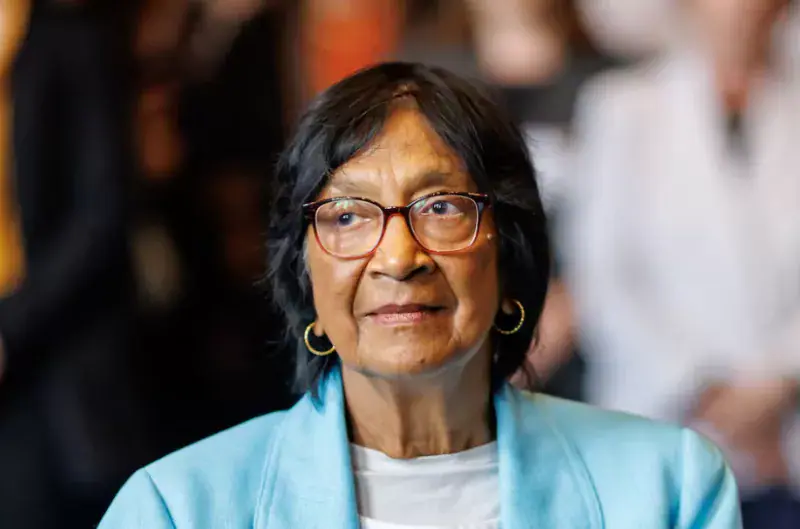
Navi Pillay, the 2023 Nobel Peace Prize winner, has denounced the US sanctions on the International Criminal Court (ICC) as "unheard of" and "unacceptable". Speaking via video link at the Nobel Peace Center in Oslo, Pillay expressed concern over the continued existence of international courts, particularly the ICC in The Hague. She emphasized that sanctions against judges for their judicial orders are unprecedented.
The US unveiled sweeping sanctions against the ICC, aiming to "dismantle" what it considers a "rogue" institution. The measures include a ban on US entities making transactions with the ICC, intending to inhibit its financial operations. The sanctions were announced hours after US President Donald Trump expressed his discontent with Pillay's Nobel Prize win, which was awarded for her efforts to promote peace and international law.
The ICC has condemned the US sanctions as an assault on the rule of law and the foundations of the international legal order. US Secretary of State Marco Rubio stated that the sanctions aim to "defend US sovereignty" and accused the ICC of seeking to prosecute Americans. The US has already sanctioned 17 ICC judges and officials, and these new sanctions target the court as an institution.
The Trump administration claims that the ICC is run by "globalists" who threaten American sovereignty. The US is furious over a past investigation into actions of US soldiers in Afghanistan, which the court has since closed, and by its arrest warrants for Israeli officials, including Prime Minister Benjamin Netanyahu. However, the new sanctions do not require the withdrawal of these warrants before being lifted.
The international community has widely criticized the US sanctions. UN Secretary General Antonio Guterres called the decision "a serious blow to our collective pursuit of international criminal justice." The UK, Canada, Denmark, Germany, France, Italy, Japan, and the Netherlands have expressed regret and disagreement with the sanctions. Pillay, 85, is a renowned human rights advocate who has worked on high-profile cases in Rwanda, Myanmar, and Gaza.
Pillay's Nobel Prize win marks her as South Africa's fifth Peace Prize recipient, following Nelson Mandela and Archbishop Desmond Tutu. Her early work involved defending anti-apartheid activists in South Africa. Upon receiving the prize, she jokingly suggested sharing it with Trump, referencing last year's winner, Venezuelan opposition figure María Corina Machado, who gifted her prize to the US president.
The US sanctions have a six-month grace period, allowing member states to continue paying for the ICC's operations. This period is intended to enable countries to negotiate a "solution to address" US concerns. The sanctions have sparked a significant reaction globally, with many questioning the US approach to international law and institutions.
Key points
- The US sanctions on the ICC have been widely criticized by the international community.
- Navi Pillay's Nobel Peace Prize win was awarded for her efforts to promote peace and international law.
- The sanctions aim to inhibit the ICC's financial operations and have sparked concerns about the future of international criminal justice.