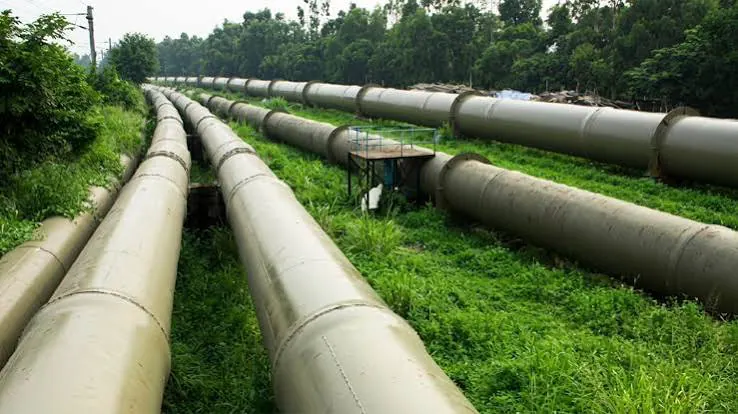
The Nigerian National Petroleum Company Limited (NNPC) has spent ₦8 trillion on oil and gas security contracts and other items over two years, according to financial statements reviewed by the Daily Times of Nigeria. The expenditure, captured in the "Other Receivables" section, includes ₦5.7 trillion in 2024 and ₦2.36 trillion in 2025. This significant spending has raised questions about transparency and accountability in the country's oil and gas sector.
The NNPC's expenditure on oil and gas security contracts has been grouped with "advance payment to the Federation", making it difficult to contextualize the scale of the spending. The company's financial statements also reveal that "Other Receivables" from the Federation hit ₦11.2 trillion at the end of 2025. This has sparked concerns about the true cost of fuel price support and pipeline security, which has been difficult to track due to lack of clear information in budget documents.
The NNPC's spending on oil and gas security contracts has been linked to two contractors, Tantita Security Services and Pipeline Infrastructure Nigeria Limited. Tantita Security Services, founded by Government Ekpemupolo, a Niger Delta militant, has been involved in pipeline surveillance in the Niger Delta. The company's role in the scheme has raised questions about the decision to spend such a large amount on private entities.
The situation has been criticized by former Vice President and ADC Presidential Candidate, Atiku Abubakar, who alleged that the Tinubu administration is still paying fuel subsidies, contrary to its denials. Atiku argued that expenditures captured under "energy-security cost" and "under-recovery" were being paid to cronies of the President. He described these terms as "a new coinage of the Tinubu administration to deceive Nigerians."
The NNPC's spending on oil and gas security contracts has also raised concerns about the country's security strategy. Nigeria budgeted ₦4.7 trillion for the Ministry of Defence in 2024 and 2025 combined, yet the NNPC alone claims to have spent almost double the national defence budget on securing oil and gas assets. This has prompted security analysts to question the decision to spend such a large amount on private entities.
Despite the controversy, the National Assembly joint committees on Petroleum Resources have dismissed petitions challenging the pipeline surveillance contract. They passed a vote of confidence in Tantita, security agencies, and NNPC for improving oil production. The committees noted that surveillance boosted Nigeria's oil output, which rose from roughly 900,000 barrels per day in 2022 to about 1.8 million barrels per day by April 2026.
The disclosure adds to a long-running question about how much of Nigeria's oil income never reaches the treasury. The NNPC has for years paid for items on behalf of the state and recouped them from revenues owed to the Federation Account. For now, the ₦11.2 trillion in other receivables as of 2025 remains outstanding, with no information on how or when it will be settled.
Key points
- NNPC spent ₦8 trillion on oil and gas security contracts and other items over two years.
- The expenditure has raised concerns about transparency and accountability in the country's oil and gas sector.
- The situation has sparked questions about the country's security strategy and the role of private entities in securing oil and gas assets.