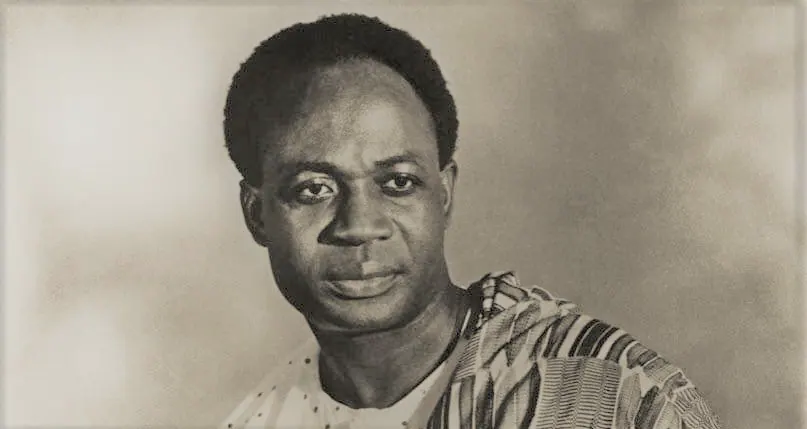
As Ghana marks Kwame Nkrumah's 117th birth anniversary, a University of Ghana historian is urging Ghanaians to look beyond political divisions and study Nkrumah's development thinking. Prof Samuel Ntewusu, Director of African Studies at the University of Ghana, said in an interview with the Ghana News Agency that Nkrumah's strategies were central to Ghana's independence success. He argued that Nkrumah's contribution to the nation should be assessed beyond political affiliations and contemporary partisan debates.
Ntewusu emphasized that true honour for Nkrumah lies in action, not ceremony. He pointed to Nkrumah's thinking on economic independence, resource extraction, education, urbanisation, agriculture, and energy as areas ripe for critical re-examination in tackling Ghana's current development challenges. He also said Nkrumah's ideas on African unity and liberation deserved fresh consideration in the context of present-day Africa.
Nkrumah was born on September 21, 1909, at Nkroful in the then Gold Coast. He returned from abroad in 1947, founded the Convention People's Party in 1949, and became Leader of Government Business after the CPP's 1951 election win, later serving as Prime Minister from 1952. Under his leadership, the Gold Coast became independent as Ghana on March 6, 1957, and he went on to become Ghana's first President when the republic was declared in 1960.
Founders' Day, observed every September 21, was restored by Parliament in 2025 as a public holiday. The day is a celebration of Nkrumah's life and legacy, and Ghanaians and Pan-Africanists are marking the 117th anniversary through various activities. Ntewusu's call for a critical examination of Nkrumah's policies comes as the nation reflects on its past and looks to the future.
Nkrumah's government pushed programmes in education, industrialisation, and infrastructure, including the Volta River Project and the Akosombo Dam. He also helped found the Organisation of African Unity in 1963, the forerunner of today's African Union. His vision of Africans advancing as a united front remains an important subject for study, according to Ntewusu.
The reflection on Nkrumah's legacy comes just days after rare 1965 footage of Nkrumah launching Ghana Television resurfaced online, part of wider NkrumahFest commemorations at his birthplace, Nkroful. The GNA interview did not indicate any planned policy review or government programme arising from Ntewusu's call.
Ntewusu urged all parties to put aside political differences and examine Nkrumah's policies critically, with a view to applying them for the betterment of Ghana and global Africa. He emphasized that celebration is not an event, but rather a call to action to study and apply Nkrumah's development ideas.
Key points
- Nkrumah's development thinking remains relevant to Ghana's current development challenges.
- True honour for Nkrumah lies in action, not ceremony.
- Nkrumah's ideas on African unity and liberation deserve fresh consideration.