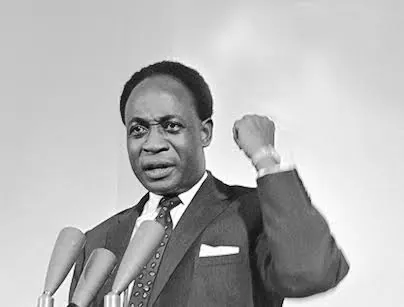
Dr. Kwame Nkrumah, Ghana's first president, left an indelible mark on the country and the continent. His legacy continues to inspire generations with the familiar declaration: "Nkrumah Never Dies." This phrase does not deny his physical death but rather highlights the enduring value generated by his life. Nkrumah's ideas, institutions, and possibilities continue to shape Ghana and Africa's future. According to Kwesi Amoafo-Yeboah, Nkrumah's life was larger than its time, and his impact on Ghana's independence in 1957 was a testament to his vision.
Nkrumah's achievement of leading Ghana to independence in 1957 was more than just the birth of a nation; it was evidence that colonial rule was not permanent and that freedom could be achieved. This demonstration of self-governance inspired other African nations, and Ghana's independence became part of their inheritance. Nkrumah's leadership not only exercised power but also expanded the horizon of possibility for those who came after him. His legacy has been recognized globally, with many regarding him as African of the Century.
The concept of Continuity is crucial in understanding Nkrumah's legacy. It is not about preserving a person as an untouchable monument but rather about preserving the valuable state. A mature nation must separate enduring value from historical limitation, retaining the courage, ambition, and long-range thinking of its leaders while learning from their mistakes. This approach allows future generations to begin with the benefit of both successes and failures.
Nkrumah understood that Ghana's independence could not be secure in an Africa that remained politically fragmented, economically dependent, and institutionally weak. These questions remain relevant today: Can African nations convert political freedom into economic capability? Can the continent build institutions that preserve knowledge across generations? Can it integrate its markets, develop its own productive capacity, and turn its natural and human resources into lasting prosperity?
The responsibility of remembrance is crucial in honoring Nkrumah's legacy. September 21 should be more than just a day for remembering his birth; it should be a day for asking what remains alive from the possibilities he opened. What have we preserved? What have we lost? What have we improved? What unfinished work are we prepared to carry forward? A nation truly honors its founders by ensuring that the valuable state they created continues to generate capability.
The greatest tribute to Nkrumah is not to reproduce his era but to preserve and advance the valuable state represented by his courage, vision, intellectual confidence, and belief in Africa's capacity to determine its own future. Ghana and Africa face different conditions today and require new institutions, new technologies, and new forms of leadership. The task is not to preserve his form but to build upon the foundation he laid.
Nkrumah remains present whenever an African believes that the continent can shape its own destiny. He remains present whenever Ghana chooses ambition over resignation. His legacy continues to inspire confidence, knowledge, and possibility, transferred from one generation to the next. That is why the slogan endures: Nkrumah never dies, not because a human being can escape mortality, but because a life that enters the continuity of a people can continue working long after the person is gone.
Key points
- Nkrumah's legacy continues to inspire generations with his vision for a self-governing Africa.
- The concept of Continuity is crucial in understanding Nkrumah's legacy and its relevance today.
- Nkrumah's impact on Ghana's independence and African self-governance has had a lasting impact on the continent.