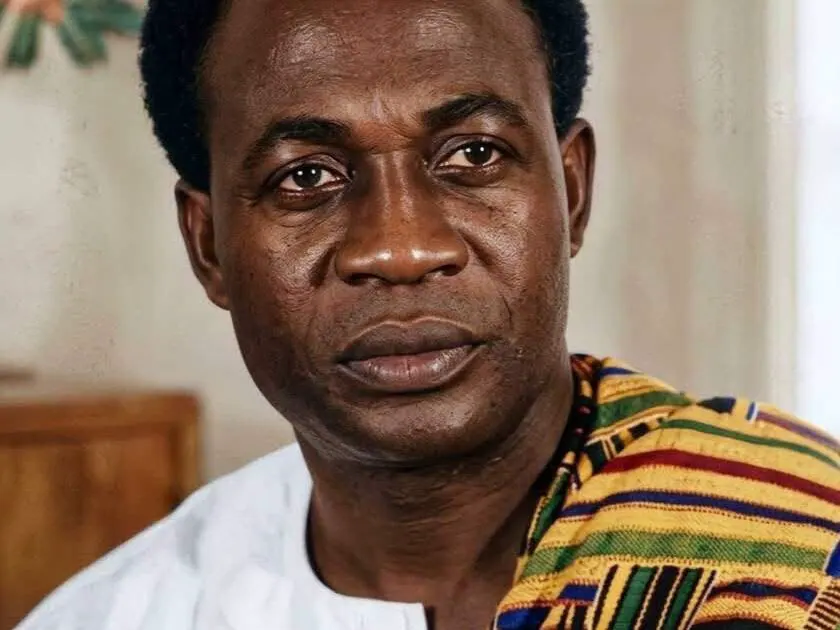
On March 6, 1957, Dr. Kwame Nkrumah declared Ghana's independence, marking a pivotal moment in African history. As the Union Jack was lowered and the Black Star flag was raised, Nkrumah proclaimed that Ghana's freedom was not just a national achievement but a stepping stone towards the liberation of the entire African continent. This bold vision anchored his foreign policy agenda, which emphasized decolonization, structural integration, and global non-alignment. According to Joy FM's Gilbert Attipoe, Nkrumah's words continue to echo across generations, inspiring a new wave of African leaders. Nkrumah's declaration was more than a statement of independence; it was a call to action for African nations to unite and challenge colonial powers. His vision for a united Africa resonated with many, and his leadership played a significant role in shaping the course of African history. As the first nation in sub-Saharan Africa to gain independence, Ghana carried the weight of continental expectation, and Nkrumah was determined to lead by example.
Nkrumah transformed Accra into a hub of anti-colonial resistance, welcoming hundreds of political refugees, independence activists, and freedom fighters from across the continent. Under the Convention People's Party government, Ghana provided financial and political assistance, travel documents, and military training to these groups. Leaders such as Patrice Lumumba, Robert Mugabe, Amílcar Cabral, and Sam Nujoma found refuge and support in Ghana. By allowing Ghana to serve as a diplomatic headquarters for these liberation movements, Nkrumah ensured a coordinated and sustained fight against colonial oppression. This move was a testament to Nkrumah's commitment to African unity and his willingness to challenge colonial powers. The support provided by Ghana helped to galvanize the fight for independence across the continent, inspiring other nations to follow suit.
In April 1958, Nkrumah convened the Conference of Independent African States in Accra, bringing together eight independent African nations to establish a collective foreign policy baseline. The assembly asserted that an attack on one sovereign state was an attack on all, laying the groundwork for future continental cooperation. This landmark event was followed by the All-African Peoples' Conference, which united non-governmental freedom movements, trade unionists, and political party representatives from across the continent. The conference accelerated the wave of African independence throughout the 1960s, as momentum built towards a united and liberated Africa. Nkrumah's efforts to promote African unity and cooperation helped to create a sense of shared purpose among African nations, paving the way for future progress.
Nkrumah argued that independence without economic and structural integration would inevitably lead to neocolonialism. In his seminal work, Neo-Colonialism: The Last Stage of Imperialism, he detailed the concept, warning that small, fragmented African states would remain economically dependent on former colonizers. To combat this vulnerability, Nkrumah advocated for a radical blueprint featuring a borderless Africa, a central executive political authority, a Pan-African Parliament, a unified military force, and a common economic market with a single currency. This vision for a united Africa was ambitious, but Nkrumah was willing to take bold steps to achieve it. His commitment to African unity and economic integration helped to shape the course of African history, inspiring future generations of leaders.
Nkrumah's commitment to unification was enshrined in Article 2 of Ghana's 1960 Republican Constitution, which permitted the surrender of national sovereignty to achieve a wider union of African states. He initiated the Ghana-Guinea-Mali Union between 1958 and 1961 as an early practical experiment in continental federation. However, not all African leaders shared Nkrumah's immediate, federalist ambition, leading to a deep ideological division in the early 1960s. The Casablanca Group, led by Nkrumah, advocated for immediate political unification, while the Monrovia and Brazzaville Group favoured a gradualist approach. This ideological impasse would ultimately shape the course of African history, influencing the development of continental institutions and policies.
The ideological division culminated in Addis Ababa in May 1963, where extensive diplomatic negotiations birthed the Organization of African Unity (OAU) as a crucial compromise. While the OAU adopted the gradualist, state-centric framework of the Monrovia Group, it incorporated Nkrumah's liberation agenda by establishing a dedicated Liberation Committee to fund and coordinate anti-colonial struggles. Decades later, the transition of the OAU into the African Union in 2002, alongside modern frameworks like the African Continental Free Trade Area—headquartered in Accra—serves as a direct validation of Nkrumah's early economic and political diagnoses. The African Union's establishment marked a significant milestone in the development of continental institutions, providing a new framework for African cooperation and integration.
Nkrumah's declaration of the "New African" represented a profound psychological awakening, urging Africans to shed colonial inferiority complexes and assert themselves as equals on the global stage. Through his founding contributions to the Non-Aligned Movement, Nkrumah ensured that Africa remained an independent force in world affairs rather than a pawn in Cold War competition. Today, as Ghana celebrates his memory, Kwame Nkrumah's singular efforts in fighting colonialism and promoting African self-determination remain as relevant as ever, proving that in the ongoing march toward continental unity, his legacy truly lives on. Nkrumah's vision for a united Africa continues to inspire future generations of leaders, shaping the course of African history and promoting a brighter future for the continent.
Key points
- Dr. Kwame Nkrumah's vision for African unity and independence continues to inspire future generations of leaders.
- Nkrumah's commitment to economic integration and structural unity helped shape the course of African history.
- The Organization of African Unity, established in 1963, was a crucial compromise between Nkrumah's federalist ambitions and the gradualist approach of other African leaders.