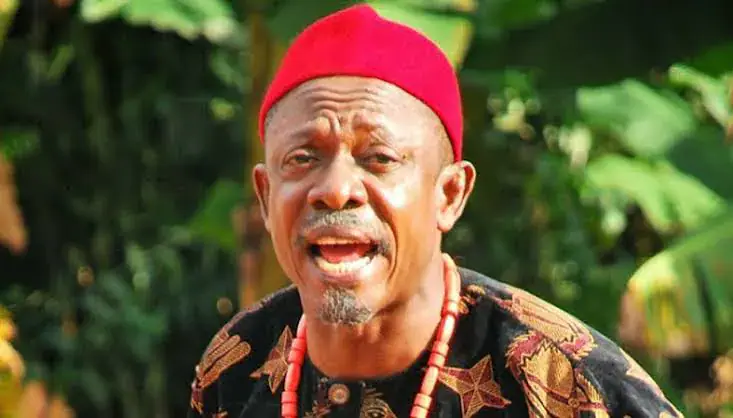
Veteran Nollywood actor Nkem Owoh, popularly known as Osuofia, has clarified his earlier comments on the origins of Nigeria's cinema industry, highlighting the significant contributions of Yoruba filmmakers to home-video productions. During an appearance on Curiosity Made Me Ask, a programme hosted by comedian Adebayo Abidemi, Owoh explained that Yoruba filmmakers pioneered and popularised home-video productions long before the emergence of modern Nollywood. He acknowledged the contributions of late filmmaker Hubert Ogunde and veteran actor Adebayo Salami.
Owoh's clarification comes amid renewed debate over which ethnic group played the leading role in establishing Nigeria's film industry. In August 2026, late actor Francis Duru argued that Igbo entrepreneurs played a major role in building modern Nollywood through the commercial home-video boom of the 1990s and early 2000s. The debate has generated discussions about the distinction between the origins of Nigerian cinema, Yoruba travelling theatre, early home-video productions and the emergence of modern Nollywood.
Yoruba theatre's influence on Nigerian cinema is significant, particularly the influence of travelling theatre groups that transitioned from stage performances to film productions. Figures such as Hubert Ogunde and Duro Ladipo played significant roles in developing indigenous theatrical productions, using traditional stories, music and cultural themes to entertain audiences. Their performances eventually expanded into film and television productions, helping establish a foundation for indigenous-language cinema in Nigeria.
The role of Igbo filmmakers in modern Nollywood is also notable, particularly with the 1992 film Living in Bondage, produced by Kenneth Nnebue, which helped popularise Nigeria's direct-to-video film industry. The film's commercial success encouraged more filmmakers to explore the home-video format, contributing to the rapid expansion of Nigerian movie production during the 1990s. The name Nollywood came into wider use in 2002, when a report by journalist Norimitsu Onishi appeared in The New York Times.
Owoh maintained that Yoruba filmmakers played a significant role in making home-video entertainment popular across Nigeria. He recognised the contributions of Hubert Ogunde and Adebayo Salami, whose productions helped establish the popularity of Yoruba-language films and home-video entertainment. Owoh's comments have brought renewed attention to the historical development of Yoruba cinema and its influence on Nigerian cinema.
The development of the industry reflects contributions from different ethnic groups, filmmakers, theatre practitioners, producers and businesspeople. Owoh's position is that recognising the contributions of Yoruba filmmakers to home-video entertainment should not be confused with claiming that they alone founded Nollywood. His comments have highlighted the importance of acknowledging the different pioneers and cultural traditions that shaped Nigeria's entertainment industry.
The debate over Nollywood's origins is ongoing, with different stakeholders contributing their perspectives. Owoh's clarification has added to the discussion, emphasising the need to acknowledge the contributions of various groups to the development of Nigeria's film industry. The industry continues to evolve, with new generations of filmmakers building on the foundations laid by pioneers such as Ogunde, Ladipo and Nnebue.
Key points
- Nkem Owoh clarifies his comments on Nollywood's origins, highlighting Yoruba contributions to home-video productions.
- The debate over Nollywood's origins continues, with different stakeholders contributing their perspectives.
- The development of Nigeria's film industry reflects contributions from various ethnic groups, filmmakers and practitioners.
Reporting sources
- Nkem Owoh Reopens Debate Over Nollywood’s Origins · Daily Times of Nigeria