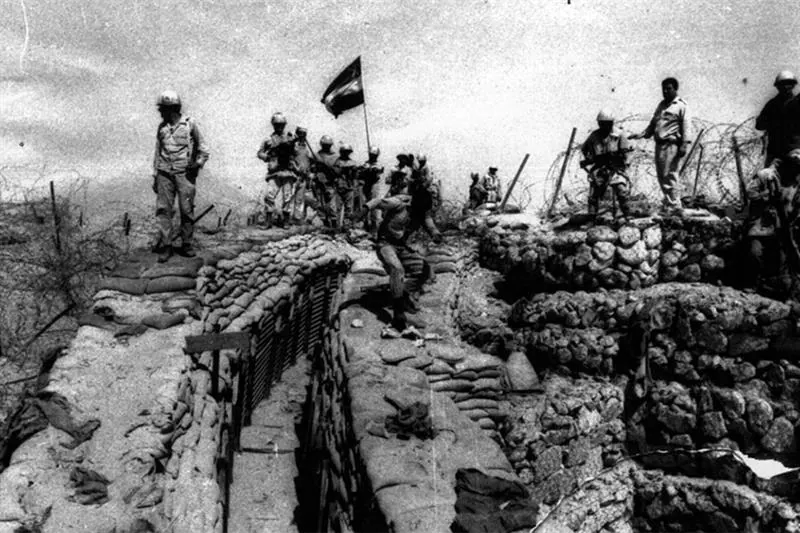
The Nixon Presidential Library has opened further records from the 1973 October War, including a wartime memorandum to the White House, as earlier US documents reveal how warnings of an attack were discounted. The library releases came nearly a month before the 53rd anniversary of Egypt's 1973 victory, celebrated annually on 6 October, which ended Israel’s occupation of the Sinai Peninsula.
The newly opened records, released on 8 September 2026, cover about 150 documents across three boxes, including National Security Council and Henry Kissinger files. The release includes an eight-page memorandum with an attachment sent on 17 October 1973 by Thomas Pickering, executive secretary of the State Department, to Brent Scowcroft, deputy national security adviser.
Earlier records published in the US State Department’s Foreign Relations of the United States series document its failure to anticipate the assault. American analysts had identified why Egypt might choose war, yet struggled to recognize the military preparations that preceded it. A warning in May 1973, presented by Ray Cline, director of the State Department’s Bureau of Intelligence and Research, predicted renewed hostilities by autumn.
The May memorandum, although not fully preserved, was discussed in Kissinger's memoirs and recalled by Roger Merrick, who drafted the assessment. Merrick noted that disagreement over the likelihood of war persisted among US officials through the summer and autumn. By 30 September, six days before Egypt and Syria launched their offensive, another memorandum from Cline recorded reports of Syrian troops moving into position.
Despite these warnings, the US intelligence community remained skeptical about signs of an imminent offensive. A forecast after fighting began on 6 October predicted that heavy combat would last “no more than a week”. The estimate expected Israel to blunt Syria’s attack within days and push Egyptian forces back across the Suez Canal quickly.
An internal US intelligence investigation dated 20 December 1973 concluded that the information collected before the war had been sufficient to prompt a warning. It described that information as “plentiful, ominous, and often accurate”. The report found that assumptions about Arab military weakness had shaped how analysts interpreted the evidence.
The newly opened Nixon Library files could add depth to the understanding of US intelligence and diplomacy during the 1973 war. Egypt and Israel signed the peace treaty in 1979 in Washington, with late Egyptian President Anwar Sadat and then-Israeli Prime Minister Menachem Begin, following the 1978 Camp David Accords.
Key points
- The Nixon Presidential Library released records from the 1973 October War, including a wartime memorandum to the White House.
- US intelligence had identified reasons for Egypt to choose war but struggled to recognize military preparations preceding the attack.
- An internal US intelligence investigation found that information collected before the war was sufficient to prompt a warning.