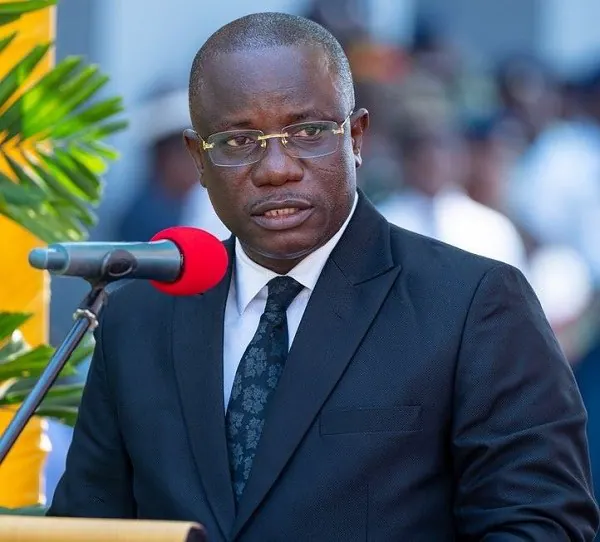
Former Defence Minister Dominic Nitiwul has moved to correct a misunderstanding about the Narcotics Control Commission's (NACOC) role at Ghana's ports. He insists that NACOC was never removed from the ports, contrary to suggestions circulating after a 3.9-tonne cocaine shipment escaped detection. Nitiwul explained that what changed in 2018 was NACOC's participation in the physical, container-by-container inspection process. The reform aimed to reduce bureaucracy and improve efficiency, not weaken drug enforcement.
Before the 2018 reform, several agencies would routinely open and inspect the same containers, slowing down cargo clearance and creating opportunities for corruption. The government reduced the number of agencies that physically inspect containers to cut bureaucracy and improve efficiency. Nitiwul confirmed that NACOC was taken out of the joint inspection process in 2018 but maintained this was different from removing the agency from the port altogether. NACOC and other security agencies continued to check containers based on intelligence rather than inspecting every single container.
Nitiwul's clarification comes at a sensitive moment, with Ghana's port security arrangements under intense scrutiny following the seizure in France of a large cocaine consignment traced back to a container that originated in Ghana. President John Dramani Mahama has directed that NACOC be restored to the joint container inspection regime. This move follows claims by Wa West MP Peter Lanchene Toobu that NACOC is understaffed and stretched too thin to effectively police the country's ports.
The debate over NACOC's role has played out alongside controversy involving GRA customs officers, four of whom were denied bail in Ghana's €225 million cocaine case. There is also wider reporting on how the drug network allegedly operated, including a case of a wanted Dutch drug lord linked to the trafficking chain. The dispute over what exactly happened at the ports in 2018 goes to the heart of how the 3.9-tonne cocaine shipment escaped detection.
Understanding what safeguards replaced joint physical inspections and whether those safeguards failed is central to preventing a repeat. Police, the Bureau of National Investigations, and NACOC are currently investigating how the shipment left Ghana undetected before its seizure in France. Nitiwul argued that assigning blame along party lines would not resolve the underlying problem.
Nitiwul called for the formation of a bipartisan parliamentary committee to investigate recent trafficking cases and recommend ways to strengthen Ghana's systems. He urged Parliament to bring in security analysts, academics, and other experts to help find lasting solutions. No date has been given for when such a committee might be formed or when it would report its findings.
The clarification by Nitiwul aims to address concerns about NACOC's role and the effectiveness of Ghana's port security arrangements. The incident has highlighted the need for a thorough investigation and a comprehensive approach to prevent similar incidents in the future. The formation of a bipartisan parliamentary committee could provide a platform for experts to share their insights and recommendations.
Key points
- NACOC was never removed from Ghana's ports, but its participation in joint physical container inspections ended in 2018.
- The 2018 reform aimed to reduce bureaucracy and improve efficiency, not weaken drug enforcement.
- A bipartisan parliamentary committee may be formed to investigate recent trafficking cases and recommend ways to strengthen Ghana's systems.