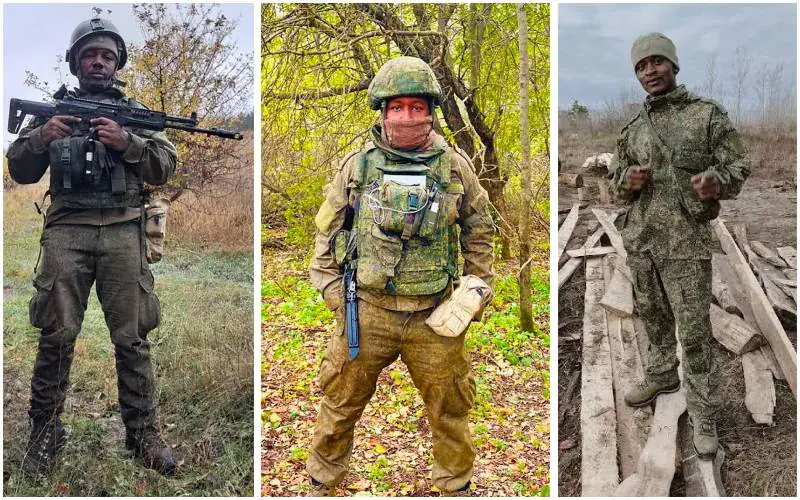
South African authorities arrested nine Zimbabwean nationals on November 8 in an intelligence-led operation. The suspects, aged 20 to 46, were accused of attempting to travel abroad to fight in Russia's war in Ukraine. The operation involved local law enforcement and international partners, including INTERPOL and the Hawks' Crimes Against the State unit.
The detainees were arrested at OR Tambo International Airport and a hotel in the Bruma district of Johannesburg. Five suspects were stopped at the airport while allegedly preparing to board flights, and the remaining four were seized at the hotel. The arrested individuals have been identified as Weight Mudhanyane, Javangwe Munyaradzi, Wesley Sothole, Abel Muchenje, and Knowledge Ndunduma for the airport arrests, and Bobo Chinhondo, Batsirai Shereni, Liberty Shereni, and Niobe Zhou for the hotel arrests.
The suspects appeared before two Gauteng magistrates' courts and were charged with breaching the Regulation of Foreign Military Assistance Act 15 of 1998. Plea hearings have been postponed, with the five airport arrests slated to plead on Tuesday and the four hotel arrests on Thursday. All suspects remain in custody pending legal representation.
According to the Centre for Innovation and Technology, recruiters have been targeting economically vulnerable Zimbabweans, especially unemployed youth and former security-service personnel. These recruiters link their targets to Russian handlers operating under aliases. This recruitment network has been operating despite Zimbabwe criminalizing mercenary activity.
The Suppression of Foreign and International Terrorism Act in Zimbabwe contains an exception that permits citizens to provide private military services to states with which Zimbabwe maintains diplomatic relations. This exception complicates the legal landscape and may impact the prosecution of the detained individuals.
The operation that led to the arrests was coordinated by multiple units, including the Serious Organised Crime Investigation unit, SAPS Crime Intelligence, and private security firms. The Gauteng Provincial Tracking Team and the Modus Operandi Centre also played a role in the intelligence-led operation.
The detainees will continue to face legal proceedings as their plea hearings approach. The case highlights the efforts of South African authorities to prevent their citizens from engaging in foreign conflicts, particularly in the context of the ongoing Russia-Ukraine war.
Key points
- The arrested individuals were attempting to travel abroad to fight in Russia's war in Ukraine.
- The recruitment network targeted economically vulnerable Zimbabweans, including unemployed youth and former security-service personnel.
- The case involves complex legal considerations due to Zimbabwe's laws on mercenary activity and private military services.